...
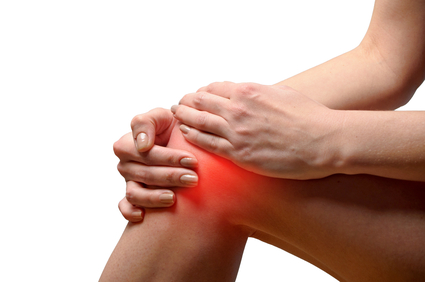
Young woman having knee pain

Case study Melinda – Running a Marathon After Knee Replacement


Situation:

Melinda (name changed) had a knee replacement after struggling with arthritis for the past 15 to 20 years in her right knee. She had been a runner for a couple of years prior to coming to me.

Changes to her running gait and an aggressive strengthening program reduced the pain and enable her to run 4 marathons, several half marathons, a Dopey Challenge, etc.

Even though, changes to her running gait enabled us to continue running 4 about 4 to 5 years before the surgery was inevitable.


Complete Knee Replacement Surgery August


Melinda chose a surgeon who used a minimally invasive procedure that would avoid cutting the muscle tissue.


Post-surgery progress: for the first 3 weeks after surgery Melinda had to focus on regaining range of motion and minimizing the swelling. Driving was not possible yet, and physical therapy was done in-home.

After 3 weeks she started to work with me three days a week again for 60 minutes, as well as with a physical therapist 2 days a week.

After having a conversation with the physical therapist, I decided that the training for her knee replacement recovery needed to focus on several important areas:

  • An increase of range of motion of the knee in regards to flexion to 120-130 degrees as well extension to 0-1 degrees.
  • Improving the proprioceptive reflexes in the surgical leg. Every surgery, and especially replacement surgeries, destroy proprioceptive receptors in the affected tissue. Regaining those abilities is crucial to avoid further injuries in other joints above and below or on the other leg
  • Regaining the strength in the surgical leg as well as overcoming the mental hurdle of using that leg


Training

For the first 5 to 6 weeks off the training, we slowly increased the use of her leg primarily with bilateral exercises due to her inability to fully load the surgical leg.  As we progressed we increasingly focused on unilateral exercises closed kinetic chain exercises in order to minimize the deficit within the surgical leg.

Once a normal gait pattern was established again and the swelling caused by exercise was minimal, we started to reintroduce running patterns into the training.

These running patterns consisted of high knee running, high heels, side shuffle, heel to ball rolling patterns while walking, as well as focusing on Cross diagonal moving patterns with arms and legs.

Upon being able to execute these movements pain-free for a while we started to introduce run/walking back into the training program.

The duration of the run started between 20 and 30 seconds, while the walking interval was 60 seconds to 2 minutes. Even though her capability was higher than that, the goal was to be minimally fatigue only when running.

Throughout this phase, the strength training started to also slowly contain easy plyometric exercises.

Melinda completed her first half marathon after the surgery in the middle of November. She then proceeded to do the Dopey challenge in the beginning of January 2018. The Dopey challenge consists of a 5K, and 10K, 1/2 Marathon, as well as a Marathon on consecutive days.

Even though the healing process in the knee and the surrounding tissue had been going well, I opposed both race events.

The reason for my recommendation was that she had not built up the training mileage prior to the race and the likelihood of injury was too big. The concerned areas for injuries were not the actual knee replacement side, but the hip, the back, as well as the hip or the knee on the other leg.

Despite having worked hard to minimize the deficit on the right leg come on I did not feel confident in her ability to maintain an even running gait throughout the various races.

After the race series, she had only minimal swelling in the surgical leg which was to be expected and not all to worrying.  The problem was though, that she had a strong IT band issue on the left side as well as potential bursitis over the left trochanter major.

The recovery from those injuries took about 4 weeks and included absolutely no running, soft tissue manipulation by her and her massage therapist, and very careful leg training in order to minimize the impact on the site of injury.

We are now at week 5 after the race series and we will begin running again this week with a short distance of 1-2 miles at the most.


Outlook

To minimize further injuries the reintroduction into running will have to be slow. Both legs need to be equally strong and her running movement patterns need to be consistent even when fatigued.

Her strength training will continue to focus on movement education, proprioceptive training, light plyometrics, consistent strength training with a heavy focus on single leg training and hip stabilization.

Her run training will include running drills and a slow increase in her mileage. The goal will be to run a Half Marathon in May/June and a full Marathon end of October.


Conclusion


Running with a total knee replacement is perfectly possible if handled responsibly. Above you see the approach I have used. You cannot control the client and you can see that being too hasty to get back to race events led to consequences.

Having said that, her tenacity and willingness to work hard in physical therapy and personal training led to an incredibly fast recovery. It is amazing what you can accomplish with an exceptional work ethic.

Her physician had approved of her running marathons again.

What to do when you sprain your ankle?

Ankle sprains are pretty common. Many of us have had one and if you had one, there is a good chance you will have or had a second one. You step off the curb, step wrong just for one second, and bang, your ankle goes out of under you.

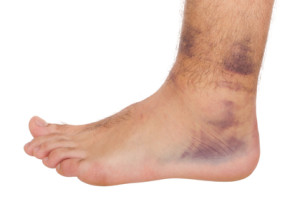
Inversion ankle sprain with strong hematoma
Not a pretty sight!

What is an ankle sprain?

The most common ankle sprain is the inversion ankle sprain. The sprain is graded into 3 different categories.

  • Category one leads to some stretching or minor tearing of the ligamentous fibers. The joint stability is usually not compromised. You might feel the joint to be a little bit more stiff, but usually there is not a lot of swelling, and only mild pain.
  • The second degree sprain is a different matter. The joint is definitely more unstable, there is more tearing and separation of ligamentous fibers.
  • The third grade involves a total rupture of the ligament and severe instability of the joint, profuse swelling and severe pain. A third degree sprain can be accompanied by other ligament or structural injuries  in the joint. and surgery might be necessary.

What to do at first?

RICE – rest it, ice it, compress it and elevate it is probably the most important thing to do in an ankle injury initially. Depending on the severity of the sprain you might have to have the ankle immobilized for a couple of weeks, or even have surgery (usually 3rd degree sprain).

What to do later?

Here comes my disclaimer, I am not a physician and don’t try to be one. This advice is not for you to treat yourself but be a little bit better informed. It certainly does not replace your healthcare professional.

In the beginning you will have to scale back on vigorous training (that is at least what the textbook says). Well, you have other body parts you can work out vigorously without compromising joint integrity. You will have to lay off of running, jumping or some leg exercises but don’t think you can get out of working out once you are past the first 3-5 days. Once you are allowed to be weight bearing again you can even try some aquatic exercises which allow you to be partially weight bearing, and you have some compression from the water on the joint. Neat trick!

Now if you only have a minor ankle sprain you don’t have to go into the pool to exercise. You will want to stay initially with bilateral movements that minimize eversion or inversion of the foot. Avoid forcing range of motion. Stability seems to be the key. Pain should be the guidance and you want to progress to range of motion exercises as quickly as possible. Later on it is important to maintain the appropriate range of motion via mobility work.

Training balance as soon as it is painfree can help stabilize the joint against future injuries. Some people question the use of balance boards, bosu balls, etc. with the argument that they defy the argument of specificity. The next step would be the transition from walking to running, lateral movements with stabilization and finally cutting and sport specific exercises. Strength training should be functional and look at the whole body not just the ankle joint. Gait analysis and corrections should be made and progressions should be dependent on owning the movement. Pain should be seen as an indicator to back off.

Take Away

Stage 1

  1. RICE (rest, ice, compression, elevation)
  2. Exercises stressing plantar and dorsiflexion (pointing your foot and pulling the foot back)
  3. Cycling and hand ergometer

Stage 2

  1. Range of motion in all planes
  2. reduce swelling and pain
  3. Balance exercises

Stage 3

  1. Full strength
  2. Full range of motion
  3. Restoration of proprioception
  4. Reintegration into sports

Rehab nowadays does not reduce you to one join anymore, at least it should not. Your training should still be challenging but take into account that your ankle is a problem. Pain is always the guidance. Pain changes movements and innervation patterns. Just because you are able to still do the movement clean with pain, does not mean that the muscle that the integrity of the kinetic chain is still given. Unilateral strength exercises are functional and add stability to your strength training but initially after returning to your strength training you might have to regress back to bilateral work in order to really focus on strength. If you look at the make up of a training session it would look something like this:

  1. Foam Rolling
  2. Mobility work as allowed
  3. Ankle stability training
  4. Strength training
  5. Conditioning

I hope this has been helpful,

Have a great start into the weekend,

Michael


References:
Cressey, Eric (6/23/2014 online) http://www.t-nation.com/training/bosu-ball-the-good-bad-and-ugly/print
Prentice, William E. (2004).  Rehabilitation Techniques for Sports Medicine and Athletic Training
Peterson & Rendström (2001). Verletzungen im Sport. Prävention und Behandlung. 3. Auflage. Deutscher Ärzte-Verlag.

Exercise, fitness and work can be a pain in the a… i mean neck!

Check this out. I talked to my friend the chiropractor Markus Schuster next door. As a personal trainer I  have been working with him and some of his clients for the past year and have to say we had some awesome results.

The reason I am posting this today is that I had a whole bunch of “desk warriors” and “travel champions” come in lately with severe neck issues that were relentless. As much as I would like to think that I can fix it all, it is sadly not true. Markus has done an incredible job at helping some of my clients.

This video is just an introduction and depending on the feedback we will add a mini series every two weeks or so dealing with specific issues and how YOU can deal with it to avoid getting bigger problems.

If you need to contact Markus for help you can get in touch with him here

4832 Park Road, Suite J,
Charlotte, NC 28209
drs@schusterchiropractic.org

Feel the burn!

but not the pain….something that a lot of athletes follow. I catch myself sometimes pushing through pain and with pain I am not referring to burning muscles but rather the pain of injury. I am a trainer, not a saint. I know what to do right, but sure enough my own insecurities sometimes keep me pushing where I should not. With some aches it is okay to keep working out with some it is not, a change of routine is necessary.
As a runner, I have occasional plantar fasciitis (if I neglected my stretching, yeah, I am a bad boy), IT-Band issues and other things. As long as the symptoms are getting better within a short period of time you might not have to lay off what you are doing but just ease off a little bit. But then when I am done training I will take care of my body, ice it, stretch it, use the foam roller, NSAIDS if necessary and strengthen areas that are weak.
None of us are superhuman, you work out, you will get hurt, eventually. It is you who decide to deal with it. If you have pain, limited range of motions, the pain does not dissipate despite doing everything you are doing, go and see a professional. orthopedists, chiropracters, physical therapists and personal trainers can help you stay on task with your body.

Seraphinite AcceleratorOptimized by Seraphinite Accelerator
Turns on site high speed to be attractive for people and search engines.