 Skip to content
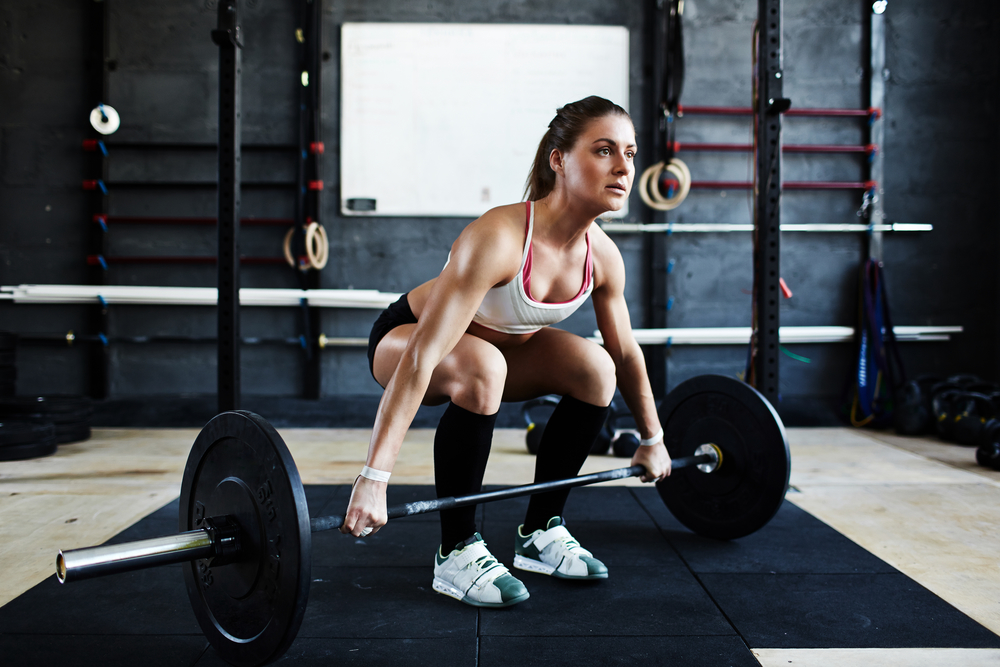
Deadlifts, many people do them, many variations exist, and many people get hurt. It is a great exercise, and many people call it the king of exercises because of its functionality and how many muscle groups it activates.
The deadlifts we utilize at the gym
Kettlebell Deadlift
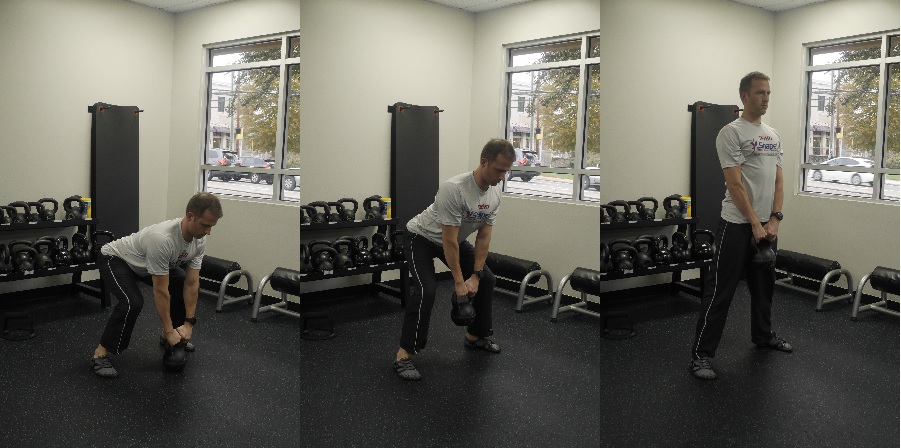
The kettlebell deadlift is done…drumroll…with a kettlebell or two. I know, this came as a big surprise. The advantage of the kettlebell deadlift is that it can help teach a great hip hinge (the thing where your rear shoots out to the back like you are trying to touch the wall behind you) because of the kettlebell placement.
The disadvantage of the kettlebell deadlift is the limited weight. Most gyms don’t have heavy kettlebells (>80 lbs), and you may hit your limit. The kettlebell deadlift is to some extent similar to the sumo deadlift.
Trap Bar Deadlift
This is a great tool for our clients and people like myself that physiologically do not have the range of motion to perform a deadlift well with a barbell off the ground. The trap bar deadlift can 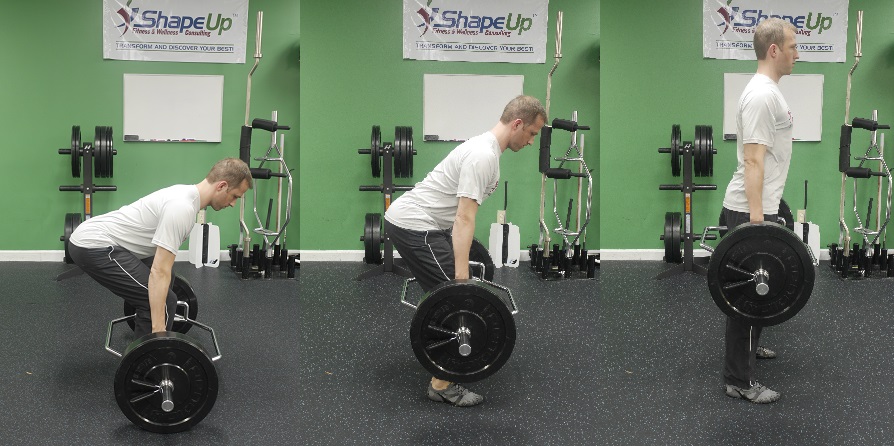 also be an excellent tool for taller people who struggle with a barbell for the same reason. You can have more of a squatting movement with the trap bar set low, or choose more of a hip hinge movement with the bar set higher.
The hand positioning and the shape of the bar make the movement easier. The results are similar to a regular deadlift, and it seems that back pain is less prevalent with a trap bar and since we don’t prep people for powerlifting competition who gives a hoot about which bar I use as long as the results are the same?
Regular Deadlift
The original, best, and the movement some “meatheads” will tell you that if you don’t do twice your body-weight you are not a man. I wonder where they came up with that arbitrary number, but I digress; let’s go back from “real men” to regular people with smaller egos who want to feel healthy and fit. The deadlift is a great exercise but caters to people with relatively short legs and torso compared to arm-length.
Hey, it is simple biomechanics, longer arms and shorter legs mean you don’t have to pick it up as high. That fact puts people like me who are lanky, have long legs, regular wingspan and long torso at a disadvantage, add in a hip position that does not allow me to squat low in a narrow stance, and I am screwed.
For this reason, I have Troy, one of my personal trainers, demonstrate the movement since it works well for him.
Make sure to figure out if this is for you. The form is everything. Videotape yourself from the side, or have a friend do it. Do it without a shirt if possible, or tight-fitting clothes. It will make all the difference to see.
Sumo Deadlift
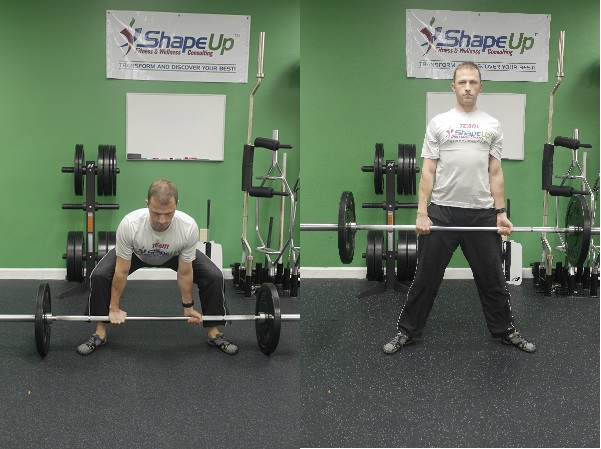
I guess people connected the dots and realized that the way up is longer with your stance more narrow and the hand outside of your legs like in the regular deadlift. Taller people often like this deadlift much more than the regular one, because the hand position is inside of the legs, the legs are further apart, and the feet are more rotated externally, which also increases the use of adductors during the movement.
Single Leg Deadlift
The single leg deadlift is a phenomenal tool to balance out leg strength, and for overcoming the bilateral deficit. Huh? What does that mean? The bilateral deficit means that doing an exercise with two legs is less efficient than doing it with one leg. An example would be you performing a deadlift at let’s say 250 lbs but being able to do it single legged with 145 lbs. You can see that the difference is significant – if you added the weight lifted unilaterally, together you would be doing 290 lb deadlifts. Training unilaterally can help you tax individual muscle groups more and redu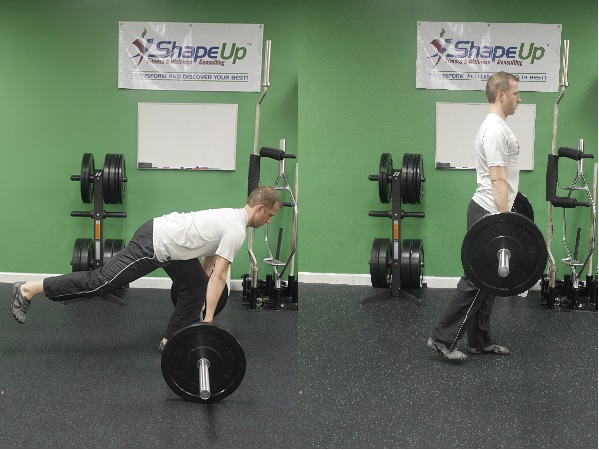 ce the impact on other parts of your body like the back, etc. You can do the single leg deadlift with a landmine attachment, kettlebells, dumbbells, cables, chains, medicine balls, barbells and who knows what else. Some of those tools have an impact on how forces work on your body. A cable, for example, moves the weight more forward on your foot, which will force your quads to work more.
So after reviewing all these basic variations on a deadlift briefly, the question is: Which one to do?
I teach with the kettlebell deadlift at first and then progress to the trap bar deadlift. Unless there is a competition reason, I rarely teach the regular one. The sumo deadlift I add in later. The single leg deadlift, being relatively difficult due to the balancing act, I add in as quickly as possible as a basic movement un-weighted before incorporating it into the training program. It’s a powerful movement that reduces any impact on the spine, and I love it for my clients. Aesthetically speaking, it helps develop nice glutes and can balance out asymmetries.

