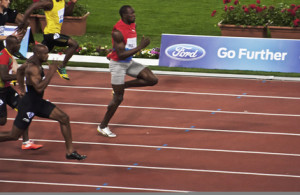
Over the past couple of years interval training has become progressively more dominant versus the old habit of spending hours on the treadmill or elliptical!
The short answer is yes and no. Hours of steady state cardio is good for some, bad for others and a waste of time for the third group.
So, what does science have to say?
Science’s approach to cardiovascular training
Older clients with stroke and hemiparetic (weakness on one side of the body) gait
people with severe left ventricular function can improve their cardiovascular fitness significantly without increasing their morbidity.
clearly improve after 6 months of cardiovascular training.
cardiovascular training reduces systolic and diastolic blood pressure
it significantly increases HDL levels
it lower LDL
aerobic exercise can have positive effects on protein synthesis in older adults
What is my take on it?
If you are training for endurance races regular aerobic exercise in the steady state range is probably a crucial component to your success and should stay a part of your training regimen.
If you are looking to lose weight then you might be better of doing some high intensity interval training sessions. They have a bigger bang for the buck. If you have more time you are welcome to add some steady state cardiovascular training but be aware that a lot of it will negatively impact your strength training routine.
If you are looking to improve your health markers aerobic trainingis a crucial component, especially in people with already impaired health. Even low intensities seem to have a beneficial effect on health and should not be overlooked.
Being physically active is great! Adding a steady state training to your routine could be a good balance to your HIIT training and strength training if you look to improve your general fitness even more
I hope this was helpful,
Have a great day,
Michael
References:
Blumenthal, J. A., Emery, C. F., Madden, D. J., George, L. K., Coleman, R. E., Riddle, M. W., … & Williams, R. S. (1989). Cardiovascular and behavioral effects of aerobic exercise training in healthy older men and women. Journal of gerontology, 44(5), M147-M157.
Conn, E. H., Williams, R. S., & Wallace, A. G. (1982). Exercise responses before and after physical conditioning in patients with severely depressed left ventricular function. The American journal of cardiology, 49(2), 296-300.
Cornelissen, V. A., & Fagard, R. H. (2005). Effects of endurance training on blood pressure, blood pressure–regulating mechanisms, and cardiovascular risk factors. Hypertension, 46(4), 667-675.
Macko, R. F., DeSouza, C. A., Tretter, L. D., Silver, K. H., Smith, G. V., Anderson, P. A., … & Dengel, D. R. (1997). Treadmill aerobic exercise training reduces the energy expenditure and cardiovascular demands of hemiparetic gait in chronic stroke patients A preliminary report. Stroke, 28(2), 326-330.
Short, K. R., Vittone, J. L., Bigelow, M. L., Proctor, D. N., & Nair, K. S. (2004). Age and aerobic exercise training effects on whole body and muscle protein metabolism. American Journal of Physiology-Endocrinology and Metabolism,286(1), E92-E101.
High Intensity Interval Training (HIIT) – just another fad?
HIIT is commonly used in training programs that promote fat loss as well as in sports performance training for team sports and track events. Most of our personal training clients utilize it to boost their metabolism for fat loss. HIIT training is usually signified by short intervals (<3 min) that are repeated 6-15 times. The rest periods between the intervals vary and range anywhere from 10s to 3-5 min. What does research say about HIIT training?
Science Talk: Effects of HIIT
Just six weeks of 3 HIIT training sessions per week seem to have a positive impact on VO2 and aerobic performance.
Break length does not seem to be as important when it comes to the VO2peak improvement, resulting sprint performance or muscle Na+,K+-ATPase content.
Really short breaks (10s) between 80 m sprint intervals seem to improve the performance over 200-300m distance more than breaks of a length of 60s. Both significantly improve the sprint performance over 100-300m.
12-15x15s runs at 120% of maximal aerobic speed alternating with 15s of rest and and 12-15×40 m all out runs with 30s rest improved the aerobic capacity of soccer players after 10 weeks by around 18% and the sprint time was decreased by 23.5%
High intensity interval training seems to have considerable better effects in patients with a stable postinfarction heart failure than moderate continuous training. Not only did the researchers note positive cardiovascular but also peripheral adaptations in the muscle cell with higher mitochondrial activity.
HIIT seems to stimulate mitochondrial biogenesis in human muscle.
HIIT reduces insulin resistance in muscle cells.
HIIT increases Human Growth Hormone in men and women.
HIIT seems to have a bigger impact on body fat markers than moderate continuous training
It makes you smarter, well not quite, but sprints seem to increase the release of BDNF (brain-derived neurotrophic factor), dopamine and epinephrine. BDNF is like miracle-grow for the brain and can lead to formation of new brain cells in the hippocampus. Increased dopamine and epinephrine levels help to form stronger mid-term and long-term memories. Steady state cardiovascular training seems to help with BDNF release after 5 weeks of training.
Interval training seems to help with peripheral nerve damage repair whereas continuous exercise does not seem to have the same effect.
What does that mean for you?
Unless there is a medical contraindication HIIT can be a useful tool for you to accomplish numerous things. The best part is, it does not take long and you only have to do it 2-3 days a week. That seems like a win:win situation to me. Here is your take-home message:
Fat Loss & General Fitness: Now this gets interesting. The increased oxygen consumption after finishing a HIIT workout combined with the adaptations in muscles, and the reduced insulin resistance can help you shed those last extra pounds you were looking to get rid of. The increase in HGH helps with fat and sugar metabolism and improves muscle growth.
Sports Performance: HIIT can give you the conditioning edge that you have been seeking in your sport. It improves your cardiovascular and anaerob abilities.
Your Brain: It seems that cardiovascular activity, especially HIIT have a miracle-grow effect on your brain. You are actually capable of forming new brain cells, improve your retention rate when studying. Especially for students, or the older population threatened by Alzheimers and age related dementia these findings can have an enormous impact.
Nerve Healing: If you have peripheral nerve damage, HIIT might just increase your healing rate.
Now go out and do some intervals.
Please let me know if you have any questions,
Michael
References:
Boutcher, S. H. (2010). High-intensity intermittent exercise and fat loss. Journal of obesity, 2011.
Dupont, G., Akakpo, K., & Berth0in, S. (2004). The effect of in-season, high-intensity interval training in soccer players. The Journal of Strength & Conditioning Research, 18(3), 584-589.
Felsing, N. E., Brasel, J. A., & Cooper, D. M. (1992). Effect of low and high intensity exercise on circulating growth hormone in men. The Journal of clinical endocrinology and metabolism, 75(1), 157-162.
Gibala, M. J., & McGee, S. L. (2008). Metabolic adaptations to short-term high-intensity interval training: a little pain for a lot of gain?. Exercise and sport sciences reviews, 36(2), 58-63.
Griffin, É. W., Mullally, S., Foley, C., Warmington, S. A., O’Mara, S. M., & Kelly, Á. M. (2011). Aerobic exercise improves hippocampal function and increases BDNF in the serum of young adult males. Physiology & behavior,104(5), 934-941.
Edge, J., Eynon, N., McKenna, M. J., Goodman, C. A., Harris, R. C. and Bishop, D. J. (2013), Altering the rest interval during high-intensity interval training does not affect muscle or performance adaptations. Experimental Physiology, 98: 481–490. doi: 10.1113/expphysiol.2012.067603
Wideman, L., Weltman, J. Y., Hartman, M. L., Veldhuis, J. D., & Weltman, A. (2002). Growth hormone release during acute and chronic aerobic and resistance exercise. Sports Medicine, 32(15), 987-1004.
Pincivero, D. M., Lephart, S. M., & Karunakara, R. G. (1997). Effects of rest interval on isokinetic strength and functional performance after short-term high intensity training. British journal of sports medicine, 31(3), 229-234.
Sabatier, M. J., Redmon, N., Schwartz, G., & English, A. W. (2008). Treadmill training promotes axon regeneration in injured peripheral nerves. Experimental neurology, 211(2), 489-493.
Saraslanidis, P., Petridou, A., Bogdanis, G. C., Galanis, N., Tsalis, G., Kellis, S., & Mougios, V. (2011). Muscle metabolism and performance improvement after two training programmes of sprint running differing in rest interval duration. Journal of sports sciences, 29(11), 1167-1174.
Tremblay, A., Simoneau, J. A., & Bouchard, C. (1994). Impact of exercise intensity on body fatness and skeletal muscle metabolism. Metabolism, 43(7), 814-818.
Winter, B., Breitenstein, C., Mooren, F. C., Voelker, K., Fobker, M., Lechtermann, A., … & Knecht, S. (2007). High impact running improves learning. Neurobiology of learning and memory, 87(4), 597-609.