...
Nutrition Consultation at Shape Up Fitness & Wellness Consulting

Food Sensitive? An Elimination Diet Might Help

According to Berardi & Andrews (2013) 3 out of 4 people have some form of food intolerance. These food intolerances are uniquely individual, some of which are benign, while others can lead to serious gastro-intestinal distress, hives, headaches, ulcers, stuffy nose, mucus build up in the lungs, etc.

If you suspect that you have some of these issues and want to address them, you can have yourself tested in a lab for a lot of money. I am not judging it. It is a legit path but the food elimination diet is still the gold standard.

If you want to figure out if you have issues with some of the most common food allergies and intolerances you need to be aware of them:

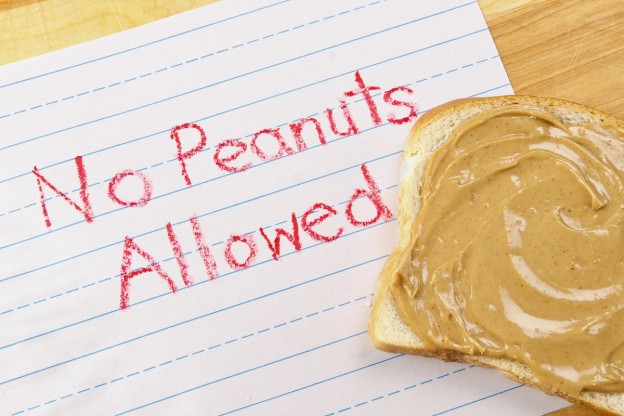
Common food allergies

  • in adults:
    • eggs
    • milk
    • fish
    • nuts
    • corn
  • in children:
    • eggs
    • milk
    • wheat
    • nuts
    • soy

Common food intolerances

  • gluten
  • dairy
  • fructose
  • yeast

Food allergies are the worse of the two. Some of you might have been hospitalized because allergies to certain foods but that does not mean that food sensitivites or gastric reactions do not have severe impacts on someone’s life.  Here are just some of the disorders and diseases caused or impacted by food sensitivities are:

  • asthma
  • autoimmune disorder
  • skin conditions
  • arthritis
  • ADD / ADHD
  • etc.

After you have removed the most common causes for food sensitivities, allergies for six to eight weeks you reintroduce them one by one. You might find out that you actually got rid of the issues. If your problem reappears you can simply remove the food from your diet and you should no longer have any issues.

Going in depth

I do not need to reinvent the wheel. Berardi wrote an excellent article with explanation on how to proceed best with food sensitivites. Here is the link to his article. Precision Nutrition: Elimination Diet.

Make sure to talk to your healthcare professional before embarking on this endeavor.

Yours in health & fitness,

Michael

Shape Up Fitness & Wellness Consulting as the leader in weight loss & personal training in Charlotte

Fat or Carbs – What is the superior food source?

We have come more and more to believe that we need to cut out a certain food from our diet in order to improve our performance. Some ultra-marathoners go so far to have a ketogenic diet (30-50gs of carb/day).

We face a couple of problems here. I think and Mike T. Nelson PhD made a good argument for it as well that both carbohydrates as well as fats play an important role in our life depending on our activity level.

There is no research that is able to tell you that a ketogenic diet is better able to produce power & strength. I think along the line of Nelson who says that the emphasis should be the ability to switch from one metabolism to another based on the energetic needs at the moment. So let’s look at what that means for most of us:

How to approach carbs and fats in daily life:

If you are a typical woman or man who works out a couple of times a week but is primarily sedentary (anyone with an office job for example) then you should consider this approach:

Have some complex carbohydrates (pasta, rice, potatoto, sweet potatoes) or some fruit (banana, apples, etc.) before and/or after the workout with some protein (greek yogurt, meat, poultry, fish, whey protein) in order to speed up recovery.

Once you go back to your usual daily activity it is time to switch back over to the fat burning mode. Reduce the carbohydrate intake and focus on protein and fats. Most like you will end up with a diet that consists of 30-40% carbs, 20-35% protein and 30-50% fat intake.

If you want to gain some serious muscle mass

If you are looking to gain some serious muscle mass then you won’t be able to stick with an hypo-caloric diet unless you are a total beginner. You would start to compromise muscle synthesis. In order to build something you will have to have the nutrients to put it together, and the energy to work hard to have the stimulus. Cutting your carbohydrate intake at that point too low will be detrimental to your workout performance, since carbohydrates are major players in anaerobic, alactic and lactic metabolic processes necessary for power & strength.

06Your nutrient intake will have to be about 18-20 kcal/current lbs body weight. What does that mean in a practical sense:

A woman weighing 120 lbs looking to gain lean muscle mass, working out 3-4 times a week will have to take in between 2160-2400 kcal/day. Going by the lower number with the above mentioned percentages this means:

  • 162g of carbohydrates (30%)
  • 135g of protein (25%)
  • 108g of fats (45%)

A man weighing in at 170 lbs with the same workout frequency will have to take in about 3060-3400 kcal/day. So what does that mean for this man in regards to macro nutrients? Again we use the lower number for calculation

  • 230g of carbohydrates (30%)
  • 191g of protein (25%)
  • 153g of fat (45%)

You can clearly see that this is not a diet that is low on fat or on carbohydrates. This diet is designed to optimize the performance. This is not optimal for everyone but just an example. Nutrition like that should be modified for each individual depending on goals and body types.

Nutrient timing can be an important game changer in your pursuit for excellence.

Have an awesome day,

Michael


Nutritional Advice at Shape Up Fitness & Wellness Consulting

When should I eat? How much should I eat? When should I stop eating?

Many of our personal training clients seeking weight loss ask us questions like these:

  • Should I eat breakfast
  • What should I eat for breakfast
  • Can I skip lunch?
  • Should I not eat after 6 or 7 pm?

Should I eat breakfast if I want to lose body fat, or can I just skip it?

That is actually an excellent question. As you can see with Intermittent Fasting skipping breakfast can be actually beneficial for some people in order to lose body fat and improve their body composition.

On the other hand, some people skip breakfast and then just wolf down so much food in the following meals that it not only offsets their skipped breakfast but they super-compensate.

Conclusion: If you want to follow an intermittent fasting diet, make sure that you plan it out properly.  At the same time skipping a meal here and there will not do you any harm as long as you don’t go off the rails because of it.

I have decided I want to eat breakfast but don’t know what to eat

Breakfast seems to be difficult for many people and one approach hardly fits everyone. We like to tell people that your dinner and your breakfast could look pretty much identical. Veggies, protein and some starchy carbs if you have worked out prior to breakfast.

The problem with that suggestion is simple. Some people cannot do it. We need to adjust for that. Some breakfast options that are healthy are the following:

  • plain Greek yogurt or regular yogurt, some frozen fruit w/ raw honey (1 1tsp)
  • whey protein mixed with almond milk, one serving of fruit and possibly one Tbsp of almond butter or peanut butter
  • omelet or egg muffins with spinach, bell peppers, mushrooms, onions, maybe some meat
  • sauteed veggies with some stir fry meat
  • veggie pan cakes with some scrambled eggs.

Can I skip lunch?

I prefer for you not to skip lunch. Here is the reason why: Most people seem to completely derail in the afternoon or evening and start binging on crap food. Now I also understand that it is not always easy to get lunch in. Meetings, work, etc can get in the way. Have alternatives ready if you cannot tear yourself away for 10-15 min to eat your lunch:

  • Protein Bars: Even though I am not a big fan of them, they can be used for the occasional meal replacement. Look at the KIND bars or Quest bars. I personally don’t like them but as a quick fix on a stressful day they will do.
  • Green smoothie: if you have a thermos you can mix some whey protein with frozen fruit and some kale or other dark greens, almond milk or water and if you like the taste add some nut butter. You just covered protein, veggie and fruit intake for lunch and it is super healthy.
  • Nuts; All you have are some nuts? Well, that is better than nothing. Have some almonds or walnuts to get you safely across the food gap and have a later lunch.

Should I eat after 6 or 7 pm?

That is a pretty general question. If you are heading to bed 5 min later it is probably not a good idea to have a heavy meal just before then. I usually recommend clients to stop eating one to two hours prior to bed time. This way the body has time to digest and sleep quality is not necessarily impaired. Ingesting a heavy meal just before bed time can definitely mess with your sleep, especially if you have trouble sleeping to begin with.


Prep for outdoor activities at Shape Up Fitness & Wellness Consulting

Workout Alternatives For The Summer In Charlotte

Working out does not always need to be in a boring gym environment. Sometimes you need to change it up, especially if you want to do something with friends and family. Charlotte has a lot of things to offer. Maybe it is time to apply the fitness you have gained with your personal trainer or a friend to some other activities. Here are some of my favorites, well some I stole from clients :-).

  1. The Whitewater Center is a great place for hiking, mountain biking, rock climbing (artificial wall), flatwater kayaking, whitewater kayaking, zip lining, canopy tours, etc. There are a host of things to do.
  2. You can kayak or paddleboard on Lake Norman
  3. Inner Peaks is a great place if you love to rock climb or would like to learn how to. This indoor facility is great not only when it rains.
  4. Various parks in Charlotte. The greenway system has been built out quite a bit. Walking, running or even hiking through some of the parks is a ton of fun but they offer much more like tennis courts, basketball courts, playgrounds, baseball, etc.
  5. Crowder’s Mountain is a great a place to hike and get a good workout if you don’t mind driving 30-45 min depending on where you live in Charlotte.
  6. Defy Gravity or Sky High are great places if you enjoy a trampoline. There is one up near University area but I am sure there are similar places in town.
  7. Theme Races are more and more up and coming. May it be the Color Run, Spartan Races or Tough Mudder, or more you can always find something that is fun and low pressure.
  8. There are also flag football leagues, soccer leagues, etc. all over town.

There are a ton of things to do in Charlotte and the surrounding area. This is just a small number of the things you can do here in Charlotte.

Now go out there and play 🙂

Michael

Paleo diet products

Paleo Diet May Have Positive Effects On Metabolic Syndrome

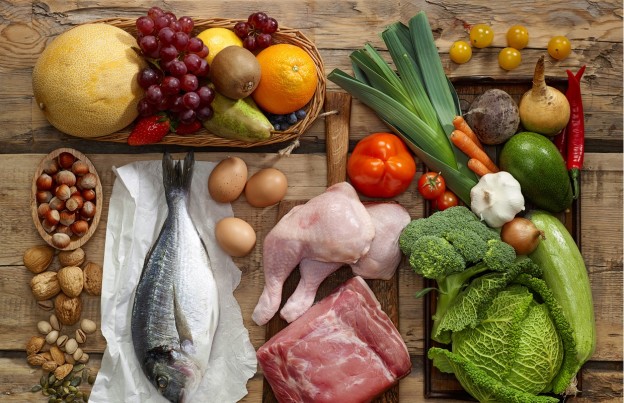
The paleo diet is an often discussed diet with clients and outside of the studio. Trial research has been looking quite favorable on the “paleo diet”. A recent study is looking at the effects of the diet on people with metabolic syndrome.

For those who don’t know what the metabolic syndrome is here is a quote from the mayo clinic:

Metabolic syndrome is a cluster of conditions — increased blood pressure, a high blood sugar level, excess body fat around the waist and abnormal cholesterol levels — that occur together, increasing your risk of heart disease, stroke and diabetes.

http://www.mayoclinic.org/diseases-conditions/metabolic-syndrome/basics/definition/con-20027243

Considering that more than 25% of the adult american population suffers in some form from the metabolic syndrome, this is a major issue.

The study done was a pilot study done on 32 individuals. 18 were assigned to the paleo group, 14 to the control group. The small number of people participating and the setting of the study should already warn us that this study does not provide conclusive, final results but a peek into what should be explored further.

Both groups ate 2080 kcal/day. The paleo group increased the amount of eggs eaten but did not have dairy, grains or legumes.

The results of this study were impressive: The paleo group consumed about 24% protein (vs 18%), 34% carbohydrates (vs. 53%) and 41% fat (vs 29%). The researchers goal was to avoid weight loss. Seven people in the paleo group needed to eat additional snacks versus 2 in the control group to avoid weight loss.

The paleo group outperformed the non-paleo group in just two weeks tremendously in all measured parameters: BW loss, reduction of systolic & diastolic BP, total cholesterol, triglycerides, increase in HDL, and improvement of metabolic syndrome.

Conclusion:

A diet is only as good as its sustainability. If you are not able to maintain it you are not going to be successful in the long run. The results in this pilot study are highly promising and show a lot of potential. The paleo diet has been extremely successful with clients that we have successfully employed it with in regards to weight loss and improvement of their metabolic syndrome. Do we recommend it to everyone? No, even not the people who have metabolic syndrome. Eating is more than choosing what we put in our mouth. A lot of emotional attachments play a role and what works for one person does not work for another.

Our recommendations are individualized but in general will lead to a minimally processed foods diet / paleo-esk diet in the long run if it is doable and sustainable for our client.

Have an awesome day,

Michael

Ressource:

Examine.com: Can the paleo diet make metabolic syndrome ancient history? Favourable effects  of consuming a Palaeolithic-type diet on characteristics of the metabolic syndrome: a randomized controlled pilot-study.

Seraphinite AcceleratorOptimized by Seraphinite Accelerator
Turns on site high speed to be attractive for people and search engines.