...
Marine Corps Marathon

Marine Corps Marathon 2018 vs 2013 – Attitude is Everything In Life

I am sitting here at my computer, and I can tell you, I am glad that I am because my legs are sore. Getting up and walking around is rather entertaining at this point. My calves and quads are screaming but I have a content smile on my face.

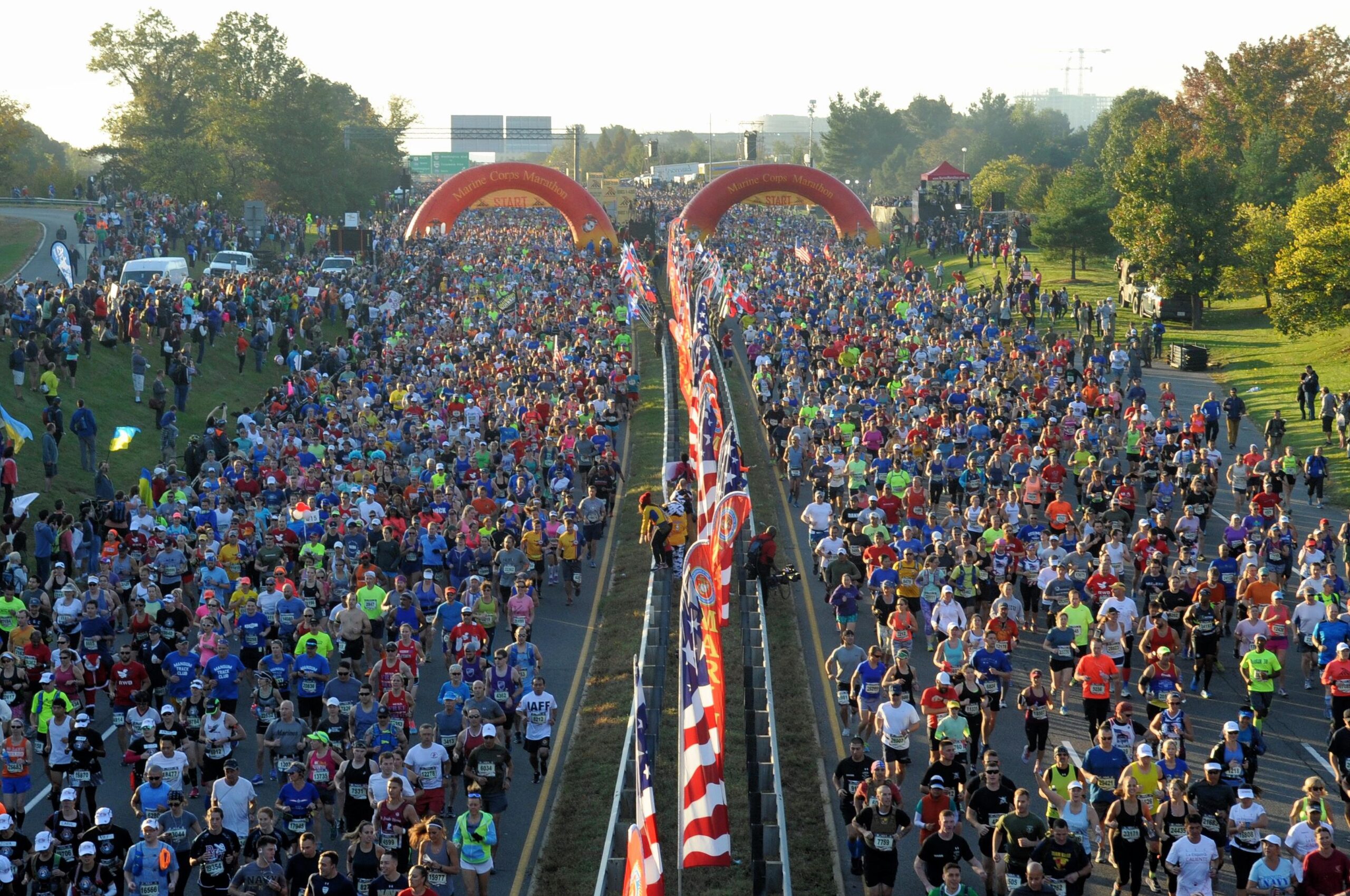
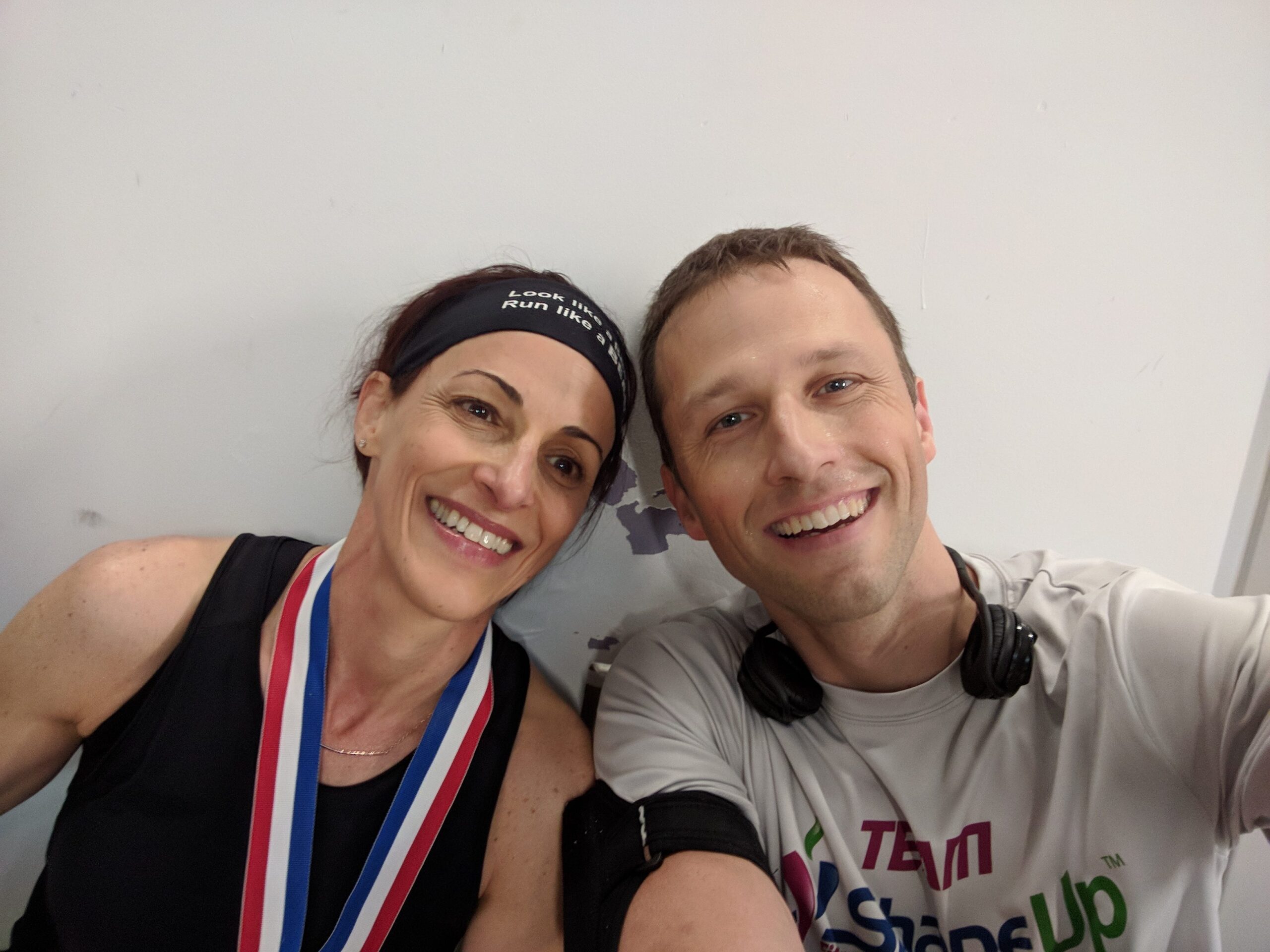
I ran the Marine Corps Marathon, the People’s Marathon, yesterday with two great friends. One finished her fourth Marine Corps Marathon and the first time after a knee replacement, while the other just started running and kicked butt in her very first race and 10k.

Both have come a long way. The recovery from knee replacement is not linear, like any injury recovery. “Melinda” as you may know her from my blog post about her knee replacement recovery is up and “running” today doing some sightseeing. She had finished the race in under 6 hours which was one of her goals. She was not in pain, even though she said she would never sign up for another marathon as she walked away from the finish line, and have heard that many times…from her…lol. I am so proud of her, what a wonderful accomplishment.

My other friend, Suzie,  hated running. She despised it for 42 years (she’s 42), and certainly never wanted to do it other than to run away from something dangerous :).  I had mentioned to her that I had signed up for the Marine Corps Marathon and asked if she wanted to come and check it out. Come to find out she hates being a spectator, and I suggested why not do the 10k. In the spur of the moment, she signed up and I was floored. Over the next 7 months, she followed a training plan I created for her that would ease her into running, and I constantly reminded her to have fun, to focus on enjoying the runs. After studying her early form, we realized she hated running because her form was so bad that she hurt constantly. Now she has admitted she has come to like running. Learning how to run properly made a big difference for her and the focus on enjoying it. She did her first race ever and ran it in under an hour.

Now to my race. I am a dad, I have a family, travel a lot to be with my family and have not nearly as much time as in 2013 or prior. I cannot and most importantly do not wa

nt to commit to 20 mile runs on the weekend. I run only 3 days a week, I feel my body does best with running that little and I prefer to lift weights and do martial arts to complement my fitness.

I am telling you this because I want to make it clear that none of the people involved in this story are elites, we are normal people who enjoy running, fitness and being healthy.

Melinda had shown me a newer training method from the Netherlands that relied on much shorter training runs, with 9 miles at the most, to get ready for a Marathon. I was really skeptical but willing to try it. The claim was that it was designed to help runners who run between 3-5 hour marathons. My fastest marathon had been 3:20 hours but that was the Marine Corps Marathon in 2013. We were now 5 years later and I had not been running nearly as much. I usually do intervals on Tuesdays and including warm up and cool down and end up at around 6 miles. On Thursdays, I run around 7 to 8 miles as a tempo run. If I do not have my youngest son, I do my long runs on Saturdays and run anywhere between 9-14 miles tops. My total mileage average is about 23 miles per week. That is very little compared to most runners and frowned upon if you are running a full marathon distance. I was overhearing people at the race running 70 miles a week. Bear in mind that I was able to hear them talk because I was running at the same pace as they were.

Runners are notorious for getting injured – 90% of runners get hurt. I have been a running coach for about 8 to 9 years and I can tell you that people are obsessed with their training plans when most should be obsessed with the way they run. 

The short story is that I finished the race in 3:35 hours despite little training mileage, having diarrhea before and during the race, having a potty break and leg cramps at mile 21. I am ecstatic and sore today, and that is fine by me. I always give everything I have in a race.

What is really important though, is that I loved the race. I loved the runners, the spectators, the support, everything. In 2013 I hated it, I hated life at mile marker 3. I just wanted to go home. Even though my race was slower yesterday, I stopped being obsessed with being faster and accomplishing some silly time goal, instead I made it my primary focus to enjoy myself and support other runners, so if you ran it and you saw a crazy maniac yelling out supportive comments to you and others, that might have been me.

Conclusion

You may have learned that

  1. Despite my blog post feeling like a rant, the conclusion is simple. You have three normal people here who have done something that you might not like and say you never would do. Just like in my story though, maybe it is time to stop saying never and step outside of your comfort zone. You don’t know what you might be missing. Just like my friend who started running despite hating it (btw, she already signed up for her next race…the day after this first 10l). Find something that is a little bit out of reach for you and try it.
  2. You are able to do something even though you think is impossible like having an active lifestyle after joint replacement surgery and feeling good doing it.
  3. Doing more is not always better and that giving your body the rest it needs and giving it quality workouts might be more important than volume.
  4. That attitude matters, that focusing on an end goal can rob you of the experience during the process and that the success is shallow afterward because it only lasts until your next end goal.

 

Personal Trainer In Charlotte NC

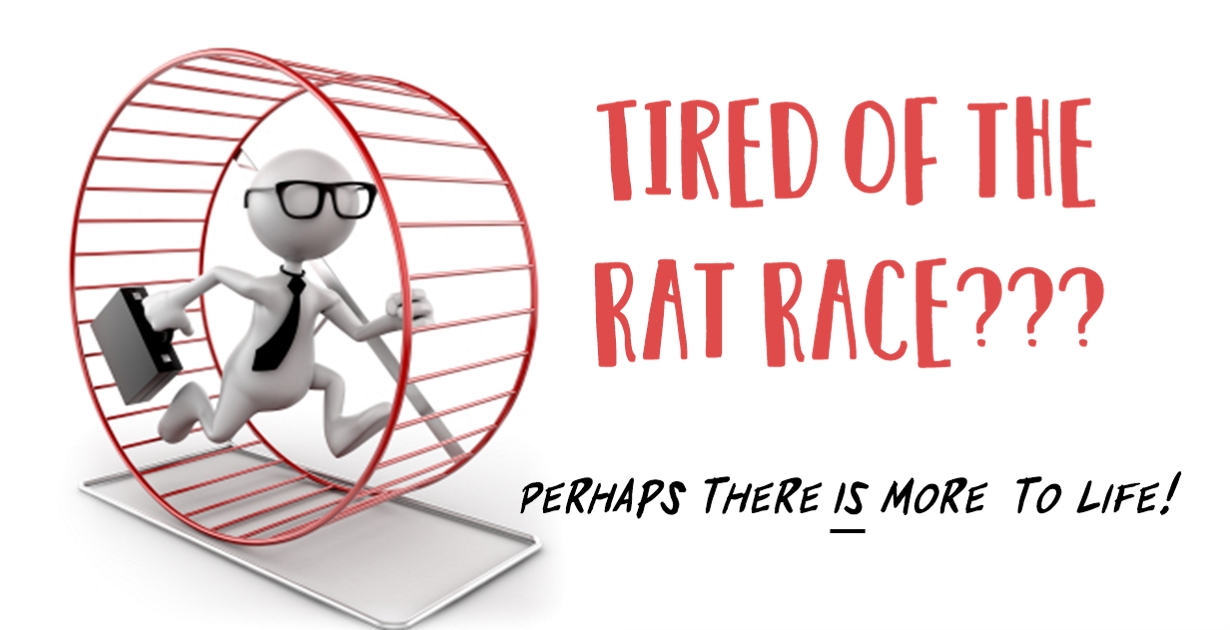
Time to Pause the Rat Race

Time to Pause

I am often caught in my own rat race. I get up between 4 and 5 depending on when I start work, head to my personal training studio in South Charlotte and start either training clients, myself or do administrative work.

The day is filled with clients, putting out fires, taking care of business and fretting over various things that I often have no control over.

I am bombarded with text messages, fake phone calls, sales calls, emails, offers, suggestions on how to run my business, life, health, and wellbeing every day.

At the end of the day, I can barely look straight; I am listening to an audiobook on the way home. The day has been long by the time I get home, and my sons get the last couple of percent of the energy that is left. My wife often receives nothing, but then she does not have much to give either at the end of her day.

On the weekends, I would spend time with my family and one or two choice friends. I would feel desperate to fill my life with things to do and have fun, feeling the need to catch up with life.

Before The Pause

Before I paused I did not think that anything was going on, after all, I was living my life just like everyone else, and since everyone else is in the same rat race, it seemed reasonable to me. I liked my life for the most part, or at least was content with it. Sure, I would have wanted to read more, have more energy and feel overall better, but everyone seems to struggle with those, and at least I can work partially from home, and only work from 5.30 am to 12.30 pm on Fridays, right?

The Pause

Beginning of June I went on vacation, the first extended vacation I have had in 5 years. I went back to see my family and had a time-out for about 3.5 weeks. I worked some but not nearly as much as I did prior. I was taken out of the rat race and plummeted straight into despair, depression, and unhappiness. If you followed my Instagram and Facebook account you were able to see all the fun highlights; few put their emotional ups and downs on a social media account, most people put their happy side forward, me including.

Being comfortable with being uncomfortable

It took me a good while, but having a wife who is getting her Ph.D. in Psychology, my background as a trainer, and coach and my continued education eventually led to me working through my feelings or rather accept them.

I realized that my constant listening to music, audiobooks, reading, etc. was just my effort to turn off my thoughts and feelings and overpower what is going on inside. I turned the outside volume up to not having to listen to the inside.


I have a lot of what I call white noise going on in my head. Stuff my mind comes up with that is random. My mind babbles, it worries and frets over the future and the past. I realized that my life in the USA or before that in Germany was built on overpowering that fretting by doing a lot. May that be the business or at home. I am just not good being with myself.

I realize more and more that it is essential to take a time-out. I know all about mindfulness, meditation and other things that I should be regularly doing and certainly am not doing as much as would be beneficial. There does not seem to be enough time in the day between work and family. I have become in many ways my client, I fell into the trap that I see so many of my clients in, daily. It is so much easier to understand other people’s issues than your own.

I had to get more comfortable being with myself, my thoughts, feelings, not judging them or giving them too much power. Wow, that is hard. I would lie if I told you I mastered it.

Being all Zen And All That

This is not about being zen, not letting stuff bother you but rather the opposite, I want to acknowledge my feelings without giving them the overwhelming power they have when I don’t deal with them for a prolonged period. It is okay for me to want to be busy, but also essential to listen to what is going on inside, accept it and be me. It makes me a happier person. With the words of Tara Brach, a psychologist: “This too, I accept, no matter if it is anger, fear, sadness, depression, low bank accounts, etc. I don’t have to like it, but I want to accept it as part of life.”

If I don’t, I lie to myself, try to gloss over it.   


Take Away

  • Taking 5 min 3 times a day to step away, no phone, or other distraction, just you
  • Take an afternoon  or 2-3 hours once a month to sit down and reevaluate your life
  • Take a vacation once a year for at least a week, even if it is at home and focus on yourself and the things that are important to you.


Personal Trainer Michael Anders

A Stair Race and the Perception of Can and Cannot Do

I am not a stair racer, I am not a runner, I am not a lifter and I am not a martial artist. Don’t get me wrong, I do all four of those things and the last three I am doing frequently but I do not identify myself as any one of those. Because my training is so diverse, I probably will never the fastest runner, accomplish the best lifts or master the martial arts I do. I run at a good pace, I have good lifts and I am good at martial arts, just not great.

After this rather lengthy intro, what is this blog post about? Like the title already stated, it is about can and cannot do and that you don’t have to be a master of anything to attempt something for the experience.

“Whether you think you can or whether you think you can‘t, youre right.” Henry Ford

I have a tendency to explore new things, try new things and discover the limitations of my body and mind. Some might think that it is not healthy, or that I am nuts, others think I have an obsessive need to prove myself. There is probably truth in all of those statements. May it be running a marathon, ultra-marathons, doing Spartan Races, carrying a client while doing Spartan Races or Stair Races or living outside of social norms in regards to my relationships, I have a tendency to go if not against the grain, then definitely at an oblique angle, lol.

What those things have taught me though is that exploring things that are slightly uncomfortable in the beginning, have led to fulfilling life experiences that I would have completely missed out on if I had not dared to try something that I was afraid of or uncomfortable with. I do not want to paint a picture of perfect bliss, there was sometimes a lot of discomforts or emotional distress but in the end, I have grown for it and not regretted it.

The day before the race

Michael, a friend of mine struggling with cerebral palsy, and I had signed up for this race a while back. I would do the race and then strap him on my back in a modified Molly-Backpack and do it again. I did it last year and it took me a grueling 30 min to get to the top with him. I was exhausted. The experience though had been great and we had been able to motivate a great number of people and received the warmest support and welcome ourselves. A beautiful thing.

This year would be different. Michael had to cancel short notice and let me know he would not be able to make it. In my head, there were thoughts of why should I go now? I am on a date and rather would sleep in the next morning. I decided to do the race anyway and told myself I just would have fun…fun climbing over 1195 stairs to the top.

Race Day

Suzanne Bergen, Linda Viner and me at the finish line

We made it pretty early to the race and I met a good friend and former client, Linda Viner, before the race. Having a decent time I had signed up as an elite and started at 8.30 am with some really fast people. What I loved the most was the caring for each other, nobody pushing for placement, everyone looking out not to be a hindrance for a potentially faster stair climber. Linda and I talked a little and she voiced her concerns about being nervous. This building was not her strong suit and had never felt great racing in it. We both agreed to have fun, be in the moment (heart pounding through the chest, lungs burning and thighs heavy as lead, lol…)

She took off before me, historically a faster racer than me by far, she is a competitive stair racer unlike me, I did not want to hold her back. 30s later it was my turn. The light turned green and got into the building. At first slightly disoriented, I had forgotten that the building has a stretch where I have to run a hallway, I finally found my rhythm.

Being in the moment is tough, thoughts start to wander, what if I cannot make this, what if I am slower than last year, what if I am holding the person behind me back….The race does not take very long from a runner’s perspective. Last year I had done it in 10:14 min but when your mind is going hard, while your body threatens you to quit (there is no downhill in a stair race, just up), 10 min seems like a long time and the numbers of the floors would pass more slowly over the course of the race.

Finally, I made it to the 50th floor and not seeing the timing chip line, kept running (call me Forrest Gump). Linda was already waiting upstairs and we chatted. She had a great race, she had crushed her previous record and felt like she had more in her. I looked at my time and knew I had been faster than my time from last year as well.

The Take Away

We all get distracted, every day, we continue to do so even while doing something that we might enjoy. The focus for me is to come back to the here and now. Acknowledge my fears, worries, and anxieties and make peace with them. They have proven false many times, there are no guarantees. Focus on experiencing the moment, being there and having an open attitude towards the experience. I won’t fool you. I am not like Henry Ford, I don’t think I can, but I think I might :).

What in your life occupies your thoughts, takes you away from the here and now and tells you that you cannot accomplish something? What if you thought you might?

Young woman having knee pain

Case study Melinda – Running a Marathon After Knee Replacement


Situation:

Melinda (name changed) had a knee replacement after struggling with arthritis for the past 15 to 20 years in her right knee. She had been a runner for a couple of years prior to coming to me.

Changes to her running gait and an aggressive strengthening program reduced the pain and enable her to run 4 marathons, several half marathons, a Dopey Challenge, etc.

Even though, changes to her running gait enabled us to continue running 4 about 4 to 5 years before the surgery was inevitable.


Complete Knee Replacement Surgery August


Melinda chose a surgeon who used a minimally invasive procedure that would avoid cutting the muscle tissue.


Post-surgery progress: for the first 3 weeks after surgery Melinda had to focus on regaining range of motion and minimizing the swelling. Driving was not possible yet, and physical therapy was done in-home.

After 3 weeks she started to work with me three days a week again for 60 minutes, as well as with a physical therapist 2 days a week.

After having a conversation with the physical therapist, I decided that the training for her knee replacement recovery needed to focus on several important areas:

  • An increase of range of motion of the knee in regards to flexion to 120-130 degrees as well extension to 0-1 degrees.
  • Improving the proprioceptive reflexes in the surgical leg. Every surgery, and especially replacement surgeries, destroy proprioceptive receptors in the affected tissue. Regaining those abilities is crucial to avoid further injuries in other joints above and below or on the other leg
  • Regaining the strength in the surgical leg as well as overcoming the mental hurdle of using that leg


Training

For the first 5 to 6 weeks off the training, we slowly increased the use of her leg primarily with bilateral exercises due to her inability to fully load the surgical leg.  As we progressed we increasingly focused on unilateral exercises closed kinetic chain exercises in order to minimize the deficit within the surgical leg.

Once a normal gait pattern was established again and the swelling caused by exercise was minimal, we started to reintroduce running patterns into the training.

These running patterns consisted of high knee running, high heels, side shuffle, heel to ball rolling patterns while walking, as well as focusing on Cross diagonal moving patterns with arms and legs.

Upon being able to execute these movements pain-free for a while we started to introduce run/walking back into the training program.

The duration of the run started between 20 and 30 seconds, while the walking interval was 60 seconds to 2 minutes. Even though her capability was higher than that, the goal was to be minimally fatigue only when running.

Throughout this phase, the strength training started to also slowly contain easy plyometric exercises.

Melinda completed her first half marathon after the surgery in the middle of November. She then proceeded to do the Dopey challenge in the beginning of January 2018. The Dopey challenge consists of a 5K, and 10K, 1/2 Marathon, as well as a Marathon on consecutive days.

Even though the healing process in the knee and the surrounding tissue had been going well, I opposed both race events.

The reason for my recommendation was that she had not built up the training mileage prior to the race and the likelihood of injury was too big. The concerned areas for injuries were not the actual knee replacement side, but the hip, the back, as well as the hip or the knee on the other leg.

Despite having worked hard to minimize the deficit on the right leg come on I did not feel confident in her ability to maintain an even running gait throughout the various races.

After the race series, she had only minimal swelling in the surgical leg which was to be expected and not all to worrying.  The problem was though, that she had a strong IT band issue on the left side as well as potential bursitis over the left trochanter major.

The recovery from those injuries took about 4 weeks and included absolutely no running, soft tissue manipulation by her and her massage therapist, and very careful leg training in order to minimize the impact on the site of injury.

We are now at week 5 after the race series and we will begin running again this week with a short distance of 1-2 miles at the most.


Outlook

To minimize further injuries the reintroduction into running will have to be slow. Both legs need to be equally strong and her running movement patterns need to be consistent even when fatigued.

Her strength training will continue to focus on movement education, proprioceptive training, light plyometrics, consistent strength training with a heavy focus on single leg training and hip stabilization.

Her run training will include running drills and a slow increase in her mileage. The goal will be to run a Half Marathon in May/June and a full Marathon end of October.


Conclusion


Running with a total knee replacement is perfectly possible if handled responsibly. Above you see the approach I have used. You cannot control the client and you can see that being too hasty to get back to race events led to consequences.

Having said that, her tenacity and willingness to work hard in physical therapy and personal training led to an incredibly fast recovery. It is amazing what you can accomplish with an exceptional work ethic.

Her physician had approved of her running marathons again.

Seraphinite AcceleratorOptimized by Seraphinite Accelerator
Turns on site high speed to be attractive for people and search engines.