Skip to content
Why Your Achilles Pain Keeps Coming Back
Achilles tendon pain is one of the most frustrating overuse problems I see, especially in runners, hikers, and active adults who are trying to do the right thing and still can’t seem to get rid of it.
For most people, the default plan is simple: rest until it stops hurting.
And to be fair, that can calm symptoms down for a little while. But in many cases, it does not actually solve the problem. In fact, complete rest often sets people up for the exact pattern they are trying to avoid: pain goes away, activity resumes, and the pain comes right back.
I see this all the time with people training here in Charlotte. They back off completely, feel better after a week or two, then go for a run on the greenway, take a long walk, do a hard workout, or head out for a hike, and the tendon flares up all over again.
That does not necessarily mean the tendon is permanently damaged. More often, it means the tissue was no longer irritated, but it also was not prepared for the load you asked it to handle.
The Common Misunderstanding
A lot of people assume tendon pain is mainly an inflammation issue.
The thought process usually goes like this:
Pain means inflammation.
Inflammation means rest.
Once pain settles down, the tissue must be healed.
The problem is that Achilles tendon pain often does not work that way.
While inflammation can play a role, Achilles tendinopathy is usually more about load capacity, tendon remodeling, tissue sensitivity, and whether the demands you place on the tendon are greater than what it is currently prepared to tolerate.
That is a very different problem than “just let it calm down.”
What May Actually Be Going On
In many cases, Achilles pain is better understood as a load management and capacity problem than a simple inflammation problem.
A few things are usually involved:
- how much load the tendon can currently tolerate
- how well the tendon has adapted to recent training or activity
- whether the tendon is being irritated more by tensile load, compression, or both
- how sensitive the tissue and nervous system have become
- whether daily or weekly demand keeps exceeding the tendon’s current capacity
That is why two people can both have “Achilles pain” and need somewhat different strategies.
Why Complete Rest Often Backfires
One of the most important concepts here is load tolerance.
Load tolerance is simply the amount of stress a tissue can handle before it starts to get irritated.
When your Achilles is painful and you fully stop loading it, symptoms often improve. That part makes sense. But at the same time, the tendon is no longer getting the mechanical input it needs to maintain capacity.
Tendons are not like batteries that recharge best by doing nothing. They are living tissues that respond to appropriate stress. When you underload them for too long, they can become less prepared for the demands of real life.
So yes, pain may decrease with rest. But capacity can decrease too.
That is why so many people get trapped in this cycle:
Pain.
Rest.
Feel better.
Return to activity.
Pain again.
This is the same basic issue I wrote about in Why Your Knee Pain Is Probably NOT a Strength Problem. People often assume the answer is just less pain or more rest, when the real issue is that the tissue is not prepared for the load being put on it.
Tendons Need Load, but the Right Amount
Healthy tendons adapt to loading. With appropriate mechanical stress, they can become stiffer, stronger, and more resilient over time.
But there is a catch: tendons adapt slowly.
Muscle can respond relatively quickly. Tendon usually takes much longer. Meaningful tendon adaptation often takes weeks to months, not days. That is one reason people get impatient and either do too little for too long or too much too soon.
If the tendon is underloaded, capacity tends to decline.
If the tendon is overloaded, symptoms often flare and healing can be disrupted.
The goal is to find the middle ground where the tendon is challenged enough to adapt, but not hammered so hard that it keeps getting irritated.
That is where good rehab and smart programming matter.
Tendon Remodeling and “Failed Healing”
Tendons are constantly remodeling in response to stress.
In a healthy situation, that remodeling process supports collagen turnover, fiber alignment, and tissue resilience. But when loading becomes excessive, too repetitive, poorly timed, or not matched with enough recovery, the tendon can shift away from healthy adaptation and toward a failed healing response.
That is where you start to see changes in the tendon itself, including collagen matrix disruption, altered cellular behavior, vascular changes, and changes in how the tissue responds to load.
This is one reason why simply waiting for pain to disappear is often not enough. Symptoms may settle before the tendon has rebuilt the load tolerance needed for training, running, hiking, or even long periods on your feet.
Why the Location of Pain Matters
Not all Achilles pain behaves the same.
Insertional Achilles Tendinopathy
If the pain is right down near where the tendon attaches to the heel bone, compression often plays a bigger role. These cases are commonly aggravated by deeper ankle dorsiflexion, especially when the tendon is being compressed against the calcaneus.
In these cases, early management often goes better when people avoid:
- aggressive calf stretching
- deep dorsiflexion positions
- heel drops below neutral
- exercises that repeatedly compress the tendon at the insertion
Sometimes a temporary heel lift can also help reduce irritation.
Mid-Portion Achilles Tendinopathy
If the pain is higher up in the tendon, a few centimeters above the heel, this is more often a mid-portion issue. These cases are usually more tension-dominant and often respond well to progressive tensile loading, including heavy slow resistance and eccentric-based work when used appropriately.
This distinction matters because what helps one presentation can aggravate another.
Pain Is Not Just About Structure
Another piece people miss is tissue sensitivity.
Pain is not always a direct measurement of damage. Once a tendon has been irritated repeatedly, the tissue and nervous system can become more sensitive. That means loads that used to feel fine may suddenly feel threatening or painful.
This often creates a bad cycle:
- pain increases
- people become cautious or fearful
- loading drops too much
- capacity falls further
- normal activity becomes irritating again
That is one reason tendon rehab is not just about making pain disappear. It is about gradually restoring confidence and rebuilding the tissue’s ability to handle load again.
You could also internally link here to your pain article: Pain Is Gain… Or Is It?
Capacity vs. Demand
This is the simplest way to think about most chronic Achilles problems.
Pain often shows up when the demands on the tendon regularly exceed its current capacity.
That can happen because of a sudden spike in training. It can happen because someone was inconsistent and then had one big weekend of activity. It can happen because they rested too long and lost tolerance. It can also happen because recovery, sleep, age, training structure, footwear changes, hills, sprinting, or volume progression were not managed well.
The tendon is not necessarily “fragile.” It is just being asked to do more than it is ready for.
Real-World Examples
I see this pattern in a few common groups.
The Runner
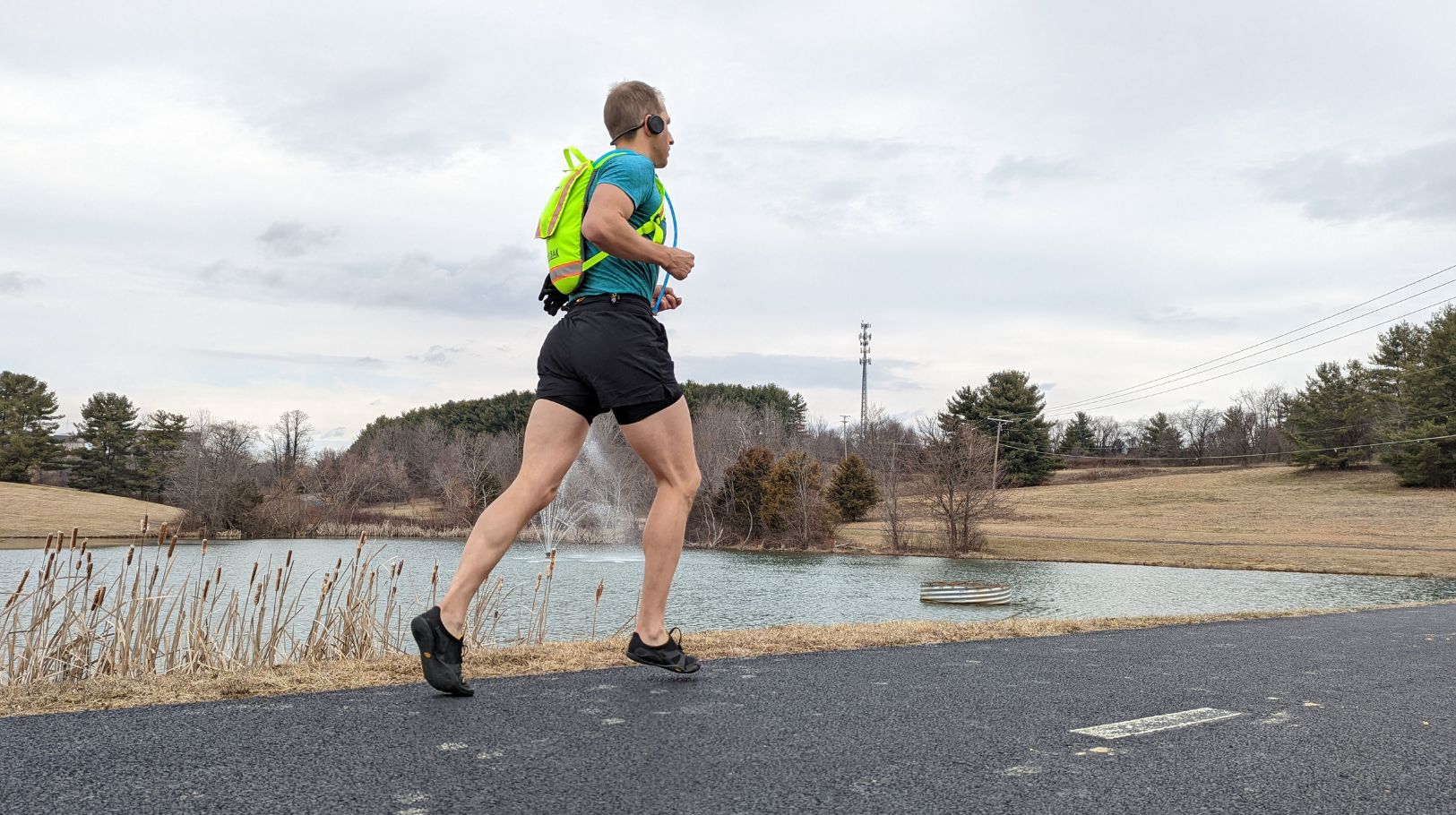
They feel a little Achilles pain, shut everything down, wait until it calms down, and then jump right back into the same pace, mileage, or hills that irritated it in the first place.
The Walker or Hiker
They are mostly fine in daily life, then go do a long walk, a hiking trip, or a big day outdoors without enough preparation. Around Charlotte, that might mean someone feels okay during the week and then overloads the tendon with a long outing after doing very little tendon-specific preparation.
The Weekend Warrior
Low activity Monday through Friday, then intense tennis, pickleball, yard work, hiking, or bootcamp-style exercise on the weekend. The tissue never really builds enough consistency to stay ahead of the demand.
What Actually Helps
In most cases, the answer is not endless rest and it is not just pushing through pain either.
What usually works better is a more structured approach:
1. Progressive loading
The tendon needs load to rebuild capacity. That loading has to be dosed appropriately and progressed gradually.
2. Better load management
You do not want huge spikes in volume, intensity, hills, speed, plyometrics, or weekend activity before the tendon is ready for them.
3. The right exercise selection
Isometrics, heavy slow resistance, and eccentric-based approaches can all be useful, depending on the presentation and the stage of irritation.
4. Recovery
Sleep, recovery, training frequency, and overall life stress matter. This becomes even more important with age, high training volume, or a history of repeated flare-ups.
5. Patience
This is the hard part. Tendon rehab usually moves slower than people want. You are not just trying to get out of pain. You are trying to build a tendon that can actually tolerate life and training again.
The Bigger Reframe
Achilles pain is often not just an inflammation problem.
It is usually a capacity problem.
Rest may reduce symptoms for a while, but load is what helps rebuild resilience. That does not mean reckless loading. It means intelligent, progressive loading with enough patience to let the tendon adapt.
Recovery is rarely perfectly linear. Small flare-ups do not always mean you are going backward. What matters more is the overall trend over time: Is the tendon gradually tolerating more?
That is the question that matters.
Need Help With Achilles Pain in Charlotte?
If you are dealing with recurring Achilles pain and you are tired of the cycle of resting, feeling better, and getting hurt again, I can help.
At Shape Up Fitness & Wellness Consulting, I work with active adults in Charlotte who want to rebuild strength, improve load tolerance, and get back to running, training, hiking, and daily life with more confidence.
If you want help figuring out whether your issue is more related to load management, tendon capacity, exercise selection, or overall programming, you can schedule a consultation here.
About the Author
Michael Anders is a Specialist Personal Trainer for Adults Over 40 and owner of Shape Up Fitness & Wellness Consulting in Charlotte, North Carolina. He specializes in helping active adults rebuild strength, improve movement, and return to training after injury setbacks.
Disclaimer
This article is intended for educational purposes only and does not constitute medical advice, diagnosis, or treatment. Individual conditions vary, and persistent or worsening symptoms should be evaluated by a qualified healthcare professional. Always consult your physician before making changes to exercise or rehabilitation programs.
Further Reading / Evidence Sources
Merry, K., Napier, C., Waugh, C., & Scott, A. (2022). Foundational Principles and Adaptation of the Healthy and Pathological Achilles Tendon in Response to Resistance Exercise. Journal of Clinical Medicine, 11.
Matsui, T., & Tanaka, Y. (2025). Pathophysiology and healing of insertional Achilles tendinopathy. Journal of ISAKOS.
Fang, Y. et al. (2024). Collagen denaturation in post-run Achilles tendons. Science Advances.
Schulze-Tanzil, G. et al. (2022). Tendon healing mechanisms. Bone & Joint Research.
Pringels, L. et al. (2022). Intratendinous pressure changes. Scandinavian Journal of Medicine & Science in Sports.
Bohm, S., Mersmann, F., & Arampatzis, A. (2015). Human tendon adaptation. Sports Medicine – Open.
Pierantoni, M. et al. (2023). Tendon alterations with reduced loading. Acta Biomaterialia.