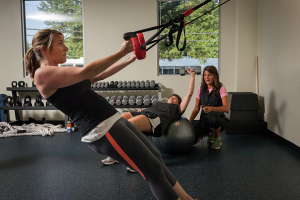
We hear this more and more often. The body part that people focus on changes over time. Lately it has been all about the butt. Some men & women claim they cannot have a toned, shapely butt. I have one client & friend who even jokes around saying that she lost her butt working out with me, when in truth she has a very trained, athletic behind that is rounded but certainly anything but big!
We have to differentiate between butts that look shapely because the
Real, photoshopped or worked on?
person is highly lordotic (arching the lower back), or because it is really a butt comprised of some well trained muscles combined with good nutrition.
Jen Selter, a social media celebrity has a strong lordosis which accentuates her posterior. What I am saying is: she is sticking it out.
I personally think that even if she did not it may either be overdeveloped, photoshopped, worked on, or all of the above.
What is realistic to accomplish?
Butts, like the rest of the body come in all different shapes and forms. Everybody can train their glutes to get a shapely butt, lift it up a little bit. A trained butt is not necessarily a big butt. Big butts are primarily due to fatty tissue deposits.
Go and work out at the gym. Do squats, lunges, deadlifts, bridges, you name it. You can make a difference in the shape of your tush!
One thing: If you are not changing your nutrition, most likely you won’t see the changes you want to see.
One of the best exercises to really train your behind is the barbell bridge as seen below.
Cramping during exercise often is painful and debilitating. If it happens during a competition or race you might not be able to finish it, at the least your performance will be terrible. To this day the reason for cramping is not entirely understood but two causes seem to be the most likely:
Electrolyte depletion
Change in neuromuscular motor control due to fatigue.
How to deal with a cramp:
Gently stretch the cramping muscle. You will need to be very careful with it because stretching the muscle fast can lead to tearing. Secondly, try to identify the cause for the cramp. It might be severe fatigue, or electrolyte depletion, or both. Assess the situation:
Take in electrolytes with some fluid
End the training session or competition and let the person rest
How to prevent a cramp:
If you are looking to prevent a cramp you will need to make sure to adjust the intensity of your workout. Workouts that are extremely hard are more likely to lead to cramps, especially when the calves or hamstrings are involved.
If you have a longer sporting event and electrolyte depletion might become an issue, prepare for it in your training by knowing when you need to take in electrolytes with how much fluid.
Adjust for temperature: Your electrolyte household changes more rapidly during hotter weather because of you sweating.
The biggest mistake that is being made is trying to figure this out during race day instead of working on it during your training sessions.
So, you are eating primarily unprocessed or minimally processed foods. You are on a low-carbohydrate or low calorie diet, and you plateaued. You are not losing those last couple of pounds of fat anymore.
To be honest for most people this does not really happen. Their nutrition leaves plenty to be improved upon. But if you are one of those driven people who knows the caloric amount and their macronutrients of every meal then re-feed days might be your solution.
There are two ways of handling refeed days. You can have infrequent but big refeeds, or you can have more frequent but moderate refeed days. The goal is to never let your body settle into homeostasis, which is a fancy word for not letting your body settle into relatively stable and constant conditions.
Infrequent, big refeed days:
You will have one refeed day every one or two weeks while maintaining a low caloric or low carb diet on the other days. During that day you will eat a significantly higher amount of carbs and calories than on any other day.
You need to be committed to a strict plan every 7 to 14 days.
No deviations off the plan on regular days.
On the 7th or 14th day you will eat high calorie foods normally not in your diet
Calorie restriction during refeed days = 3-3.5x your normal regular intake. Example: if you are normally taking in 1000 kcal then you would take in 3000-3500 kcal.
You need to exercise that day so that the energy will go towards recovery and building muscle
Make sure to do measurements regularly to confirm that your strategy is working
Frequent, Moderate Refeeds
This is easier if you have a hard time sticking to your strict diet for a longer period and are highly active
Refeed days every 3-4 days
Similar diet to usual but adding some high quality carbohydrates to each meal
Food should be high quality and low glycemic
Total intake should be about 1.5x of their low caloric, or low carb plan.
You need to exercise on those days to ensure that the higher energy intake goes towards recovery and muscle building
Take regular measurements to make sure it is working
If you are doing great with your nutrition, these two ways are a way to jumpstart your weight loss again. Please don’t forget. You need to be on point, no deviations. For that reason athletes in physique, bikini, or bodybuilding competitions are most of the time the only ones who are consistently using refeed days.
I hope you have an awesome day,
Michael
References:
Berardi, J. & Andrews, R. (2013) The Essentials of Sport and Exercise Nutrition. Precision Nutrition.
We sometimes struggle with getting everything in. Like this past Monday. My alarm clock had
Things you can do at home
gone off at 4.45 am, my martial arts training started at 5.30 am and the first client trained at 6 am. I still got the rest of my training later that day but it almost did not happen and I sure did not get my lunch break.
Sometimes no matter how much we try, we just don’t make it. We have to cut our workout short, or, just skip it altogether.
It seems though, that even short bouts of exercise are highly beneficial for our mental and physical well being for that reason I want to provide you with something you can do on those days when it just simply does not happen.
Here are a couple of workouts that you can do when you have 30 min or less. You can do them as a circuit training or in order.
TRX reverse flys followed by arm raises 3 sets of 10ea
20 min Workout gear required same as above
Alternating Lunges 3 sets of 20
Burpees 3 sets of 20
TRX Squat to Row (single or two legged) 3 sets of 15
Atomic Push Ups 3 sets 10-15
10 min Workout
Speed Squats 3×20
Jab/Cross Combo 3×30 punches
Burpee + Push Up 3×15
TRX Chin Ups 3×12
5 min Power Break
Push Up max
Squats 1×40
Plank w/ alternating leg lift for 5s 1x60s
Jumping Jacks 80
This gives you several different workouts that you can do whenever you are short on time. I hope this will help you maintain your fitness during the coming busy holiday season.
This exercise is often performed wrong. Rounded back, too much of squatting. You name it.
A great way of shaping your butt and keeping the hip stable
Here is a short video I put together to help you clean up your deadlift and hope you get this great exercise down.
Setting up your deadlift
Inhale deeply into your stomach
Pack your shoulders
Make sure your back is straight
Picking up the weight
Press through the heel
Focus on pushing the floor away with your feet
Exhale during the motion or on the very top
As you can see in the video despite me telling you to keep the cervical spine aligned you see a slight curvature of the my neck. I decided to leave it in the video to demonstrate the difficulty of the exercise. I was sure that at the time my neck was aligned which tells you that your own feedback is deceiving at times!
It is important to have either people check your form or you checking it yourself with a camera.
Last week I wrote about the 21 day fat flush. Today we have completely different topic. The eternal
Is your muscle mass increasing?
quest for lean muscle mass and what we can do to not primarily gain body fat.
This is not nearly as easy as you think unless you have by nature a more mesomorph body type. You are one of those people who look at weights and gain a pound of muscle doing so.
For most of us that is not true. If you are the person that is really lanky and lean, aka have an ectomorph body type, then gaining lean muscle is more difficult. The same goes for someone who is shorter and more prone to accumulate body fat. Changes in their nutrition can easily lead gaining weight…the wrong kind that is.
What is the best way to approach it?
Your pantry
Throw away cookies, candy. You can keep whole brown rice, potatoes, & whole grain bread if you desire. Try to keep low processed carbs in your pantry.
As with the fat flush I recommend consuming foods that are highly unprocessed. For that reason I like the paleo forum for my protein & veggie recipes.
Veggies are an important source of vitamins, phytonutrients, etc, so they stay an important part of your nutrition.
Prep your food (slice veggies, fruits). Cook your meals for the whole week (5 days at least)
If you are still working out at home, this is the time you might want to get a gym membership. If you really want to gain muscle mass then the more diverse equipment at the gym (cables, dumbbells, barbells, medicine balls, etc) are more likely to be what you need then your two rubber bands and three dumbbells. Don’t get me wrong, you can get it done at home but the gym is the better place.
How to eat!
The food rules are different for someone who wants to gain muscle mass versus losing body fat. Here is the reason why. You need fuel and not too little of it. If you are constantly below your caloric needs you will never gain mass. Just like weight loss, habit changes introduced one at a time over the course of a couple of weeks have the biggest chance for success.
Eat faster and until you are full with each meal unlike weight loss clients who should eat slowly and until they are about 80% full.
Have protein with each meal. Women: 1 Palm size, men: 2 palm sizes. Your choice of beans, fish, meat, poultry, greek yogurt, some cheese, etc.
Have fats: Women: 1 thumb-tip size, men: 2 thumb-tip sizes
Carbs is where the big difference is. You need energy to perform well in your training. Taking in 1-2 cupped handfuls of carbs/meal for women or 2-3 cupped handfuls for men will provide you with a higher carbohydrate intake that supports gaining muscle mass in conjunction of your high protein intake (~1-1.25g/lb of body weight)
Supplements taken daily: Creatine (5g) during submaximal training and a carb+protein drink (30g of carbs/10gs of protein) prior & during workout.
Have a protein/carb rich meal after your workout.
How to go about exercise:
You will have 4-5 quality workouts per week.
Two rest days or cross training (~15-20 min of cardio)
Your warm up is still dominated by the sequence: foam-rolling, stretching + dynamic warm up
Cardio does not play a big roll during this training phase. Remember the goal is to gain weight, more specifically muscle mass. We want the signals to your body pretty clear, especially if you are ectomorph!
Weekly Training Routine
This routine is designed to preserve or build lean muscle mass, You will have 2-3 days off or have some light cardio during these days.
The holiday season has begun. It is getting rough now. Cookies, treats and many other delicious items keep popping up on tables. If you are one of those people who says: “This will be the year I won’t gain but lose some body fat and get fitter instead!”; then this training plan is for you. It is hard, it will take commitment but the results can be amazing!
The Clean Up
Throw away, all pasta, rice, cookies, candy, bread, packaged DAy meals, etc. I mean it, total clean up. Throw it away or give it away to someone you don’t like 🙂
Go online and search for paleo meals. You don’t have to eat paleo-style but what I like about the recipes is that they utilize unprocessed foods only. Make a list for one to two recipes that you will cook for the week. This Site is a good source! See more
Next buy veggies en masse (you can use the frozen kind you just steam), buy a little fruit, and whatever you need for the recipes you picked, some Omega-3s and a multivitamin supplement.
Prep your food (slice veggies, fruits). Cook your meals for the whole week (5 days at least)
Get out your gym bag, pack it and sign up for a gym. It is getting cold and I don’t want you to have an excuse not to work out.
Food Rule
I have written extensively on good habits when eating. Now usually I recommend people going slowly about changing habits. Most of the time a slow change is more successful in the long run. Check out my blog on habit changes if you are interested in more on that matter. Here is a quick summary:
Eat until you are 80% full over a period of 20 min
Have veggies/fruits with every meal in a 3:1 ratio; Women: 1 fist size, men: 2 fist sizes
Have protein (fish, meat, poultry, beans, greek yogurt, etc.) with each meal. Women: 1 Palm size, men: 2 palm sizes
Have fats: Women: 1 thumb-tip size, men: 2 thumb-tip sizes
Take out cereals, grains, pasta, rice, breads, etc. If you cannot forego it, only have it after an intensive workout (right afterwards).
Sample Nutrition: (double the portions for men)
Workout Drink: 5g BCAAs+ 20oz of water
Breakfast I: Women: 1-2 egg spinach omelette with a little bit of cheese and red bell pepper + 3gs of Omega 3s + Multivitamin
Breakfast II: Women: 1/2-1 cup whole fat greek yogurt with 1 cup of fruit
Lunch: Women: 1 palm sized boneless skinless chicken thigh, steamfresh veggies seasoned to taste w/ a little bit of grassfed butter/olive or coconut oil and seasoning
Afternoon Snack I: Women: 1 small handful of almonds/walnuts (about 22 pieces)+ 1/2 apple
Afternoon Snack II Women(optional): 1 small piece of at least 70% dark chocolate
Dinner Women: Mixed Salad greens, 1 chopped tomato, handful of chopped carrot matchstick, 1/2 avocado, + protein (2 eggs, can of tuna, palm size chicken, etc.)
How to go about exercise:
Your body is your guidance. If you are in pain don’t ignore it, stop doing what you are doing and find an alternative
Do something every day. Preferably alternate what you are doing for sufficient rest and recovery.
Warm up by foam-rolling, stretching + dynamic warm up
Do some cardiovascular activity, some high intensity interval training if you are medically cleared.
Weekly Training Routine
This routine is designed to preserve or build lean muscle mass, maximize your metabolism and have you lose body fat fast. You will only have one day off, which will be Sunday. You can move that around a little depending on your schedule:
Stretch: hamstrings, calves, quads, hip flexor, chest,
Active Warm Up: 20 bodyweight squats, 40 high knees, 20 side lunges, 20 knee push ups, 20 supermans, 20 squat+fist pumps.
Workout
Squat to press (3-5 x 8)
Chin Ups (assisted/weighted if necessary) (3-5x8ea)
Barbell Deadlift (3-5×8)
Spiderman push ups (3-5×8)
Alt. shoulder press, body leaning against wall or rack to maintain form (3x10ea)
Single arm cable row (3-5×8)
Saturday steady state cardio
20-30 min moderate intensity
Sunday off
Form is always the most important part. Make sure you work only until technical failure. If you need to start cheating in order to finish a repetition, you are done.
If you follow newspapers and magazines, you see advertisements for 5 min, 7 min, 15 min workouts, etc., the less the better. In our world of busy schedules, hurried lunches, breakfasts in the car, etc. this looks enticing and we want to buy into the concept of minimal movement even though we might feel inside that it is not enough.
So what is your “ROI”, your return of investment?
It depends on how in shape you are, and how much time & effort you invest.
What shape are you in?
This is crucial. Someone who has not worked out in years, is used to sitting on the couch, does not move more than absolutely necessary, is severely overweight…this person will gain a lot from doing relatively little. Their body is so deconditioned that even the slightest increase in movement is a stimulus for the body to adapt. If the person is severely obese then the next factor, effort, comes into play as well. It is much harder to move 285 or 340 lbs than moving 185 lbs. As you improve you will have to work harder and longer to provide a stimulus for your body to improve.
What is your effort level?
Like mentioned above, effort level is a big factor in your success. You might have seen people in the gym picking up a 3 lb dumbbell and curl it 30 times without breaking a sweat. The effort level is low and the effect of it mirrors that. The person weighing 325 lbs and simply standing up off a bench just squatted 325 lbs. That is most likely a huge effort for that person. Results will happen if he or she persists.
Now, you don’t have to lift that heavy. Each person’s intensity level differs. The long time powerlifter might deadlift 225 lbs as a warm up, for you it might be your next PR. A good way to judge your effort level: if you rate the effort as an 8-9/10 by the end of the set/run/etc., you were working hard. If you are lifting weights, please don’t go beyond 15 repetitions, just increase the resistance/weight.
How much time do you commit?
This often is a problem. I have seen people spend 2 hours and more in the gym but really effectively train only 20-30 min. I understand that there is a social factor involved but spending that long in the gym does not mean you are actually training that much.
On the other hand we have people who do something for 5 min and that is it. They actually work hard during those five minutes but overall the stimulus to change is not enough either.
One thing is for sure: Something is better than nothing and research seems to support that. There is abut! If you are aiming for more than just healthful goals, if you are striving for that six-pack, a model-figure, etc. then you need to put in more time. You don’t have to become a fanatic necessarily but someone who wants to improve their weight loss or fat loss reaches a peak at around 5 hours per week. You can do more, the improvements just don’t go up linearly with the increase in time.
How does this look like in a practical setting?
Let’s say Paul came to us to lose weight. He has a busy schedule and is always pressed for time. His schedule might look like something like this:
Monday: Personal Training: 15 min of core and warm up exercises 30 min of weights, whole body
Tuesday: 5-10 min warm up, 20-30 min of high intensity interval training
Wednesday: Personal Training: 15 min of core and warm up exercises 30 min of weights, whole body
Thursday: 30-40 min steady cardiovascular training
Friday: Personal Training or alone, 15 min of core and warm up exercises 30 min of weights, whole body
Saturday: 5-10 min warm up, 20-30 min of high intensity interval training
Sunday: Rest day, preferably active rest, like walks, hikes, etc.
This adds up to 4-5 hours a week. It only takes up a fraction of your day and you will have some awesome results.
Training is great, but not everything. It needs to be supported with healthy food choices.
Now go out there and kick some butt. Remember it does not take that much in order to have phenomenal results.
5 Simple recipes for lunch that can be easily changed and modified:
Prepping for lunch seems always to be such a tedious task. Well it does not have to be. It can be quick and easy. I have a busy schedule and I bring my food every day. I cook for 4-5 days a week within 1-2 hours of the weekend.
Rules for weight loss
Keep it simple: This is what you want to take in with each meal
Always eating out? Maybe you can do better!
Have vegetables/fruit with every meal (3:1 ratio)
Have protein dense food with every meal
Have carbohydrate-dense foods only after workouts
How to prepare if you are really busy.
This takes some thinking. Use the crockpot, the stove and the oven. You can prepare 2-3 different meals for the whole week easily within a short period of prep time.
Pork Tenderloin As Roast:
Marinate or season to liking (Pepper, salt and garlic often does it, I wrap it in uncured bacon too)
Sear it 4 min each on both sides
Place it into preheated oven (400* F) for 30 min
Bigger Roasts
Same preparation but preheat oven to 420* F then once roast is inside turn down to 400* for 30 min. Turn it off and let it sit for 90 min
Boneless Skinless Chicken Thighs
Season to taste
coat with some fat (coconut oil, lard, butter, olive oil)
Place into oven at 400* for about 45 min or until crispy
Flat Iron Steak, N.Y. Strip Steak (thick cut)
Room Temperature
Season to taste (grill seasoning, pepper, salt, garlic, etc.)
Preheat coconut oil, lard, butter (stable fat) on high
Sear from each side for 4-5 min
Place in oven at 350* F for 10 min for medium-rare
These are a couple of recipes that can be varied easily. You add your veggies (unless you are having the salad, duh) to this relatively easily by using steamfresh veggies and season them to taste. This is obviously not a complete list of foods but should give you an idea that it does not have to take forever to prepare the whole lunch for the week with little effort.
Everyone can cook!
There is no person that is completely incapable of cooking. Just simply follow a recipe and don’t do 10 things at the same time while you are cooking. You can google delicious foods at any time and get ideas. After a while you will feel comfortable enough to change the recipes and make up your own.
The logistics of having healthy food during the week:
You are what you eat, kind of 🙂
Sometimes my personal training clients think that eating clean is easy for me. In a way it is, and in a way it is not! I have a severe restraint issues with sugar and fat combinations, especially chocolate. Don’t laugh, there were times when I was considerably heavier despite my profession.
How does your day look like?
I learnt the hard way that having a food routine is crucial for me to make the right decisions during the week and the weekend. I train frequently and work long hours. My day starts at 5.00-5.30 am by getting out of bed, do my workouts and then start training people or run my business. I come home at 8.00-8.30 pm and have dinner. I end up in bed by 9:45-10:15 pm. That gives me time to spend with my son and wife.
Planning your food:
Plan your success by knowing what you want to accomplish:
In my case: I like to build some lean muscle mass while staying in good running shape and martial arts. Those are, to some degree, opposing goals, and I will have to make sure to be precise with nutrition.
Eat food when you need it.
I have my biggest energy demands in the morning. I work out & train clients. I burn the most energy then. If I have higher carb + protein meals it is now.
Plan Breakfast I, Breakfast II, Lunch, Afternoon Snack, Dinner.
Plan in your one cheat meal/week if you need it.
My cheat meals are special occasions, birthdays etc. I make sure that my nutrition is solid surrounding that particular meal
90/10 rule: If you are getting 90 % right you are doing great!
I don’t always get it right. I enjoy my life, I don’t care about a faux magazine body. I am also subject to emotional eating at times. I do the best I can, and sometimes it just does not work out. The goal is to get on track fast again. My structure helps me.
Prepping food for the week
Pick one day of the week to prep your food. Just one day. You are going to prep 80% of your food. If your schedule is as busy as mine, then I assume that you have the same struggles I have. I prepare two meals for lunch that I am alternating during the week Mo-Fri. I purchase frozen steamable veggies in. Why do I use frozen veggies? Because it is easy and I don’t have to prepare it on the weekend. Basically I end up prepping the meat/poultry/fish portion of my food on the weekend.
Use your kitchen. You can prep one meal in the crockpot, one in the oven and one on the stove.
I ended up prepping to meals on the stove: Total cooking time: 60-75 min. I prepared steak and boneless, skinless chicken thighs.
Don’t overthink it. Use easy and quick meals (Google recipies) and prepare in bulk for the week. My meals don’t take longer than 2 hours. Most of the time I am done after less than 90 min including clean up.
What does a sample week look like for me:
Breakfast I:
Dextrose+Protein during my workout
Whole Fat Organic Yogurt, 1 Tablespoon (T) of raw honey, with 1/2 cup of oats
Steamed veggies (vary seasoning by adding different spices, a little bit of coconut oil or butter (grass-fed)); today Asparagus with some pepper & salt.
This week: 6-8 ounces of steak w/ garlic herb butter (homemade) alternating with:
This week: 2-3 chicken thighs sauteed.
Afternoon Snack
Whole Fat Organic Yogurt, 1 Tablespoon (T) of raw honey
On a heavy training day: (1-2 Bananas w/ almond butter (1-2T) and cocoa powder (extra dark)
Dinner
Mixed salad greens
2-3 small tomatoes
Shredded carrots
4 uncured, grass-fed bacon
3-4 eggs
1/2 avocado, chopped
2 T basil vinaigrette
I consume a lot of food. You have to consider though that this is tailored to my needs, goals, lifestyle and workout. It is just an example on how it could look like.
Conclusion
I have more carbohydrates during the morning. That is when I am the most physically active. The overall carbohydrate load is pretty low 30-35% of my total intake in a day.
My following meals are primarily comprised of veggies (low carbohydrate intake), fats and proteins.
I have 5-8 servings of veggies/salad a day.
I have 2-4 servings of fruit max.
I don’t eat salty food for the most part because it makes me crave more.
I stay away from processed stuff.
I eat according to my training schedule & lifestyle. On a highly active day I eat considerably more, while on a low key day like Sunday I eat less.
I hope this gave you a good example structure for your own nutrition. If you need any help with your training and nutrition, my team and I will take good care of you.
 Skip to content



 race you might not be able to finish it, at the least your performance will be terrible. To this day the reason for cramping is not entirely understood but two causes seem to be the most likely: