...

Aging: Boost Strength & Heart Health

In my last blog article, I discussed the critical role sleep plays in performance, injury prevention, and longevity. Today, I turn our attention to the other vital pillars that support your health, mental well-being, and, most importantly, Aging: Boost Strength & Heart Health,longevity.
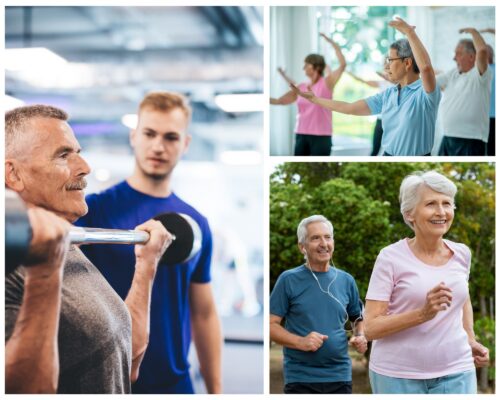
Longevity, in my perspective, doesn’t simply equate to an increased lifespan. Advancements in medicine have indeed enabled us to live longer than previous generations, but at what cost?

For me, true longevity means avoiding a future in an assisted living or nursing home; instead, I envision a vibrant, active lifestyle that includes being physically active, traveling, potentially continuing work as a trainer, and spending quality time with family and future grandchildren.

To prepare for this future, we must understand how aging affects us. Here’s some data on the topic:

Effects of Aging on You

Muscle mass diminishes by 3-5% per decade after the age of 30, a condition known as sarcopenia.

Muscle Strength

Muscle strength wanes by approximately 1.5% per year in your sixties and accelerates to about 3% annually thereafter.

What do these figures mean in practical terms? If a 30-year-old can lift 30 lbs, which suffices for stowing a carry-on in an overhead bin, this strength could diminish as follows, assuming an average annual decline of 2% starting at age 30:

  • By age 40, strength might drop to about 80% of its original level, reducing the lifting capacity to approximately 24 lbs.
  • By age 50, one might only retain about 64% of their original strength, equating to lifting around 19 lbs.
  • At age 60, the capability might further decline to about 51%, meaning lifting only about 15 lbs.

Bear in mind, this decline isn’t strictly linear and varies significantly based on lifestyle, diet, and exercise habits, but it illustrates the general trend.

Cardiovascular Fitness

VO2 max, the maximum amount of oxygen the body can utilize during exercise, lessens by about 10% per decade after age 30. Maximal heart rate also decreases.

Many overlook cardiovascular fitness compared to strength, but I rank it just as highly. Cardiovascular capacity is partially responsible for how quickly you fatigue, whether you can dash through an airport when late, or climb stairs without getting winded.

Flexibility and Balance

With age, flexibility typically wanes, and balance deteriorates, significantly impacting the risk of falls after 70. The CDC reports that falls are the leading cause of injury-related deaths in adults over 65, with mortality rates rising with age. The one-year mortality rate after a hip fracture can soar to an astonishing 20-30%.

What Does This Mean for You?

There’s both good and bad news. While all these facets of physical fitness are trainable, and training can profoundly affect other well-being factors, like cardiovascular health and the risk of Alzheimer’s and diabetes, it also means that ignoring these aspects of well-being isn’t a viable option.

When Should I Do Something About It?

The best time was yesterday! Starting early to build a strong foundation is crucial.

Optimal Physical Activity Levels

Ideally, you should engage in 4 hours of Cardiovascular Training in Zone 2, and about 30 minutes of Zone 5 training weekly (more on this in my next article).

Strength Training should ideally encompass 4 sessions of 45-60 minutes each, including stability and balance training.

Minimum Training Requirements

While aiming for the optimal training levels is ideal, the minimum recommendation would be two Zone 2 workouts of about 45 minutes each and one Zone 5 workout of 30 minutes per week for cardiovascular health. For strength, stability, and balance, the minimum would be three 30-minute sessions weekly.

Summary

Exercise isn’t merely for vanity; it’s a cornerstone of living a high-quality life into old age. Too many people retire only to spend their days addressing health issues stemming from a sedentary lifestyle.

Regular exercise, purposefully undertaken, increases your chances of a vibrant life in your later years. Take my 80-year-old father as an example: by maintaining a rigorous routine of lifting, cardiovascular training, volleyball, and group exercises, he defies the conventions of aging.

So, what path will you choose for yourself?

Warm regards,

Your Coach,

Michael Anders

  1. Sarcopenia and Muscle Loss with Aging:
    • Cruz-Jentoft, A. J., Bahat, G., Bauer, J., Boirie, Y., Bruyère, O., Cederholm, T., … & Zamboni, M. (2019). Sarcopenia: revised European consensus on definition and diagnosis. Age and ageing, 48(1), 16-31. PubMed
    • Peterson, M. D., Rhea, M. R., Sen, A., & Gordon, P. M. (2010). Resistance exercise for muscular strength in older adults: a meta-analysis. Ageing Research Reviews, 9(3), 226-237. ScienceDirect
  2. Decline in Muscle Strength:
    • Goodpaster, B. H., Park, S. W., Harris, T. B., Kritchevsky, S. B., Nevitt, M., Schwartz, A. V., … & Newman, A. B. (2006). The loss of skeletal muscle strength, mass, and quality in older adults: the health, aging and body composition study. The Journals of Gerontology Series A: Biological Sciences and Medical Sciences, 61(10), 1059-1064. Oxford Academic
  3. Cardiovascular Fitness (VO2max Decline):
    • Betik, A. C., & Hepple, R. T. (2008). Determinants of VO2 max decline with aging: an integrated perspective. Applied Physiology, Nutrition, and Metabolism, 33(1), 130-140. NRC Research Press
  4. Flexibility and Balance:
    • Granacher, U., Muehlbauer, T., Gollhofer, A., Kressig, R. W., & Zahner, L. (2012). An intergenerational approach in the promotion of balance and strength for fall prevention–a mini-review. Gerontology, 58(5), 446-457. Karger
  5. Falls and Mortality Rates Among Older Adults:
    • Centers for Disease Control and Prevention (CDC). (2023). Older Adult Fall Prevention. CDC. CDC
    • Haentjens, P., Magaziner, J., Colón-Emeric, C. S., Vanderschueren, D., Milisen, K., Velkeniers, B., & Boonen, S. (2010). Meta-analysis: excess mortality after hip fracture among older women and men. Annals of internal medicine, 152(6), 380-390. Annals of Internal Medicine
  6. Physical Activity Recommendations:
    • Piercy, K. L., Troiano, R. P., Ballard, R. M., Carlson, S. A., Fulton, J. E., Galuska, D. A., … & Olson, R. D. (2018). The physical activity guidelines for Americans. JAMA, 320(19), 2020-2028. JAMA


Unlocking Health: The Importance of Sleep

Revealing Health: The Importance of Sleep

I realize the title seems like complete clickbait, but disclosing the topic might have prompted you to overlook on Unlocking Health: The Importance of Sleep. I hope to pique your interest in a crucial subject underlying many of our problems: sleep deprivation.

Are you someone who professes to function well on minimal sleep? Research might surprise you. Matthew Walker, a renowned sleep researcher and author of “Why We Sleep,” asserts that nearly everyone needs adequate sleep, contradicting claims of optimal functionality on minimal rest.

Most people require between 7 and 9.5 hours of sleep, with the average American getting approximately 6.8 hours, inadvertently accumulating sleep debt. Furthermore, being in bed from 11 PM to 6 AM does not equate to seven hours of quality sleep, leaving many hovering around the national average.

Cognitive and Psychological Impact:

Lack of sleep profoundly impacts cognitive and psychological health, reducing alertness, attentiveness, decision-making abilities, and elevating risk-taking behaviors. It magnifies irritability, moodiness, anxiety, and depression, significantly impacting emotional well-being.

Health Consequences:

Sleep deprivation compromises immune function, increases susceptibility to infections, and augments risks for hypertension, stroke, and coronary artery disease. It impedes weight loss efforts and predisposes individuals to weight gain, with the lost weight likely being lean muscle mass.

Social and Occupational Ramifications:

Insufficient sleep affects academic and occupational performance, productivity, and impairs social interactions due to reduced ability to read social cues. It also increases the propensity for substance use and poses long-term risks, including Alzheimer’s, Parkinson’s, and a shortened lifespan due to cumulative health issues.

Conclusion:

Understanding and prioritizing sleep is paramount for maintaining optimal cognitive, psychological, and physical health. Integrating healthy sleep patterns can prevent numerous adverse health outcomes and enhance overall quality of life.

Walker, M. P. (2009). The role of sleep in cognition and emotion. Annals of the New York Academy of Sciences, 1156, 168-197.

Lim, J., & Dinges, D. F. (2010). A meta-analysis of the impact of short-term sleep deprivation on cognitive variables. Psychological Bulletin, 136(3), 375-389.

Venkatraman, V., Chuah, Y. M., Huettel, S. A., & Chee, M. W. (2007). Sleep deprivation elevates expectation of gains and attenuates response to losses following risky decisions. Sleep, 30(5), 603-609.

Zohar, D., Tzischinsky, O., Epstein, R., & Lavie, P. (2005). The effects of sleep loss on medical residents’ emotional reactions to work events: a cognitive-energy model. Sleep, 28(1), 47-54.

Baglioni, C., Battagliese, G., Feige, B., Spiegelhalder, K., Nissen, C., Voderholzer, U., … & Riemann, D. (2011). Insomnia as a predictor of depression: a meta-analytic evaluation of longitudinal epidemiological studies. Journal of Affective Disorders, 135(1-3), 10-19.

Irwin, M. R. (2019). Sleep and inflammation: partners in sickness and in health. Nature Reviews Immunology, 19(11), 702-715.

Cappuccio, F. P., Cooper, D., D’Elia, L., Strazzullo, P., & Miller, M. A. (2011). Sleep duration predicts cardiovascular outcomes: a systematic review and meta-analysis of prospective studies. European Heart Journal, 32(12), 1484-1492.

Knutson, K. L., Spiegel, K., Penev, P., & Van Cauter, E. (2007). The metabolic consequences of sleep deprivation. Sleep medicine reviews, 11(3), 163-178.

Curcio, G., Ferrara, M., & De Gennaro, L. (2006). Sleep loss, learning capacity, and academic performance. Sleep medicine reviews, 10(5), 323-337.

Hafner, M., Stepanek, M., Taylor, J., Troxel, W. M., & Van Stolk, C. (2017). Why sleep matters—The economic costs of insufficient sleep. RAND Corporation.

Van Der Helm, E., Gujar, N., & Walker, M. P. (2010). Sleep deprivation impairs the accurate recognition of human emotions. Sleep, 33(3), 335-342.

Wong, M. M., Brower, K. J., & Zucker, R. A. (2011). Sleep problems, suicidal ideation, and self-harm behaviors in adolescence. Journal of Psychiatric Research, 45(4), 505-511.

Ju, Y. E., Lucey, B. P., & Holtzman, D. M. (2014). Sleep and Alzheimer disease pathology—a bidirectional relationship. Nature Reviews Neurology, 10(2), 115-119.

Cappuccio, F. P., D’Elia, L., Strazzullo, P., & Miller, M. A. (2010). Sleep duration and all-cause mortality: a systematic review and meta-analysis of prospective studies. Sleep, 33(5), 585-592.

Battle of the Best Running Shoes: Altra Escalante Racer vs Xero Prio

The Altra Escalante Racer and Xero Prio are both super popular running shoes that have their own unique features and benefits. Let’s take a closer look at each shoe and see which one is better suited for which situation.

Altra Escalante Racer:

Pros:

  • Light as a feather: The Altra Escalante Racer is designed to be lightweight, so you can run fast without feeling like you’re carrying bricks on your feet.
  • Breathable AF: The mesh upper of the shoe allows for good airflow, keeping your feet cool and dry no matter how hard you’re running.
  • Room to wiggle: The shoe has a wide toe box, so your toes can spread out and move more naturally, which can help prevent blisters and other foot injuries.
  • Like walking on clouds: The zero-drop platform and cushioned midsole make the Altra Escalante Racer one of the most comfortable running shoes out there.
  • One shoe to rule them all: You can use the Altra Escalante Racer for both training and racing.

Cons:

  • Not the most durable: Some runners have reported that the shoe wears down pretty quickly, especially in the upper and midsole.
  • Slippery when wet: The outsole doesn’t provide the best traction on wet surfaces, which could be a safety hazard.
  • Sizing is tricky: The Altra Escalante Racer runs small, so you might need to size up to get a good fit.
  • Pricey: The shoe is on the expensive side, which might not be affordable for some runners.
  • Boring colors: The shoe only comes in a few color options, which might not suit everyone’s style.

Xero Prio:

Pros:

  • Minimalist vibes: The Xero Prio has a minimalist design that promotes natural movement and strengthens your feet.
  • Lighter than air: The shoe is super lightweight, which makes running even more enjoyable.
  • Affordable AF: The Xero Prio won’t break the bank compared to other running shoes on the market.
  • Tough as nails: The shoe’s sole is durable and can handle all kinds of terrain, making it great for trail running.
  • So comfy: The wide toe box and flexible sole make the Xero Prio one of the most comfortable shoes out there.

Cons:

  • No cushioning: The Xero Prio doesn’t have any cushioning, which might not be comfortable for runners who prefer a softer sole.
  • Size matters: The shoe runs small, so you might need to size up to get a good fit.
  • Limited colors: The shoe only comes in a few color options, so you might not find one you love.
  • Not for everyone: The minimalist design might not be suitable for runners who need more support or have foot problems.

Conclusion:

Both the Altra Escalante Racer and Xero Prio are excellent running shoes, but they’re designed for different types of runners. The Altra Escalante Racer is perfect for runners who want a lightweight and comfortable shoe with a wide toe box for natural movement. You can use it for training and racing. The Xero Prio is great for runners who want a minimalist shoe that strengthens their feet and provides a natural running experience. It’s also more affordable and perfect for trail running. Ultimately, the choice between the two shoes will depend on your individual needs and preferences as a runner.

Personally, I have been a barefoot shoe runner for over a decade. Over the years the evidence that barefoot running is better for you has not been corroborated. I have since shifted to using different kinds of shoes, from running in Vibram five-fingers, sandals, Altras and Xeros. The change helps my feet and I experience overall less issues.

tips for running form

Starter Tips on Running Form

This post provides instructions on how to develop proper running form.

Running is a popular form of exercise that can help improve cardiovascular fitness, reduce stress, and even boost mood. However, running can also lead to injuries, particularly if you don’t have proper form. In this article, we’ll discuss the best running form to avoid injury, based on expert recommendations and scientific research.

best tips on running form
  1. Posture

Maintaining good posture is essential for preventing injury while running. According to the American Council on Exercise (ACE), you should keep your shoulders relaxed and your head looking straight ahead, not down at your feet. Your arms should be bent at a 90-degree angle, with your hands relaxed and your elbows close to your body.

Source: https://www.acefitness.org/education-and-resources/lifestyle/blog/4937/5-tips-for-proper-running-form/

  1. Footstrike

Your footstrike, or the way your foot contacts the ground while running, can also affect your risk of injury. One study published in the Journal of Orthopaedic & Sports Physical Therapy found that a forefoot or midfoot strike, rather than a heel strike, resulted in lower impact forces and reduced risk of injury.

Source: https://pubmed.ncbi.nlm.nih.gov/19194022/

  1. Stride Length

Another factor to consider is stride length. Overstriding, or taking too long of a stride, can put excessive strain on your joints and increase your risk of injury. Instead, focus on taking shorter, quicker steps, and aim to land your feet under your hips rather than in front of them.

Source: https://www.runnersworld.com/training/a20802713/how-to-improve-your-running-form/

  1. Arm Swing

Your arm swing can also affect your running form. According to a study published in the Journal of Sports Sciences, a controlled arm swing can help to reduce energy expenditure and improve running economy.

Source: https://www.tandfonline.com/doi/abs/10.1080/026404102317284856

  1. Gradual Progression

Finally, it’s important to increase your mileage gradually to avoid overuse injuries. The American College of Sports Medicine recommends increasing your mileage by no more than 10% per week to prevent injury.

Source: https://www.acsm.org/docs/default-source/files-for-resource-library/running-injuries.pdf

In conclusion, maintaining good running form is essential for preventing injury while running. By focusing on posture, footstrike, stride length, arm swing, and gradual progression, you can reduce your risk of injury and enjoy the benefits of running safely.

Sources:

Seraphinite AcceleratorOptimized by Seraphinite Accelerator
Turns on site high speed to be attractive for people and search engines.