We live in a society that craves the instant fix. Fitness on the other hand
has nothing to do with an instant fix and everything to do with building a house.
Just like in constructions there are short cuts that can be taken. The problem is though that the house of cards can fall apart pretty easily.
The essential building stones for success in fitness are pretty straight forward:
Stress Reduction: I cannot emphasize it enough. Negative stressors are big when it comes to influencing our success negatively. If you are a procrastinator, you are setting yourself up for failure. If you struggles in your relationship, in your job or other personally important areas, don’t wait until tomorrow until you address it. Make a positive change today and see yourself take off in your journey to a slimmer, fitter, or stronger you!
Sleep Deprivation: I feel like this one is in every blog post of mine. Well, there is a reason for it. Sleep is important for brain function, hormone levels, healing processes, etc. It also messes with our appetite and feeling of satiation. Most people need at least 6.5 hours of sleep.
Food Preparation: Most people eating 200-400 kcal more a day if they eat out at some point during the day. Over the course of the week that is up to 2800 kcal of additional food intake. If you are unable to prepare your own food, or you simply don’t like it, you can always use food preparation services like “Custom Fit Meals” or “ModPaleo”.
Training: Someone trying to lose weight / BF will have optimum results by working out 5-7 hours per week.
If you are looking to gain muscle mass and usually struggle with it, then cardio training should be at a minimum. If you are looking to lose weight then you need to focus on a good mix of strength training, combined with high intensity interval training can melt the fat right off.
The more effort you put in, the more success you will have in the long run. Time to get started today. Let us help you get on the right track!
News Resolutions are on their way, hopefully, successful. Sadly the statistics tell us otherwise.
Planning to have flat abs?
60% of people give up by March. More than 80% of people are not successful.
I want you to succeed. I want you to make this year the year that you are going all the way in your fitness goals. Today’s blog is about fat loss.
Myths that can cost you your weight/fat loss success:
Myth 1: Unprocessed food will lead to fat loss, guaranteed: While I am a big proponent of eating minimally processed food, it does not mean you have an “All You Can Eat Permission”. It is simply not true. In order to be healthy, lose fat and look the way you want, you need to make changes. Eating a clean diet consisting of minimally or unprocessed foods is a big step towards it. It is rich in vitamins, minerals, fibers, protein, phytonutrients, etc. That does not mean you can eat as much as you want though. Check out my “Fall Fat Flush” for more information on how your food intake can look like. The amounts of food are just as important. Eating too little or too much can sabotage your goals.
Myth 2: Steady State Cardio is Bad, High Intensity Training (HIIT) is good: You need to get away from absolutes. If you decide to go on a long walk or a 3 mile run without throwing intervals into it, you still rev up your metabolism for that time period. Given, HIIT has shown to be highly effective in increasing your metabolism for up to hours after you are done, and it is shorter, but, it is also a higher stress on your system and should not be done more than 2-3 times a week. You might have to build a good base before doing it, or your health situation might not permit you to do HIIT training currently. Different cardiovascular training methods fulfill different needs.
Myth 3: Strength Training is all you need to lose weight: While it is true that strength training is an integral part of a well designed weight/fat loss program because it increases lean fat burning muscle, it won’t be successful without a sound approach to nutrition. In addition our sedentary lifestyles have lead to an increased need for cardiovascular activity in order to maintain health and a relatively high metabolic output. Simply put: We don’t physically work anymore to do our jobs therefore our energy needs are low. I consider even my job as a trainer fairly sedentary. Any physical activity will help.
Myth 4: Supplements are necessary to lose weight: That is total nonsense. Most supplements are a complete waste of time and money. Just because something has a 5 star rating on a seller’s page does not mean it works. There are a few supplements that can assist in your fat loss program, but almost all can have interactions with medications that you might be taking.
Myth 5: I need to do a complete kitchen makeover in order to be successful: It all depends on what you want to accomplish. If you are overweight and you want to lose a couple of pounds, the changes necessary are not nearly as big as someone who wants to go from 10% body fat to 5%. It is true, the bigger the effort the bigger the results. That does not mean that by implementing a couple of small changes every 1-2 weeks you won’t have reached your goals by the end of the year.
I hope this was helpful to you. If you are looking for help with your success this coming year then give us a call at 704 777 3743 or email us at michael@charlottepersonaltrainer.org, or check our New Client Special out by clicking here. Mention 5 Myths about your weight loss goal to get an additional 5% off!
We sometimes struggle with getting everything in. Like this past Monday. My alarm clock had
Things you can do at home
gone off at 4.45 am, my martial arts training started at 5.30 am and the first client trained at 6 am. I still got the rest of my training later that day but it almost did not happen and I sure did not get my lunch break.
Sometimes no matter how much we try, we just don’t make it. We have to cut our workout short, or, just skip it altogether.
It seems though, that even short bouts of exercise are highly beneficial for our mental and physical well being for that reason I want to provide you with something you can do on those days when it just simply does not happen.
Here are a couple of workouts that you can do when you have 30 min or less. You can do them as a circuit training or in order.
TRX reverse flys followed by arm raises 3 sets of 10ea
20 min Workout gear required same as above
Alternating Lunges 3 sets of 20
Burpees 3 sets of 20
TRX Squat to Row (single or two legged) 3 sets of 15
Atomic Push Ups 3 sets 10-15
10 min Workout
Speed Squats 3×20
Jab/Cross Combo 3×30 punches
Burpee + Push Up 3×15
TRX Chin Ups 3×12
5 min Power Break
Push Up max
Squats 1×40
Plank w/ alternating leg lift for 5s 1x60s
Jumping Jacks 80
This gives you several different workouts that you can do whenever you are short on time. I hope this will help you maintain your fitness during the coming busy holiday season.
The two most common goals people have when coming to a personal trainer are weight loss (fat loss) and weight gain (muscle mass). This blog is about the differences in training and nutrition.
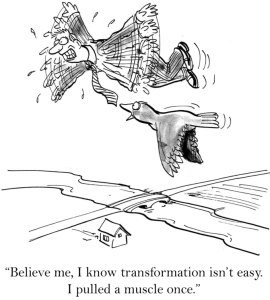
Do you feel like our friend here sometimes?
What they all have in common!
Both goals are highly dependent on your nutrition, a well setup training plan and extracurricular activities. Equally important for the success of your program are sleep and active rest. What does active resting mean? It means that you are not sitting at home on a couch, but pursuing an active lifestyle. A moving body is better circulated, reduces the insulin resistance of muscle cells, and improves recovery by nutrients reaching the cells faster, leaving you ready to go again!
Weight Loss (Fat Loss) as a goal
If you are trying to seriously lose weight and body fat, then you are faced with a myriad of tasks that can be quite overwhelming. The first and foremost goal that I have is really getting the person to move again. Obese people sit about 2.5 hours more per day (Levine 2014) than none-obese people. Time to get off your butt! I know you work a lot of hours, but get a standing desk, walk during phone meetings, take the stairs up and down, do anything but sit.
According to juststand.org a 170 lb person sitting at work burns about 1000 kcal total over the course of 8 work-hours, whereas the same person burns 1360 kcal when standing – that is an extra 360kcal per day! Compare this to an average 30 minute workout session that burns 200-300kcal. Over a one week period that extra calorie burn translates to real weight loss. What would happen if you start moving more the rest of the day as well?
Now we start adding exercise into the mix. You lift weights 2-3 days a week for 30 min, and boom, you preserve your muscle mass while losing body fat. Let’s say you are super motivated and do 2-3 days a week of some high intensity interval training and really rev up that metabolism. You are pretty golden at this point. Total amount of exercise per week: 1:30 hours – 3 hours.
You know that nutrition is important. You have heard multiple times that you are what you eat, and decide to make small changes every week or two. You add some fish oil because you heard it is important (Berardi 2013), next you start eating more veggies, cut back on the softdrinks, etc and start eating primarily unprocessed food. At this point those pounds are probably tumbling down like crazy. People at work won’t recognize you.
Weight Gain (Muscle Mass) as a goal
We have a couple of clients who want to gain weight. I know a lot of our weight loss clients are envious, don’t be! It can be just as challenging for someone to put on muscle mass as it is for some to lose body fat. My own body type is inherently ectomorph and I enjoy running. I know your pain.
Do you feel like our friend here sometimes?
Here is what you need to do to kill your goal. You need to pick up weights, and you need to go heavy, too. Don’t just pick up light weights, you need to work hard at 8-12 repetitions, sometimes dip into lower reps into the strength area to stimulate the muscles differently.
Here is the kick: even though you might not want to lose body fat, you should still get off your butt at work if you can. Why? Pretty simple. Out of our experience people who sit a long time will struggle with exercises that work on the hip; like squats and deadlifts, etc. That directly impacts your training efficiency. Despite the fact that being active helps you recover faster.
If someone is seriously interested in picking up muscle mass we usually recommend 3-5 days a week of strength training for 45-60 min. This does not have to be with a personal trainer. The body needs a good training stimulus during the week to be encouraged to change. Depending on the medical needs, body type, etc we might not recommend cardiovascular training during that training phase. Total amount of training per week: 2:15-5 hours.
Now, food becomes an issue again. Just because you want to gain muscle weight, does not mean you can stuff your face however you want. The goal is to take in high quality, proteins, fats, and carbs, vitamins, minerals, etc. to optimize your training progress and minimize the fat gain. Too many people completely blow up with body fat during this phase.
A gradual change to unprocessed foods is the best approach, doing it slowly, not overwhelming someone with goals.
What is the secret?
If you are reading all of this, you might be pretty overwhelmed by now. Don’t be! I think we can all agree on the fact that we want a permanent transformation not necessarily a fast but fleeting change. Here is the secret on how to accomplish all of your goals relatively easily:
In order to accomplish your goals follow the rule of “easy changes first”. Do whatever change comes easy to you first. It might be being more active, nutrition, training, or aspects of each. It does not matter! Simply start with what is doable and implement a new change every 1-3 weeks. Eventually you will have transformed yourself and changes that seemed to be difficult at first, are all of a sudden easy.
Key points:
Standing at work can burn as much as if not more calories than working out with a trainer for 30 min 2x a week.
Move during the day
Slowly make changes to nutrition
Will see weight loss without big $ or time investment
Please let me know if we can help with your transformation,
Michael Anders
Berardi, John & Andrews, Ryan (2013). The Essentials of Sport and Exercise Nutrition. Precision Nutrition.
http://www.juststand.org/Tools/CalorieBurnCalculator/tabid/637/language/en-US/Default.aspx (2014).
Levine, James (2014). Get Up! – Why Your Chair Is Killing You And What You Can Do About It. palgrave macmillan.
In short, yes! Heat can be harmful and even be deadly if you do not take the necessary precautions.
What happens when you exercise?
The temperature of our deeper tissue is in a dynamic balance between heat loss / gain. If because of exercise or external influences this equilibrium is interrupted the core temperature rises. In elite athlete the temperature can raise by 1.8° F / 5-7 min if exercising at intense aerobic levels.
Your body cannot let this go on indefinitely without taking damage therefore regulatory processes take place.
Ways of transferring heat away from the body
Radiation (we radiate electromagnetic heat waves through the air to solid cooler objects in our environment)
Conduction (is the heat transfer directly from one molecule to another, hand to air, or hand to water for example)
Convection is dependent on the air or fluid exchange surrounding our body. If the air does not move, it functions as insulation after heating up to body temperature. This is the reason why a fan works so well :-).
Evaporation is the major player in the fight against overheating. Water vaporizes from the respiratory passages and skin surfaces which continually transfers heat to the environment.
How does your body activate its cooling mechanisms?
We have an increased circulation to our face and skin in general. in extreme heat 15-25% of our cardiac output goes to the skin. This increased blood flow improves our ability to give heat off to air molecules.
Sweating starts within a couple of seconds of intense exercise. It takes about 30 min before it reaches an equilibrium with the exercise load. The increased circulation combined with the effects of conduction and evaporation lead to cooled blood flowing back to the core and taking on more heat to transport off. Additionally hormonal changes regulate down the salt content in sweat which prevents early onset of cramping.
What happens when it is hot and humid outside?
In high temperatures radiation (emitting heat waves) , conduction (molecule to molecule) and convection (air heating and it’s replacement) won’t work anymore. If the outside temperature is higher than the core temperature you might actually gain heat from those three.
Now if humidity comes out to play it gets even worse. Now we have another problem. Humidity will take out our major player, Evaporation. The air around us is more saturated with water and our sweat will no longer evaporate. Instead it will run down without having a cooling effect and we run into the danger of overheating and dehydration. Individuals are actually capable of resisting relatively high temperatures as long as the relative humidity is low.
What effect does your clothing have?
Changing from wet to dry clothing actually does not help. dry clothing usually slows down heat exchange. Moisture wicking clothing can help to optimize heat transfer especially in intense exercise during hot weather.
If you ignore the heat
Bad things will happen if you ignore the heat. Your performance drops because huge amounts of blood are diverted to cool you off. Renal and liver complications are common during exertional heat stress. The core temperature raises to dangerous levels which reduces the drive to exercise leads to fatigue in order protect your body from damage.
How does it show?
Heat cramps, heat exhaustion (weak, rapid pulse, headache, dizziness, general weakness) and heat stroke (failure of heat-regulating mechanisms) are a clear sign of overheating In case of a heat stroke the circulatory system collapses (absence of sweating, altered mental status) and a person can die. Medical intervention is crucial. The person should replace fluids, be cooled down by ice packs to the neck area.
I know the summer is almost over but we are still having hot days
You don’t want to be caught unaware by the heat
. So please pay attention. No training session is worth risking your health or life. Cut the training short, choose to change the location or ease off.
Have an awesome day,
Michael
References:
McArdle et al. (2007). Exercise Physiology – Energy, Nutrition & Human Performance. 6th Ed. Lippincott Williams & Wilkins.
Over the past couple of years interval training has become progressively more dominant versus the old habit of spending hours on the treadmill or elliptical!
The short answer is yes and no. Hours of steady state cardio is good for some, bad for others and a waste of time for the third group.
So, what does science have to say?
Science’s approach to cardiovascular training
Older clients with stroke and hemiparetic (weakness on one side of the body) gait
people with severe left ventricular function can improve their cardiovascular fitness significantly without increasing their morbidity.
clearly improve after 6 months of cardiovascular training.
cardiovascular training reduces systolic and diastolic blood pressure
it significantly increases HDL levels
it lower LDL
aerobic exercise can have positive effects on protein synthesis in older adults
What is my take on it?
If you are training for endurance races regular aerobic exercise in the steady state range is probably a crucial component to your success and should stay a part of your training regimen.
If you are looking to lose weight then you might be better of doing some high intensity interval training sessions. They have a bigger bang for the buck. If you have more time you are welcome to add some steady state cardiovascular training but be aware that a lot of it will negatively impact your strength training routine.
If you are looking to improve your health markers aerobic trainingis a crucial component, especially in people with already impaired health. Even low intensities seem to have a beneficial effect on health and should not be overlooked.
Being physically active is great! Adding a steady state training to your routine could be a good balance to your HIIT training and strength training if you look to improve your general fitness even more
I hope this was helpful,
Have a great day,
Michael
References:
Blumenthal, J. A., Emery, C. F., Madden, D. J., George, L. K., Coleman, R. E., Riddle, M. W., … & Williams, R. S. (1989). Cardiovascular and behavioral effects of aerobic exercise training in healthy older men and women. Journal of gerontology, 44(5), M147-M157.
Conn, E. H., Williams, R. S., & Wallace, A. G. (1982). Exercise responses before and after physical conditioning in patients with severely depressed left ventricular function. The American journal of cardiology, 49(2), 296-300.
Cornelissen, V. A., & Fagard, R. H. (2005). Effects of endurance training on blood pressure, blood pressure–regulating mechanisms, and cardiovascular risk factors. Hypertension, 46(4), 667-675.
Macko, R. F., DeSouza, C. A., Tretter, L. D., Silver, K. H., Smith, G. V., Anderson, P. A., … & Dengel, D. R. (1997). Treadmill aerobic exercise training reduces the energy expenditure and cardiovascular demands of hemiparetic gait in chronic stroke patients A preliminary report. Stroke, 28(2), 326-330.
Short, K. R., Vittone, J. L., Bigelow, M. L., Proctor, D. N., & Nair, K. S. (2004). Age and aerobic exercise training effects on whole body and muscle protein metabolism. American Journal of Physiology-Endocrinology and Metabolism,286(1), E92-E101.
High Intensity Interval Training (HIIT) – just another fad?
HIIT is commonly used in training programs that promote fat loss as well as in sports performance training for team sports and track events. Most of our personal training clients utilize it to boost their metabolism for fat loss. HIIT training is usually signified by short intervals (<3 min) that are repeated 6-15 times. The rest periods between the intervals vary and range anywhere from 10s to 3-5 min. What does research say about HIIT training?
Science Talk: Effects of HIIT
Just six weeks of 3 HIIT training sessions per week seem to have a positive impact on VO2 and aerobic performance.
Break length does not seem to be as important when it comes to the VO2peak improvement, resulting sprint performance or muscle Na+,K+-ATPase content.
Really short breaks (10s) between 80 m sprint intervals seem to improve the performance over 200-300m distance more than breaks of a length of 60s. Both significantly improve the sprint performance over 100-300m.
12-15x15s runs at 120% of maximal aerobic speed alternating with 15s of rest and and 12-15×40 m all out runs with 30s rest improved the aerobic capacity of soccer players after 10 weeks by around 18% and the sprint time was decreased by 23.5%
High intensity interval training seems to have considerable better effects in patients with a stable postinfarction heart failure than moderate continuous training. Not only did the researchers note positive cardiovascular but also peripheral adaptations in the muscle cell with higher mitochondrial activity.
HIIT seems to stimulate mitochondrial biogenesis in human muscle.
HIIT reduces insulin resistance in muscle cells.
HIIT increases Human Growth Hormone in men and women.
HIIT seems to have a bigger impact on body fat markers than moderate continuous training
It makes you smarter, well not quite, but sprints seem to increase the release of BDNF (brain-derived neurotrophic factor), dopamine and epinephrine. BDNF is like miracle-grow for the brain and can lead to formation of new brain cells in the hippocampus. Increased dopamine and epinephrine levels help to form stronger mid-term and long-term memories. Steady state cardiovascular training seems to help with BDNF release after 5 weeks of training.
Interval training seems to help with peripheral nerve damage repair whereas continuous exercise does not seem to have the same effect.
What does that mean for you?
Unless there is a medical contraindication HIIT can be a useful tool for you to accomplish numerous things. The best part is, it does not take long and you only have to do it 2-3 days a week. That seems like a win:win situation to me. Here is your take-home message:
Fat Loss & General Fitness: Now this gets interesting. The increased oxygen consumption after finishing a HIIT workout combined with the adaptations in muscles, and the reduced insulin resistance can help you shed those last extra pounds you were looking to get rid of. The increase in HGH helps with fat and sugar metabolism and improves muscle growth.
Sports Performance: HIIT can give you the conditioning edge that you have been seeking in your sport. It improves your cardiovascular and anaerob abilities.
Your Brain: It seems that cardiovascular activity, especially HIIT have a miracle-grow effect on your brain. You are actually capable of forming new brain cells, improve your retention rate when studying. Especially for students, or the older population threatened by Alzheimers and age related dementia these findings can have an enormous impact.
Nerve Healing: If you have peripheral nerve damage, HIIT might just increase your healing rate.
Now go out and do some intervals.
Please let me know if you have any questions,
Michael
References:
Boutcher, S. H. (2010). High-intensity intermittent exercise and fat loss. Journal of obesity, 2011.
Dupont, G., Akakpo, K., & Berth0in, S. (2004). The effect of in-season, high-intensity interval training in soccer players. The Journal of Strength & Conditioning Research, 18(3), 584-589.
Felsing, N. E., Brasel, J. A., & Cooper, D. M. (1992). Effect of low and high intensity exercise on circulating growth hormone in men. The Journal of clinical endocrinology and metabolism, 75(1), 157-162.
Gibala, M. J., & McGee, S. L. (2008). Metabolic adaptations to short-term high-intensity interval training: a little pain for a lot of gain?. Exercise and sport sciences reviews, 36(2), 58-63.
Griffin, É. W., Mullally, S., Foley, C., Warmington, S. A., O’Mara, S. M., & Kelly, Á. M. (2011). Aerobic exercise improves hippocampal function and increases BDNF in the serum of young adult males. Physiology & behavior,104(5), 934-941.
Edge, J., Eynon, N., McKenna, M. J., Goodman, C. A., Harris, R. C. and Bishop, D. J. (2013), Altering the rest interval during high-intensity interval training does not affect muscle or performance adaptations. Experimental Physiology, 98: 481–490. doi: 10.1113/expphysiol.2012.067603
Wideman, L., Weltman, J. Y., Hartman, M. L., Veldhuis, J. D., & Weltman, A. (2002). Growth hormone release during acute and chronic aerobic and resistance exercise. Sports Medicine, 32(15), 987-1004.
Pincivero, D. M., Lephart, S. M., & Karunakara, R. G. (1997). Effects of rest interval on isokinetic strength and functional performance after short-term high intensity training. British journal of sports medicine, 31(3), 229-234.
Sabatier, M. J., Redmon, N., Schwartz, G., & English, A. W. (2008). Treadmill training promotes axon regeneration in injured peripheral nerves. Experimental neurology, 211(2), 489-493.
Saraslanidis, P., Petridou, A., Bogdanis, G. C., Galanis, N., Tsalis, G., Kellis, S., & Mougios, V. (2011). Muscle metabolism and performance improvement after two training programmes of sprint running differing in rest interval duration. Journal of sports sciences, 29(11), 1167-1174.
Tremblay, A., Simoneau, J. A., & Bouchard, C. (1994). Impact of exercise intensity on body fatness and skeletal muscle metabolism. Metabolism, 43(7), 814-818.
Winter, B., Breitenstein, C., Mooren, F. C., Voelker, K., Fobker, M., Lechtermann, A., … & Knecht, S. (2007). High impact running improves learning. Neurobiology of learning and memory, 87(4), 597-609.
 Skip to content


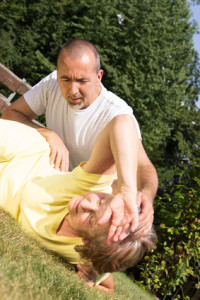
 Over the past couple of years interval training has become progressively more dominant versus the old habit of spending hours on the treadmill or elliptical!