...
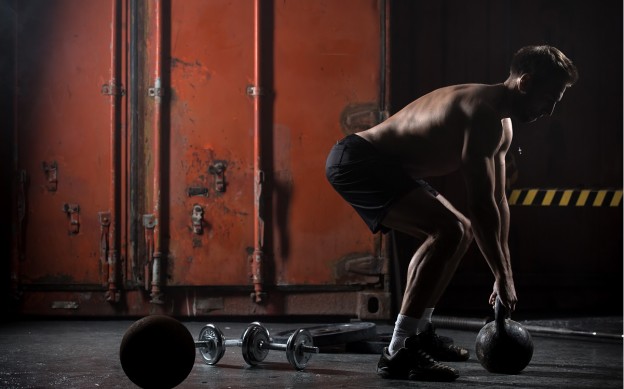
good athletic form during deadlifts at Shape Up Fitness & Wellness Consulting

Knee Pain from a Different Angle

Knee pain is a very general term and can have many causes. One cause would be trauma. For many of us engaged in physical activities and sports that may be the cause. For the majority of people knee issues seem to creep up especially in their late 30s, 40s and 50s. Often it is associated with someone becoming more active again and picking up a sport, or fitness training to improve their body composition. All of the sudden the knee starts hurting.

To understand better the complexity of the knee we need to understand more about its anatomy.

Knee Anatomy

The knee joint is one of the most complex joints in our body. It consists of

  1. The patellofemoral joint (knee cap to distal part of the femur)
  2. the tibial-femoral joint (the femur interacting with the tibia (shin bone))
  3. It has meniscii functioning as increasing the joint surface and working as shock absorbers. They are C-shaped.
  4. The ligaments attached to the femur, tibia, & fibula lending it stability and guiding movements.
    1. Patella Tendon attaching on the bottom of the patella and allowing the force of the anterior femoral muscles to lead to knee extension by being attached to the tibia
    2. The cruciate ligaments stabilizing the knee in a sagittal plane
    3. The collateral ligaments stabilizing the knee against folding open sideways (coronal plane)
  5. Bursae are little sacks filled with fluid to protect tendons going over bones, etc.)
  6. There is a multitude of muscles working on the knee: flexing, extending, rotation etc.

What does the hip and the foot have to do with my knee?
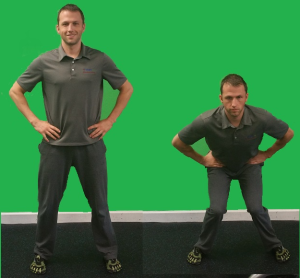
Shape Up Fitness & Wellness Consulting form training
Bad form jumping, like demonstrated can lead to injury

In addition of myriad muscles going over the knee, the hip and the muscles pulling on the hip or the foot position play a major role in your knees function. Inactive gluteal muscles can lead to changes on how the quadriceps pulls on the patella and its tendon. This can have a significant impact on patella positioning, cartilage damage, etc.

A similar situation happens when a foot is not properly supported by its arch and ankle. If your ankle collapses inwards you will have an increased risk of knee injuries due to “overuse” or rather “biomechanics”.

Basically in addition to being sensitive to traumatic injuries (i.e. in soccer, football, tennis etc) the knee is the slave to hip mechanics and foot mechanics.

How can I improve the situation if it is caused by weak hip stabilizers?

There are plenty of things you can do for the hip ranging from functional movements like deadlifts, single leg deadlifts, bridges, single leg bridges to small movements like side to side walk w/ mini-bands, bridge walks, hip hikes. 

Trap bar deadlifts are great because they work hamstrings, glutes, adductors, etc. The single leg version really helps with stabilization and is the functional progression.

I would definitely recommend you supplementing these exercises with movements like loaded bridges, clamshells, etc.

Bridges are absolutely fantastic to activate the glutes in a more isolated fashion than squats and deadlifts. With bridges make sure that the back stays straight. Don’t push the weight over the toes but rather keep the weight on the whole foot or slightly more oriented towards the heel. You have various options to set up the bridge. You can either lay down on the floor, the feet even with the floor, elevate the feet or elevate the back. Elevating the back or feet increases the range of motion and is definitely preferred. If you struggle to use a bench for your back, you can set it up on a 10” box a well. Again, I would recommend to progress to single leg bridges down the road. Make sure to use adequate padding for the bar. The bar should be sitting between pubic bone and ASIS (anterior superior iliac spine)

Clamshells on the other hand are a great isolation exercise that can support the work that you are doing with the compound movements. They are just one of many exercises that can be used for this purpose: quadruped donkey kicks, quadruped fire hydrants, cable kickbacks, back extensions, etc. can all be used to supplement the big movements. 

What You can do for your feet

Short foot exercises like the one in the video are a great tool to work on foot position and strengthening up intrinsic foot muscles. In addition to the isolated exercise make sure to integrate the short foot into squats, deadlifts, etc. 

Conclusion

Knee pain at least due to postural issues and weakness don’t have to be necessarily accepted as part of life. Working on fixing muscle activation & technique training can help clean up your form, improve joint positioning and potentially enable you to be a lifelong healthy athlete.

The sooner someone starts to address these issues the better. Depending on your age and activity level, exercises and foam rolling might not be all that is needed. You might need the synergistic efforts from massage therapists, chiropractors, trainers and your own diligence to get back “on your feet”.

Do not expect immediate and permanent results.You might have had the problems for years and progress might be really slow. If you can reduce pain and increase performance, I consider the effort well worth it.

What if it is not working

Exercises are great but training can only bring you so far. As mentioned above it might take a village to get you back on track. Massages, manual therapy, chiropractic, as well as physical therapists might be necessary to get you started.


References:

http://teachmeanatomy.info/lower-limb/joints/the-knee-joint/
http://www.physio-pedia.com/’Q’_Angle
Schuenke et al.  (2006). Atlas of Anatomy – General Anatomy and Musculoskeletal System. Thieme.


Young woman weight training

Be Honest With Yourself – Succeed in Fitness & Life

  • A lot of people are self critical and mistake that with being honest with themselves.
  • A lot of people are deluding themselves into thinking they are doing better than they really are.

How can that be – is it not contradictory?

Well, like everything life is not simply black or white, one way or another. We have grey areas everywhere. In some areas our inner critic comes out and when she/he comes out she means business. If we would hear anyone talking like that to someone we would be like: “Hold on there for a second, you cannot talk to that person like that!”

On the other hand we have often plenty of areas where we think we do pretty well but really may do only a mediocre job at best.

What does that have to do with fitness?

  • The Inner critic: people who have a strong inner critic have often a tendency to be harsh to themselves when they mess up, cheat, etc. The consequence is often that they say in their mind: F*** it, I suck, I already cheated, might as well go for it. In addition, they are more likely to not try again because they don’t want or need that negative feedback anymore. They give up more easily. Research in the field of “Positive Psychology” in the pasts 15 years has shown that people in this area are often doing better by training “mindfulness” in combination with self-compassion. It seems allow them to be human, to not go all out after cheating but resetting their efforts.
  • The person who thinks they eat or exercise better than they really do has a different problem. They don’t understand why they don’t make any progress despite their perceived effort. If you fall into this category, get an honest assessment by a third party like a trainer. Write down your training and the times you actually went, the effort you put in. Write down your food intake clearly to see for you and your personal trainer. It is eye opening and often fixes the problem.

What does that mean for you?

It is important to find a positive but honest environment that supports your efforts and holds you accountable. Your spouse or partner is often not the right person for that job because we have a tendency to take things to personal. Better would be a life coach, personal trainer, doctor, or dietitian. If for some reason you cannot afford that make sure to write it down for yourself. There are also “mindfulness classes” that help you be more self aware and teach self compassion as well.

If you are looking to get help with your program, we are always there for you.

Michael

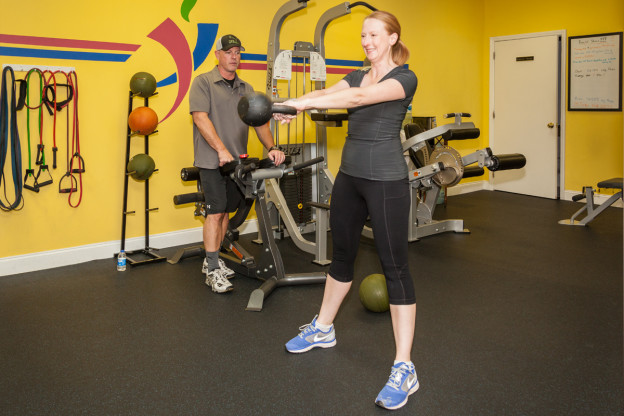
Karen at Shape Up Fitness & Wellness Consulting training with personal trainer Troy Groce

Fitness Is Like Building a House – 4 Essentials to a Fitter You

We live in a society that craves the instant fix. Fitness on the other hand

has nothing to do with an instant fix and everything to do with building a house.

Just like in constructions there are short cuts that can be taken. The problem is though that the house of cards can fall apart pretty easily.

The essential building stones for success in fitness are pretty straight forward:

  1. Stress Reduction: I cannot emphasize it enough. Negative stressors are big when it comes to influencing our success negatively. If you are a procrastinator, you are setting yourself up for failure. If you struggles in your relationship, in your job or other personally important areas, don’t wait until tomorrow until you address it. Make a positive change today and see yourself take off in your journey to a slimmer, fitter, or stronger you!
  2. Sleep Deprivation: I feel like this one is in every blog post of mine. Well, there is a reason for it. Sleep is important for brain function, hormone levels, healing processes, etc. It also messes with our appetite and feeling of satiation. Most people need at least 6.5 hours of sleep.
  3. Food Preparation: Most people eating 200-400 kcal more a day if they eat out at some point during the day. Over the course of the week that is up to 2800 kcal of additional food intake. If you are unable to prepare your own food, or you simply don’t like it, you can always use food preparation services like “Custom Fit Meals” or “ModPaleo”.
  4. Training: Someone trying to lose weight / BF will have optimum results by working out 5-7 hours per week.

If you are looking to gain muscle mass and usually struggle with it, then cardio training should be at a minimum. If you are looking to lose weight then you need to focus on a good mix of strength training, combined with high intensity interval training can melt the fat right off.

The more effort you put in, the more success you will have in the long run. Time to get started today. Let us help you get on the right track!

Have a great day,

Michael


Running Short on Time?

We sometimes struggle with getting everything in. Like this past Monday. My alarm clock had

Things you can do at home

gone off at 4.45 am, my martial arts training started at 5.30 am and the first client trained at 6 am. I still got the rest of my training later that day but it almost did not happen and I sure did not get my lunch break.

Sometimes no matter how much we try, we just don’t make it. We have to cut our workout short, or, just skip it altogether.

It seems though, that even short bouts of exercise are highly beneficial for our mental and physical well being for that reason I want to provide you with something you can do on those days when it just simply does not happen.

Here are a couple of workouts that you can do when you have 30 min or less. You can do them as a circuit training or in order.

30 min Workout gear required TRX or Jungle Gym

  • Inverted Row w/ TRX: 3 sets of 12
  • Jumping Jacks 3 sets of 40
  • Push ups 3×20
  • Single leg squat holding on to TRX 3 sets of 8
  • Mountain Climbers 3 sets of 40
  • TRX reverse flys followed by arm raises 3 sets of 10ea

20 min Workout gear required same as above

  • Alternating Lunges 3 sets of 20
  • Burpees 3 sets of 20
  • TRX Squat to Row (single or two legged) 3 sets of 15
  • Atomic Push Ups 3 sets 10-15

10 min Workout

  • Speed Squats 3×20
  • Jab/Cross Combo 3×30 punches
  • Burpee + Push Up 3×15
  • TRX Chin Ups 3×12

5 min Power Break

  • Push Up max
  • Squats 1×40
  • Plank w/ alternating leg lift for 5s 1x60s
  • Jumping Jacks 80

This gives you several different workouts that you can do whenever you are short on time.  I hope this will help you maintain your fitness during the coming busy holiday season.

Have a wonderful Thanksgiving,

Michael

The Diagonal Lift – Shoulders & Core

The diagonal lift on a cable machine is a great tool to work shoulders and core stability.

What does the lift do?

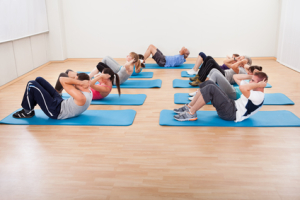
How you can work your core without crunching
Time to stop doing this and start working smarter

This exercise falls into a similar category as the “isometric pallof press” in that it works the core isometrically, forcing you to resist rotational forces. In addition though, it trains your anterior and medial delts for a nice set of shoulders!

How to do it!

We usually start our personal training clients in a tall kneeling position in order to minimize initial instability. The task is to keep the core stable while lifting the rope diagonally past the opposing shoulder, away from the cable. It is crucial to maintain hip stability at all times.

Progressions would be:

  • Half kneeling
  • Standing
  • Altering movement speed

The true test will be performing this exercise fast and maintaining form at all times.


What do I need to pay attention to?

  • You can squeeze a pad or foam roller with your knees in order to help with stability
  • Keeping the hips and torso from rotating.
  • Keep the shoulders packed
  • Vary the speed of the exercise and the load

I would love to help you with your core or sports performance training. Let me know if my team of personal trainers and coaches and I can help you.

Michael

Owner of Shape Up Fitness & Wellness Consulting

Seraphinite AcceleratorOptimized by Seraphinite Accelerator
Turns on site high speed to be attractive for people and search engines.