 Skip to content
Navigating Weight Loss and GLP-1s: The Role of a Charlotte Personal Trainer
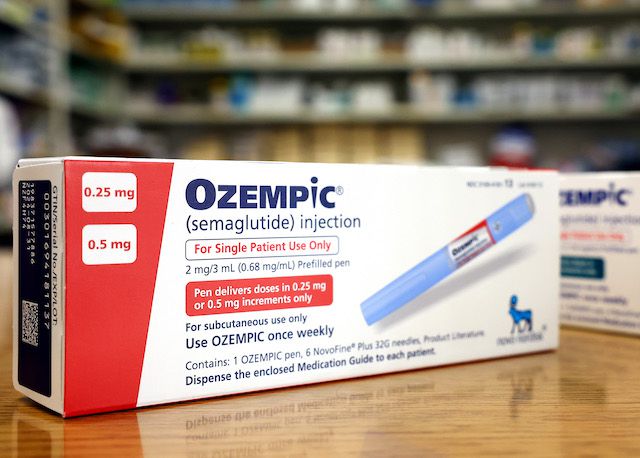
Diets come in many different flavors (see what I did there?) and losing weight is on most people’s minds at some point in their life. Nowadays, with GLP-1 inhibitors like Ozempic and Wegovy, that problem seems to have a new solution—if you can afford the medication. For many, the financial commitment is as much of a consideration as the side effects.
These medications do come with side effects though, and terms like “Ozempic mouth,” “Ozempic labia,” and “Ozempic gut” have cropped up.
What are those issues based on?
For the most part, they are caused not directly by the drug, but by the rapid weight loss it stimulates. That rapid weight loss often leads to a significant loss of muscle mass, with studies showing that up to 40% of the weight lost can be lean body mass. That’s a lot of muscle!
By the end of your weight loss journey, you might be skinny, weak, and feel like your skin fits about as well as a suit that is 3 sizes too large.
There are currently attempts to mitigate those muscle losses by combining the weight loss drug with another compound, but they are not FDA approved as of this moment.
So what can you do if you want to mitigate those effects? Because, let’s face it, no one wants a gaunt face, a turkey neck, or loose skin. This is where a Charlotte personal trainer can make all the difference.
The Charlotte Solution: Exercise and Protein
The good news is that you have a lot of control. Doing a regular exercise routine of about 360 min/week with the majority being strength training seems to significantly offset the loss of muscle mass. The same goes for upping your daily protein intake to about 2g/kg of body weight (that’s about 1g/lb). With a combined approach of high protein and exercise, muscle loss has been reduced to about 15% of the total weight lost.
A key takeaway is that exercise is absolutely crucial to maintaining body strength and muscle mass. Especially as we get older, building muscle is not as easy, and we want to preserve as much as we can.
So go out, lift heavy stuff, get your protein, make sure you sleep enough, and hope for the best if you are on a GLP-1!
The reality is that most people aren’t active for 6 hours a week. In fact, only about 20% of women and 28% of men are meeting the minimum recommended weekly activity levels.
The Missing Piece: Your Charlotte Fitness Partner
The current weekly recommended activity level is about 150 minutes a week of moderate-intensity cardiovascular activity, along with two days of strength training.
According to the Cleveland Clinic, moderate-intensity exercise includes activities like:
Walking two miles in 30 minutes.
Biking five miles in 30 minutes.
Swimming laps for 20 minutes.
Running one and a half miles in 15 minutes.
Doing water aerobics for 30 minutes.
Playing basketball for 20 minutes.
Jumping rope for 15 minutes.
Gardening for 30 to 45 minutes.
While these activities are a great start for a healthy lifestyle, they alone won’t be enough to offset the muscle loss caused by rapid weight loss. You need a dedicated, structured plan. This is where a professional personal trainer in Charlotte can help. We provide the expertise, accountability, and personalized strategy you need to build and maintain lean muscle mass while you lose weight.
Keeping the Weight Off: The Long-Term Strategy
What if you wanted to keep the weight off? Well, most of us are not keen on putting the pounds back on, even though me eating four mini snacks of M&Ms right now would strongly argue against that, lol.
The ugly truth is that staying on the GLP-1 inhibitors and exercising has the highest chance of maintaining the weight loss. It’s followed by a moderate maintenance in the exercise-only group. Not surprisingly, people who just did the drug and then stopped regained the most weight… who would have thought?
The path to long-term success is a serious commitment. Make sure you work on your nutrition quality and intake while on the drug. Focus on nutrient-rich but calorie-poor foods, aim for high protein intake, and rev up your exercise to about 4-6 hours a week. Lift heavy about 3-4 days a week, and do 2-3 days of cardiovascular exercise.
By prioritizing nutrition, protein, and strength training, you can significantly improve your results and feel stronger, not just smaller. For those in the Charlotte area, we’re here to guide you every step of the way.
Ready to get started on your weight loss journey the right way? Contact us at charlottepersonaltrainer.org for a free consultation and let’s build a plan that works for you.
Al-Badri, M., Askar, A., Khater, A., Salah, T., Dhaver, S., Al-Roomi, F., Mottalib, A., & Hamdy, O. (2024). 14-PUB: The Effect of Structured Intensive Lifestyle Intervention on Muscle Mass in Patients with Type 2 Diabetes Receiving GLP-1 Receptor Agonists. Diabetes. https://doi.org/10.2337/db24-14-pub.
Tinsley, G., & Heymsfield, S. (2024). Fundamental Body Composition Principles Provide Context for Fat-Free and Skeletal Muscle Loss With GLP-1 RA Treatments. Journal of the Endocrine Society, 8. https://doi.org/10.1210/jendso/bvae164.
Neeland, I., Linge, J., & Birkenfeld, A. (2024). Changes in lean body mass with glucagon‐like peptide‐1‐based therapies and mitigation strategies. Diabetes, 26, 16 – 27. https://doi.org/10.1111/dom.15728.
Linge, J., Birkenfeld, A., & Neeland, I. (2024). Muscle Mass and Glucagon-Like Peptide-1 Receptor Agonists: Adaptive or Maladaptive Response to Weight Loss?. Circulation, 150, 1288 – 1298. https://doi.org/10.1161/CIRCULATIONAHA.124.067676.
Sargeant, J., Henson, J., King, J., Yates, T., Khunti, K., & Davies, M. (2019). A Review of the Effects of Glucagon-Like Peptide-1 Receptor Agonists and Sodium-Glucose Cotransporter 2 Inhibitors on Lean Body Mass in Humans. Endocrinology and Metabolism, 34, 247 – 262. https://doi.org/10.3803/EnM.2019.34.3.247.
Mozaffarian, D., Agarwal, M., Aggarwal, M., Alexander, L., Apovian, C., Bindlish, S., Bonnet, J., Butsch, W., Christensen, S., Gianos, E., Gulati, M., Gupta, A., Horn, D., Kane, R., Saluja, J., Sannidhi, D., Cody, S., & Callahan, E. (2025). Nutritional Priorities to Support GLP-1 Therapy for Obesity: A Joint Advisory From the American College of Lifestyle Medicine, the American Society for Nutrition, the Obesity Medicine Association, and the Obesity Society.. American journal of lifestyle medicine, 15598276251344827 . https://doi.org/10.1177/15598276251344827.
Reiss, A., Gulkarov, S., Lau, R., Klek, S., Srivastava, A., Renna, H., & De Leon, J. (2025). Weight Reduction with GLP-1 Agonists and Paths for Discontinuation While Maintaining Weight Loss. Biomolecules, 15. https://doi.org/10.3390/biom15030408.
Jensen, S., Blond, M., Sandsdal, R., Olsen, L., Juhl, C., Lundgren, J., Janus, C., Stallknecht, B., Holst, J., Madsbad, S., & Torekov, S. (2024). Healthy weight loss maintenance with exercise, GLP-1 receptor agonist, or both combined followed by one year without treatment: a post-treatment analysis of a randomised placebo-controlled trial. eClinicalMedicine, 69. https://doi.org/10.1016/j.eclinm.2024.102475.


