...

How to Deal with Low Testosterone Levels: A Personal Trainer’s Guide for Injury Prevention and Longevity

As personal trainers specializing in injury prevention and longevity, we know how important it is to maintain optimal health for peak performance, especially as we age. Low testosterone is a common concern for many clients, and while it doesn’t always require action, understanding the implications and addressing the root causes can help your clients live longer, stronger, and healthier lives.

Who’s at Risk?

In younger men (20-44), low testosterone is often tied to obesity, diabetes, substance abuse, or congenital issues. It’s important to recognize that testosterone levels naturally decline over time. For men in their 30s, early declines are often linked to excess weight and unhealthy lifestyle habits, while for those over 40, age-related changes combined with lifestyle factors like inactivity, poor nutrition, and chronic disease play a significant role.
Testosterone Levels

The Role of Lifestyle in Testosterone Management

As trainers, our first line of defense is lifestyle change. Before referring clients to a medical professional for potential hormone therapy, it’s crucial to address key areas that can naturally improve testosterone levels, leading to better recovery, performance, and longevity.

Sleep:

  • Long-term sleep deprivation significantly lowers testosterone levels, reducing energy, drive, and recovery.
  • Sleep apnea, often linked to being overweight, can also suppress testosterone.

Weight Management:

  • Obesity has a profound negative effect on testosterone. Helping clients reach a healthy weight is one of the best ways to restore hormonal balance.

Nutrition:

  • Low-fat diets tend to decrease testosterone levels. Balance is key—don’t let clients cut fats too low.
  • Excessive protein intake (over 3.5g/kg body weight) may also lower testosterone, so fine-tuning their macros is essential.
  • Vitamin D deficiency is common and linked to lower testosterone, so supplementation could help.
  • Caloric restriction can increase testosterone in overweight men but have the opposite effect in men of normal weight. Tailor calorie deficits carefully.

Omega-3 fatty acids, found in fish and supplements, also seem to positively impact testosterone levels, making them a great addition to any nutrition plan.

Exercise and Testosterone: Finding the Right Balance

While we understand the importance of strength and endurance training for injury prevention and longevity, it’s essential to know how they impact testosterone and recovery in different populations.

  • Endurance Training:
    • For untrained men, endurance exercise can increase testosterone, improving energy and recovery. However, in seasoned athletes, chronic endurance training can sometimes suppress testosterone due to increased cortisol production.
    • Clients who combine endurance and resistance training will see a post-exercise testosterone spike, though long-term effects may be minimal.
    • Pro Tip: When programming, prioritize strength training before endurance work to avoid cortisol spikes that can counteract testosterone benefits.
  • Strength Training:
    • Resistance training has minimal impact on resting testosterone in older clients, but it remains vital for improving overall strength, muscle mass, and bone density, which are key to longevity.
    • Use higher intensity, compound movements to stimulate natural testosterone production and improve hormonal health in your clients.

Simplifying the Plan: A Roadmap for Trainers

Here’s how to help your clients manage their testosterone levels through lifestyle optimization:

  1. Assess and Adjust Sleep Patterns:
    Ensure clients get 7-8 hours of quality sleep. For those with sleep apnea, weight loss is essential, and referrals to sleep specialists may be necessary.
  2. Optimize Nutrition:
    • Work with clients to strike the right balance of fats and protein. Too little fat and too much protein can both negatively affect testosterone levels.
    • Ensure they’re getting enough Vitamin D and Omega-3s, and focus on calorie management to avoid extreme deficits, especially in clients of normal weight.
  3. Design Balanced Training Programs:
    • Prioritize strength training for longevity and muscle preservation, but include enough endurance work to support cardiovascular health.
    • Adjust the order and intensity of exercises to minimize cortisol spikes and maximize testosterone production.
  4. Track Progress:
    Encourage clients to monitor their progress over time, using baseline measurements (including body composition, strength, energy levels, etc.) and periodic assessments every 6-12 months. This will help gauge whether lifestyle adjustments are having the desired effect.

When to Consider Referrals for Medical Intervention

If, after a year of consistent sleep, nutrition, and exercise improvements, your client is still struggling with symptoms of low testosterone, it may be time to consult a hormone specialist. While Testosterone Replacement Therapy (TRT) can be effective, it’s important to recognize that once started, it often becomes a lifelong commitment. Encourage clients to weigh the pros and cons carefully and avoid rushing into this option without thorough lifestyle optimization first.

Personal Trainer Perspective: How I’ve Managed My Own Testosterone

I’m 47 now, and about 10 years ago I had my testosterone levels tested. My results showed average levels for my age group. At that time, I wasn’t sleeping enough (5-7 hours a night), my nutrition was okay but not optimal, and while I was training regularly, I wasn’t maximizing my potential.

By simply improving my sleep, most of my symptoms of low testosterone disappeared. Sure, I still struggle with getting enough sleep occasionally, but overall, I don’t experience any issues related to low testosterone. Could I optimize further for better training results? Absolutely. But for now, I’m satisfied with my progress.

This is an important lesson for our clients: Address the basics first. If they still experience symptoms after improving their lifestyle, then hormone therapy might be an option. But jumping into TRT without giving these changes a fair chance may lead to unnecessary lifelong treatments.

Your Client’s Journey to Longevity

As trainers, we’re in a unique position to guide clients toward better health, focusing not only on short-term performance but also long-term well-being. Optimizing sleep, nutrition, and exercise can go a long way in naturally managing testosterone levels, leading to better recovery, performance, and, most importantly, a longer, healthier life.

Remember, TRT may be a solution for some, but it should always be a last resort. Help your clients master the fundamentals before considering hormone therapy.

Coach Michael
Shape Up Fitness & Wellness Consulting

Zhu, A., Andino, J., Daignault-Newton, S., Chopra, Z., Sarma, A., & Dupree, J. (2022). What Is a Normal Testosterone Level for Young Men? Rethinking the 300 ng/dL Cutoff for Testosterone Deficiency in Men 20-44 Years Old. The Journal of Urology, 208, 1295 – 1302. https://doi.org/10.1097/JU.0000000000002928.

Cohen, J., Nassau, D., Patel, P., & Ramasamy, R. (2020). Low Testosterone in Adolescents & Young Adults. Frontiers in Endocrinology, 10. https://doi.org/10.3389/fendo.2019.00916.

Livingston, M., Kalansooriya, A., Hartland, A., Ramachandran, S., & Heald, A. (2017). Serum testosterone levels in male hypogonadism: Why and when to check—A review. International Journal of Clinical Practice, 71. https://doi.org/10.1111/ijcp.12995.

Smith, I., Salazar, I., Roychoudhury, A., & St-Onge, M. (2019). Sleep restriction and testosterone concentrations in young healthy males: randomized controlled studies of acute and chronic short sleep.. Sleep health. https://doi.org/10.1016/j.sleh.2019.07.003.

Alvarenga, T., Fernandes, G., Bittencourt, L., Tufik, S., & Andersen, M. (2022). The effects of sleep deprivation and obstructive sleep apnea syndrome on male reproductive function: a multi‐arm randomised trial. Journal of Sleep Research, 32. https://doi.org/10.1111/jsr.13664.

Su, L., Meng, Y., Zhang, S., Cao, Y., Zhu, J., Qu, H., & Jiao, Y. (2021). Association between obstructive sleep apnea and male serum testosterone: A systematic review and meta‐analysis. Andrology, 10, 223 – 231. https://doi.org/10.1111/andr.13111.

Whittaker, J., & Wu, K. (2021). Low-fat diets and testosterone in men: Systematic review and meta-analysis of intervention studies. The Journal of Steroid Biochemistry and Molecular Biology, 210. https://doi.org/10.1016/j.jsbmb.2021.105878.

Whittaker, J. (2022). High-protein diets and testosterone. Nutrition and Health, 29, 185 – 191. https://doi.org/10.1177/02601060221132922.

Moran, L., Brinkworth, G., Martin, S., Wycherley, T., Stuckey, B., Lutze, J., Clifton, P., Wittert, G., & Noakes, M. (2016). Long-Term Effects of a Randomised Controlled Trial Comparing High Protein or High Carbohydrate Weight Loss Diets on Testosterone, SHBG, Erectile and Urinary Function in Overweight and Obese Men. PLoS ONE, 11. https://doi.org/10.1371/journal.pone.0161297.

Pilz, S., Frisch, S., Koertke, H., Kuhn, J., Dreier, J., Obermayer-Pietsch, B., Wehr, E., & Zittermann, A. (2010). Effect of Vitamin D Supplementation on Testosterone Levels in Men. Hormone and Metabolic Research, 43, 223 – 225. https://doi.org/10.1055/s-0030-1269854.

Abbott, K., Burrows, T., Acharya, S., Thota, R., & Garg, M. (2020). Dietary supplementation with docosahexaenoic acid rich fish oil increases circulating levels of testosterone in overweight and obese men.. Prostaglandins, leukotrienes, and essential fatty acids, 163, 102204 . https://doi.org/10.1016/j.plefa.2020.102204.

Smith, S., Teo, S., Lopresti, A., Heritage, B., & Fairchild, T. (2021). Examining the effects of calorie restriction on testosterone concentrations in men: a systematic review and meta-analysis.. Nutrition reviews. https://doi.org/10.1093/nutrit/nuab072.

Barari, A., Ayatollahi, A., Shirali, S., Ghasemi, M., Hosseini, A., Ekrami, A., & Del, A. (2014). Effect of Endurance and Resistance Training on Parameters Related to Sexual Function in Men. Medical Laboratory Journal, 8, 47-53.

Rosa, C., Vilaça-Alves, J., Fernandes, H., Saavedra, F., Pinto, R., & Reis, V. (2015). Order Effects of Combined Strength and Endurance Training on Testosterone, Cortisol, Growth Hormone, and IGF-1 Binding Protein 3 in Concurrently Trained Men. Journal of Strength and Conditioning Research, 29, 74–79. https://doi.org/10.1519/JSC.0000000000000610.

Bell, G., Syrotuik, D., Martin, T., Burnham, R., & Quinney, H. (2000). Effect of concurrent strength and endurance training on skeletal muscle properties and hormone concentrations in humans. European Journal of Applied Physiology, 81, 418-427. https://doi.org/10.1007/s004210050063.

Küüsmaa, M., Schumann, M., Sedliak, M., Kraemer, W., Newton, R., Malinen, J., Nyman, K., Häkkinen, A., & Häkkinen, K. (2016). Effects of morning versus evening combined strength and endurance training on physical performance, muscle hypertrophy, and serum hormone concentrations.. Applied physiology, nutrition, and metabolism = Physiologie appliquee, nutrition et metabolisme, 41 12, 1285-1294 . https://doi.org/10.1139/APNM-2016-0271.

Grandys, M., Majerczak, J., Kulpa, J., Duda, K., Rychlik, U., & Zoladz, J. (2016). The importance of the training-induced decrease in basal cortisol concentration in the improvement in muscular performance in humans.. Physiological research, 65 1, 109-20 . https://doi.org/10.33549/PHYSIOLRES.933039.

Hayes, L., & Elliott, B. (2019). Short-Term Exercise Training Inconsistently Influences Basal Testosterone in Older Men: A Systematic Review and Meta-Analysis. Frontiers in Physiology, 9. https://doi.org/10.3389/fphys.2018.01878.

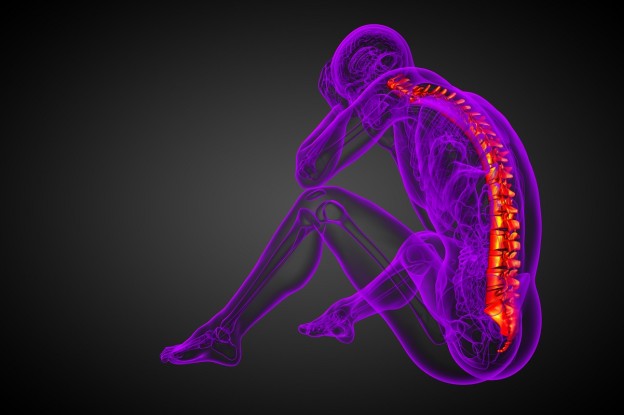
back health at Shape Up Fitness & Wellness Consulting

4 Drills for Thoracic Spine & Shoulder Mobility

Due to an increasingly sedentary work environment for most people that involves sitting at a computer for ours typing away or staring at numbers etc. We see more and more people in a posture like the one at the end of the caricature.

evolution-man-computer


The shoulders are slumped forward and people are constantly hunched. Here are 5 drills you can do to improve thoracic spine mobility, scapula movement, and chest flexibility.

Thoracic Spine Extension

Being in a bent over position for most of the day can wreak havoc on your posture . This drill is great if you have a strong rounding of your back and work in a hunched position

Thoracic Spine Rotational Mobility

If you are lacking rotational mobility this drill is for you. Make sure to keep the back straight, you can support your head with a pillow. Make sure to pinch the foam roller tight and reach towards the ceiling and diagonally out.

Prayer Stretch

This stretch hits thoracic spine extension, scapula movement, triceps stretch & lat stretch. Make sure to keep the head in alignment with your spine, don’t drop it. Keep the back straight, don’t arch your back. If you have a tendency to arch the lower back to avoid the stretch, scoot closer with your knees. This rounds your back more and prevents you to arch.

Pec major & minor Stretch

If you are really tight in your chest use a half foam roller. It puts you into a better position. Press the arms and elbows on the floor and slowly reach beyond your head and pull back. Hold the stretch in a 90 /135 and 180 degree angle for 10-15s.

Have an awesome day,

Michael

Personal Training for Older clients at Shape Up Fitness & Wellness Consulting

How Long Should A Workout Take?

We are asked many times how long a workout should take. The answer is not that simple. Sure, there is the optimum length but even that depends on the person’s fitness level, age, and willingness to commit time.

Research indicates that it is better for people to have more frequent, shorter workouts than only a few long workouts.

So, yes, ideally I would like you to go through a 10-15 min warm up sequence including foam rolling, some stretching, corrective & activation exercises. After that I would like you to work out for 60 min and then cool down for about 15 min.

But it is not going to happen for most

For most people this is simply not going to happen. So if 30 min is all you can do then it will have to do. Working out 30 min 5 days a week is always better than 90 min one day a week and then wait until the following week for the next workout.

Sometimes we don’t even have 30 min. A lot of our accountants are slammed at this time of the year. They work from 6 or 7 in the morning until 1 or 2 at night. Do some chin ups, run up and down the stairs, do some push ups, planks, etc. There is always something that can be done.

There is not really I don’t have the time. You might not have the time for a full on workout, but you might have enough time for one exercise here and there.

Today is the day

Today is the day to get started. Stop waiting for the perfect time. It will never come around. Start working out your day. It is not about a six pack, or a perfect butt. It is about your health & well being.

Yours in health & fitness,

Michael


A man and woman doing a heavy weight lifting routine at Shape Up Fitness & Wellness Consulting

How to Get Back Into Exercise After A Long Break

We all have had longer breaks from exercise. Sometimes we just got too busy at work, with our family, other times it might have been an injury. If you have been out of training for longer than 3 weeks you should follow a couple of simple rules to get back into it.

The Short about what you need to know about getting back into working out

  •  Slow down after a longer break
  • Work with your body, don’t see it as the enemy
  • Frustration is a normal part of the process
  • Shorter, more frequent workouts might be better for you
  • Listen to the cues your body is giving you!
  • Listen to a professional at the beginning

Slow is the new fast

If you are like me then you might want to jump right back into where you stopped at. Same weights lifted, same mileage run, same hours put in. This is a sure way of setting yourself up for failure, injury and frustration.

  • If your break was shorter than 1 month but longer than 2 weeks reduce your volume by 25%.
  • If your break was longer than 1 month but shorter than 3 month reduce your volume by 50% and increase it by 10-15% per week.
  • Anything longer than 3 months of no exercise start at around 35% of what you have been doing and increase your load by 5-10%/week.


Your body is not the enemy

Sometimes we treat our body like the enemy when it does not perform on the level that we are looking for. We push through pain, force workouts and keep setting ourselves back. We also diminish our joy of working out. Listen to your body and work out accordingly. You will have more fun and success in the long run!

Frustration is normal

If you have a history of working out regularly and you were sidelined because of injury, frustration can be one of the biggest problems you can have. You will get impatient, you might feel like it will never get better.

It will get better, just not necessarily on the timeline that you were looking for. Our bodies have an amazing capacity to heal. Supporting it with soft tissue work like foam rolling & massages, stretching and corrective exercise can do wonders. Advancing too fast will get you injured quickly!

Go for less more often instead of going big one time

You might feel that working out for 10 min is not nearly enough, that it is not worth the effort. But research shows that it is better to do something for 10 min six times a week than exercising for 60 mins one time in a week. Most likely you are hitting it too hard during your one big workout in the week anyway.

Trust your body

Nobody else feels what you feels. If you work with a healthcare professional or a personal trainer make sure to explain to them what you are feeling as acurately as you can. They are better at interpreting where it might come from but they will need your feedback to make the best decision in regards to your training and health. If you have the feeling that your advisors are not listening, get new ones!

 Get help

I get it, we all think we can do it ourselves, and you can. With a lot of reading up, thorough research and commitment you will be able to put something together for you that might work. On the other hand you can always ask a professional in your field (cycling coach, personal trainer, running coach, etc), to help you with the basic setup. This person will be able to put a training routine together based on your current fitness level, observe your movements and make adjustments.

If you are interested in finding out more about our program,

visit our main page


Thoughts On Wearing a Brace

Todays blog is provided by Troy Groce. He is one of my personal trainers and specializes in a corrective approach to training. He is sharing some thoughts on rushing towards braces whenever something seems to be uncomfortable:

A brace is not always the right way to go

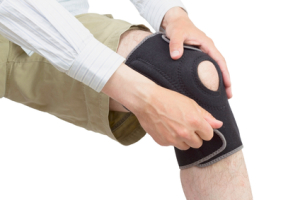
Our society has become brace happy.  At the first sign of discomfort people brace joints more often than they should.  Bracing may provide temporary relief, but it can pose more extensive long term problems.  However, bracing is appropriate when a joint is significantly injured or unstable and/or when any excessive additional movement can cause further injury. Knowing the difference between discomfort and acute pain is essential.  Significant acute pain should be diagnosed by a medical practitioner.

Bracing at the first sign of discomfort and restricting movement can actually slow down the healing process. Movement at a joint when it’s mildly injured brings blood flow to help in the recovery process. Bracing weakens the stabilizing muscles and connective tissue around the joint. Wearing a brace too long causes the joint to grow weaker, possibly resulting in a more significant injury to the specific joint or dysfunction in other related joints.  The root issue of most non-traumatic joint pain is usually associated with improper movement patterns that can be simply addressed with a proper corrective exercise program.

I am looking forward to helping you with your goals,

Troy Groce


What to do when you sprain your ankle?

Ankle sprains are pretty common. Many of us have had one and if you had one, there is a good chance you will have or had a second one. You step off the curb, step wrong just for one second, and bang, your ankle goes out of under you.

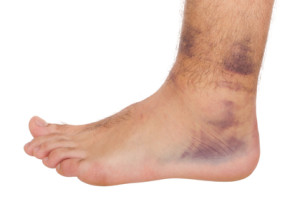
Inversion ankle sprain with strong hematoma
Not a pretty sight!

What is an ankle sprain?

The most common ankle sprain is the inversion ankle sprain. The sprain is graded into 3 different categories.

  • Category one leads to some stretching or minor tearing of the ligamentous fibers. The joint stability is usually not compromised. You might feel the joint to be a little bit more stiff, but usually there is not a lot of swelling, and only mild pain.
  • The second degree sprain is a different matter. The joint is definitely more unstable, there is more tearing and separation of ligamentous fibers.
  • The third grade involves a total rupture of the ligament and severe instability of the joint, profuse swelling and severe pain. A third degree sprain can be accompanied by other ligament or structural injuries  in the joint. and surgery might be necessary.

What to do at first?

RICE – rest it, ice it, compress it and elevate it is probably the most important thing to do in an ankle injury initially. Depending on the severity of the sprain you might have to have the ankle immobilized for a couple of weeks, or even have surgery (usually 3rd degree sprain).

What to do later?

Here comes my disclaimer, I am not a physician and don’t try to be one. This advice is not for you to treat yourself but be a little bit better informed. It certainly does not replace your healthcare professional.

In the beginning you will have to scale back on vigorous training (that is at least what the textbook says). Well, you have other body parts you can work out vigorously without compromising joint integrity. You will have to lay off of running, jumping or some leg exercises but don’t think you can get out of working out once you are past the first 3-5 days. Once you are allowed to be weight bearing again you can even try some aquatic exercises which allow you to be partially weight bearing, and you have some compression from the water on the joint. Neat trick!

Now if you only have a minor ankle sprain you don’t have to go into the pool to exercise. You will want to stay initially with bilateral movements that minimize eversion or inversion of the foot. Avoid forcing range of motion. Stability seems to be the key. Pain should be the guidance and you want to progress to range of motion exercises as quickly as possible. Later on it is important to maintain the appropriate range of motion via mobility work.

Training balance as soon as it is painfree can help stabilize the joint against future injuries. Some people question the use of balance boards, bosu balls, etc. with the argument that they defy the argument of specificity. The next step would be the transition from walking to running, lateral movements with stabilization and finally cutting and sport specific exercises. Strength training should be functional and look at the whole body not just the ankle joint. Gait analysis and corrections should be made and progressions should be dependent on owning the movement. Pain should be seen as an indicator to back off.

Take Away

Stage 1

  1. RICE (rest, ice, compression, elevation)
  2. Exercises stressing plantar and dorsiflexion (pointing your foot and pulling the foot back)
  3. Cycling and hand ergometer

Stage 2

  1. Range of motion in all planes
  2. reduce swelling and pain
  3. Balance exercises

Stage 3

  1. Full strength
  2. Full range of motion
  3. Restoration of proprioception
  4. Reintegration into sports

Rehab nowadays does not reduce you to one join anymore, at least it should not. Your training should still be challenging but take into account that your ankle is a problem. Pain is always the guidance. Pain changes movements and innervation patterns. Just because you are able to still do the movement clean with pain, does not mean that the muscle that the integrity of the kinetic chain is still given. Unilateral strength exercises are functional and add stability to your strength training but initially after returning to your strength training you might have to regress back to bilateral work in order to really focus on strength. If you look at the make up of a training session it would look something like this:

  1. Foam Rolling
  2. Mobility work as allowed
  3. Ankle stability training
  4. Strength training
  5. Conditioning

I hope this has been helpful,

Have a great start into the weekend,

Michael


References:
Cressey, Eric (6/23/2014 online) http://www.t-nation.com/training/bosu-ball-the-good-bad-and-ugly/print
Prentice, William E. (2004).  Rehabilitation Techniques for Sports Medicine and Athletic Training
Peterson & Rendström (2001). Verletzungen im Sport. Prävention und Behandlung. 3. Auflage. Deutscher Ärzte-Verlag.

What to do when your knee hurts!

A lot of my personal training clients, myself included have had knee pain at some point and time in their life.

You might remember this nagging pain under the knee cap, maybe off to the side. Some feel it just below the knee or they have problems straightening their leg because the knee feels tight.

The knee is one of the most complex joints in the body. It has many surfaces that glide over each other. It is being held in place by strong ligaments and is stabilized and moved by the muscles of your whole leg. Yep, the whole leg. You might wonder now what youknee_arthroplasty_anatomy01r butt or your calf has to do with the knee but we will get to that in a little bit.

First I need to tell you what this article is NOT, it is not a guide how to treat acute or chronic injuries yourself. First of all, I am not a medical professional, second of all, it would go beyond the scope of this blog. What the blog will do though, is get you a little bit better at understanding your body in order to help you discuss your issue with your fitness or health care professional and understand how your training impacts your knee.

The causes for knee injuries differ widely. Some are caused by an acute injury, like you tripping, someone sliding into you during sports, etc. Others come on chronically due to biomechanical factors which could be habitual, genetic, etc. and some are a combination of the above.
Your training might be able to train up your legs, make them stronger and more injury resistant to acute injuries (see above). Now when it comes to biomechanical problems it gets a little bit more complicated. Here the goal is to correct an underlying issue. Depending on its nature that might not be possible. You might have been born with a severe leg length difference, scoliosis, etc. Factors that we as trainers or health care professional might not be able to correct at all or only minimally.

So what can training do for you?

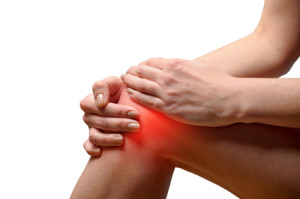
Young woman having knee pain
Is your knee hurting as well?

A lot of chronic knee issues come from the joint above or below the actual knee. I always tell my clients the following analogy: “If one of two workers goes on vacation, which one is the most likely to complain about it?” The answer is obvious, the one doing all the work. Especially with chronic knee pain we often see that the hip muscles are not able to do their job for various reasons. The hip joint is not properly stabilized or mobile enough which in turn can lead to problems in knees or back.

Bad Movement – No Pain

When a personal training client comes to us, we perform a comprehensive initial consultation to check out their movement patterns, see if pain exists, etc. Occasionally we find dysfunctional movements that do not cause pain. Oftentimes using proper lateralization/regression exercises, we are capable of activating and correcting those movement patterns and prevent an injury from happening.

Pain with Movement

In case we already have an existing pain pattern, we refer the client out to a health care professional we trust, in order to work in tandem on the problem. Together we create a cohesive team dedicated to our client’s well being.

For a long time therapists were focused solely on the muscles surrounding the affected joint. In case of the knee they would work the quads and hamstrings. One of the favorite machines back in the day was the knee extension. Extensive research and a lot of ruined post-patellar cartilage later this machine finds less and less use.

Since then, things have come a long way. Good physical therapists during the rehab phase, and personal trainers and coaches during the reintegration phase, have started to look at the whole kinetic chain. We have realized that we cannot just look at the muscles surrounding an affected joint. Don’t get me wrong those have to be addressed appropriately, but we have to look at what is happening above and below. good hip stabilization, ankle stabilization and movement patterns very much influence the knees.

What does that mean in regards to your training?

Single leg deadlifts, deadlifts, bridges, chop patterns half kneeling or tall kneeling and so many more exercises can be  great tools in your tool box. We have found that when you train a client who has knee pain and stay away from pain causing movements and focus on hip exercises, we often see improvements in their pain and movement patterns, and pain free range of motion.

Despite us not doing any treatment at the hurting location and instead addressing the muscles that were not working properly prior to the injury we were able to help some clients minimize their pain, or eliminate it completely.

So, just because your knee hurts does not mean you cannot train legs. You have to train smarter!

Have an awesome day,

Michael


Fitness Transformation Success Story I

Tammy’s story:


This is going to be a series of success stories of our personal training clients. It is in no particular order but I feel like the success they have had and the work they put in should be honored.

The Beginning

Tammy wrote me for the first time in December of ‘12. She made it very clear that she wanted to check my credentials and make sure that we were a good fit.  If yoTammy Milliken after Personal Training with Shape Up Fitness in Charlotteu meet her you will see she knows exactly what she wants. She was planning on having surgery for an injury that occurred while training for the Marine Corps Marathon that year (she did finish it), and wanted me to help her get back to training for the marathon again in 2013, but this time running it all the way through.

The Meeting

The initial consultation was a meeting of the minds. Tammy was very outspoken, voiced clearly what she wanted and had a great sense of humor. She was determined. She clearly rejected any idea of failure and is going for it. During the consultation we found a couple of movement issues that lead to her injuries aside from a nasty fall during one of her training runs.

.

The Start

We decided to go ahead and start with the personal training. She wanted to come in 3 days a week, which was optimal. After her surgery we started working closely together with her physical therapist in order to optimize the rehab process.  We were lucky since they only had cleaned out the knee and the recovery was fast.  Soon the knee that had undergone surgery was doing better than the other one that had severe arthritis.

Her training was a consistent whole body training with a focus on post rehab, optimizing her nutrition to get her to the ideal race weight, and reduce stress on joints.

The Change

In March we decided to pick up running. I had told Tammy she needed to change her running style. She was a classic heel striker with a relatively low cadence. We switched over to a fore/mid-foot strike and going for a cadence of 180 steps/min. The running started with a walk/run routine that progressed to run/walk with shorter and shorter walking intervals. The progress went well and we started working with Dr. Nevin Markel of Performance Rehab Associates in order to work on some lingering soft tissue issues and support the training progress.

The Setback

In May, while I was on vacation she had started to go off the reservation. Thinking that she needed more running than I had planned, she added more running into her existing training plan. When I came back from my vacation she was set back by 2-4 weeks.  Joints and muscles were achy and she was not moving as well anymore. Not giving up, Tammy recovered quickly and again we made good headway.

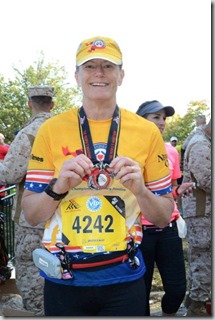
The RaceAt the Finish after the Marine Corps Marathon 2013 trained by Shape Up Fitness & Wellness Consulting

The training went great and she was stronger, faster and leaner than she ever had been before. She was not hungry despite the changes in her nutrition and the fat loss. She had gone from 196 lbs to 170 lbs and gained several pounds of muscle mass. By the time the Marine Corps Marathon came around in October, she was ready! She ran the race and finished it 45 min faster than the year before, and had a good time doing it! After the race she was not sore beyond day 2 and had no injuries.

The Aftermath

After the race we needed to slow down. Having a long structured training plan is hard. It is really important afterwards to have an easy time, just playing, training for fun, working on some things that had been neglected in the race preparation.

Tammy doing 3 chin ups by herself

The Future

Tammy has decided to run a couple of shorter races but she already mentioned that she wants to run the Marine Corps Marathon again. Her nutrition is still on point. She is down to 165 lbs., has gained 6 lbs. of muscle mass and is at 16.38% body fat. Last week she was able to do her first unassisted chin ups and she did 3 in a row, twice, because I forgot the camera the first time, haha.

Conclusion

I am so proud of what she has accomplished, the focus, the drive and the balance. She did not let anything deter her.  It really has been a pleasure to work with her and I am looking forward to continuing to train her.

What Value Does Physical Therapy Have?

A lot of our personal training clients mention orthopedic issues they have accumulated over the years and have been seeing physical therapists for. Their results have been mixed. Some have had excellent results with their therapy and others have not. The question is what made some of my clients successful and others not?

Several factors play a role here. Obviously not every physical therapist is a good therapist same as with personal trainers but let us assume that the physical therapist is decent and knows what he/she is doing.

I think that physical therapy is of high value to get you back on your feet if you have certain issues and several factors come together:

  1. Make sure that the physical therapist knows their stuff. That is one of the most difficult things to discern, since most people are laymen and don’t really know anything about training or rehabilitation. This is what you should pay attention to:
    1. Make sure the physical therapist does a thorough assessment which should consist of medical history, lifestyle history, functional movement assessment (how well do you move overall).
    2. Let the therapist give you a ROUGH layout of what he/she is planning to do with you over the course of the next couple of weeks.
  2. This is what you need to do:
    1. Once you found a therapist do not just listen to their advice but heed it as well. Do exercises they give you and do them regularly. Ice when you are supposed to, apply heat when necessary.
    2. If you continue your life exactly the way you lived it before the chance of you having the same issues again is quite high because unless you had an accident you got their somehow.
    3. Take responsibility for your actions. If you are supposed to take it easy or supposed to exercise and you don’t, don’t blame the failure of your rehab on the physical therapist. It is yours, own it! YOU HAVE TO MAKE LIFESTYLE CHANGES!
    4. Be patient. Most chronic issues do not come on overnight, and they won’t go away overnight. Gradual progress is good and in some cases you just might be able to slow down the progress of certain chronic issues or diseases.
    5. Coordinate your health care and fitness professionals. WE MAKE SURE to work closely with our clients’ health care professionals together. This way we all work on the same goal, getting YOU fitter, healthier and into better shape. Not every physician, physical therapist and personal trainer does that automatically, some might even be disillusioned. Request them to work together if they won’t, fire him.

The Charlotte Observer posted an interesting article in regards to it.


I would love to help you accomplish your goals. Feel free to post your questions.


Michael


Seraphinite AcceleratorOptimized by Seraphinite Accelerator
Turns on site high speed to be attractive for people and search engines.