...

Lose Weight for Life: A Charlotte Trainer’s Longevity Guide

Lose Weight

The Science of Sustainable Weight Loss and Longevity

By Coach Michael Anders — Shape Up Fitness & Wellness Consulting, Charlotte, NC

Why a Healthy Weight Matters for Injury Prevention and Longevity

A healthy weight isn’t just about looks — it’s vital for injury recovery and long-term health. In turn, less excess weight means less joint stress and better performance. As an example, your strength-to-weight ratio improves, and so do speed and endurance Try this simple test: strap 25 lbs to yourself and go for a run — you’ll fatigue much faster. A good example for this would be doing push ups or pull ups, any excessive weight will make it increasingly more difficult for us to perform those exercises. Considering long-term, even getting off the toilet may become a challenge if having a weak body is paired with too much weight around the mid-section.

As a Charlotte personal trainer specializing in injury recovery and longevity, I see clients transform as excess weight comes off — strength rises, pain drops, and confidence returns. It is amazing to see when someone comes it at first and struggles with relatively easy exercises to then kick butt. Seeing that smile appear on their face is absolutely one of the most rewarding things to see!
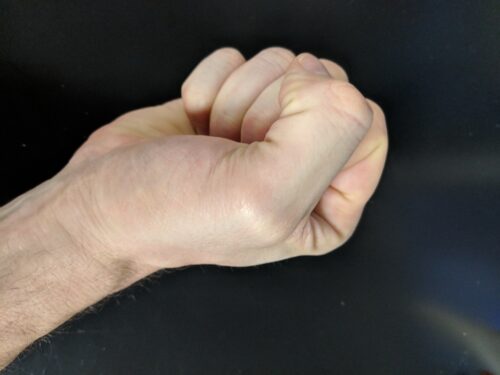
Simple portion frameworks help you stay consistent in real life, even I as a trainer use this when going out.

The GLP-1 Era — and How to Succeed With or Without It

Okay, we all have friends that have lost a ton of weight while being on Ozempic and sport their new or old outfits. I totally get it. We live in the age of GLP-1 medications. Many people have used them now and have lost a ton of weight and feel a lot better. However, if you’re using them, build the habits now so your results last when you reduce or stop. For details, see my previous article on navigating GLP-1 inhibitors.

Disclaimer: This article is informational and does not create a client–trainer relationship. Consult your physician or dietitian before making changes to your health plan.

Which Diets Actually Work Long-Term (12–24 Months of Research)

Trends come and go — low-carb, low-fat, Mediterranean, high-protein — but the research is consistent: the best diet is the one you can stick to. So, when looking at diets over 12–24 months, weight-loss outcomes among popular diets are pretty similar.

Diet TypeTypical 12–24 Month Weight LossNotable Points
Low-Carbohydrate (e.g., Atkins, Keto)4–7 kg (8.8–15.4 lbs)Slight early advantage; long-term similar to others
Low-Fat4–6 kg (8.8–13.2 lbs)No long-term advantage over others
Mediterranean4–7 kg (8.8–15.4 lbs)May improve heart health; similar weight loss
High-Protein4–7 kg (8.8–15.4 lbs)May aid maintenance; modest effects
Group/Lifestyle Interventions3–7 kg (6.6–15.4 lbs)Support and frequent contact improve outcomes

Why a Calorie Deficit Is the Foundation of All Weight Loss

No matter which way you try to skin a cat or lose weight, sustained weight loss requires a calorie deficit. Even with PCOS or other challenges, progress depends on energy balance — some of us simply need tighter systems to reach it. As painful as that can be, in the end eating less than you are putting out is what does the job, every single time.

Practical Portion Tools That Actually Help

Tool or MethodTypical Use or AdviceWeight-Loss Impact
Hand-Based GuidesVisual estimation (hand/fist/palm)Modest, supportive
Portion Control PlatesHalf veggies, quarter protein, quarter carbsModest, supportive
Calibrated UtensilsMeasured serving spoons/cupsModest, supportive

These tools shine when eating out or estimating portions, and they work best when paired with support by learning more about nutrition as well as tools that help change behaviors that might lead to you eat too much, e.g. stress eating, boredom eating and so on.

Intermittent Fasting: Helpful, Not Magical

We all have this friend that insists intermittent fasting is the best thing since sliced bread…pun intended. The reality is, this is not so. It is not some magic bullet that fixes it all. Intermittent fasting can work because it helps some people eat fewer calories — not because it’s inherently superior.

When calories are matched, results are similar to other methods. That means, if it works for you, have fun, but otherwise find what serves you best. Personally, calories in vs. out works best for me. I have established that over years and worked on it. For others a specific diet might be better. It is okay! Just don’t become a holy roller and start preaching to others how your way is THE way! It is not, it is just yours. Get over yourself.

How to Stay Lean for 5 Years and Beyond

Long-term success comes from multicomponent lifestyle interventions: Well that is quite a mouthful here but really just means you learn more about nutrition and behaviors that lead to you to fall off the wagon.
You also want to be active on a regular basis, preferably with me as your coach, haha. A good suggestion here is about 3-7 hours of you moving per week.
We are not lone wolfs, we are group animals, so let’s face it having support by people, friends, partners is important. Shaping a new identity can help us and groups like a running club, cycling group, or a local fitness community come in handy— it doesn’t have to be a commercial program.

I tell clients: “I’m an obese person in a lean body.” I weigh my food daily for accountability — not obsession — to stay consistent in any training phase.

Medical & Surgical Options

  • GLP-1 medications (e.g., semaglutide, tirzepatide) often sustain 10–15% weight loss when paired with lifestyle changes.
  • Bariatric surgery remains the most effective for severe obesity, maintaining 20–30% loss over 5+ years (some regain is common).
  • Digital health tools (apps, trackers, coaching) reinforce accountability and maintenance.

8 Key Steps for Sustainable Weight Loss

  1. Choose a diet you can stick with long-term.
  2. Maintain a consistent calorie deficit.
  3. Favor minimally processed foods with adequate protein.
  4. Track portions (hand guides) or weigh your food.
  5. Exercise 3–7 hours per week.
  6. Sleep 7–9 hours nightly.
  7. Address stress and mental health barriers.
  8. Find social support (partner, group, or coaching).

Living in Charlotte? Make It Local and Sustainable

Life in Charlotte is busy — work, family, traffic, and everything in between. At Shape Up Fitness & Wellness Consulting in South Charlotte, we build practical, sustainable plans that fit your lifestyle, whether your goal is injury recovery, nutrition coaching, running performance, or lifelong strength.

The Real Cost of Neglect

“I don’t have time” is understandable — but neglect defers the cost to your future self with interest. Healthy living isn’t a guarantee against illness, but it shifts the odds and helps you live longer, stronger, and with higher quality of life.


Coach Michael Anders
Shape Up Fitness & Wellness Consulting Inc., Charlotte, NC
From Injury to Performance™

Book a consultation  •  Read more articles


Sources:

Jabbour, J., Rihawi, Y., Khamis, A., Ghamlouche, L., Tabban, B., Safadi, G., Hammad, N., Hadla, R., Zeidan, M., Andari, D., Azar, R., Nasser, N., & Chakhtoura, M. (2022). Long Term Weight Loss Diets and Obesity Indices: Results of a Network Meta-Analysis. Frontiers in Nutrition, 9. https://doi.org/10.3389/fnut.2022.821096.

Tobias, D., Chen, M., Manson, J., Ludwig, D., Willett, W., & Hu, F. (2015). Effect of Low-Fat vs. Other Diet Interventions on Long-Term Weight Change in Adults: A Systematic Review and Meta-Analysis. The lancet. Diabetes & endocrinology, 3, 968 – 979. https://doi.org/10.1016/S2213-8587(15)00367-8.

Curioni, C., & Lourenc, P. (2005). Long-term weight loss after diet and exercise: a systematic review. International Journal of Obesity, 29, 1168-1174. https://doi.org/10.1038/sj.ijo.0803015.

Borek, A., Abraham, C., Greaves, C., & Tarrant, M. (2018). Group-Based Diet and Physical Activity Weight-Loss Interventions: A Systematic Review and Meta-Analysis of Randomised Controlled Trials.. Applied psychology. Health and well-being, 10 1, 62-86 . https://doi.org/10.1111/aphw.12121.

Kim, J. (2020). Optimal Diet Strategies for Weight Loss and Weight Loss Maintenance. Journal of Obesity & Metabolic Syndrome, 30, 20 – 31. https://doi.org/10.7570/jomes20065.

Van Baak, M., & Mariman, E. (2019). Dietary Strategies for Weight Loss Maintenance. Nutrients, 11. https://doi.org/10.3390/nu11081916.

Atallah, R., Filion, K., Wakil, S., Genest, J., Joseph, L., Poirier, P., Rinfret, S., Schiffrin, E., & Eisenberg, M. (2014). Long-Term Effects of 4 Popular Diets on Weight Loss and Cardiovascular Risk Factors: A Systematic Review of Randomized Controlled Trials. Circulation: Cardiovascular Quality and Outcomes, 7, 815–827. https://doi.org/10.1161/CIRCOUTCOMES.113.000723.

Clifton, P., Keogh, J., & Noakes, M. (2008). Long-term effects of a high-protein weight-loss diet.. The American journal of clinical nutrition, 87 1, 23-9 . https://doi.org/10.1093/AJCN/87.1.23.

Chawla, S., Silva, T., Medeiros, S., Mekary, R., & Radenkovic, D. (2020). The Effect of Low-Fat and Low-Carbohydrate Diets on Weight Loss and Lipid Levels: A Systematic Review and Meta-Analysis. Nutrients, 12. https://doi.org/10.3390/nu12123774.

Jia, S., Liu, Q., Allman-Farinelli, M., Partridge, S., Pratten, A., Yates, L., Stevens, M., & McGill, B. (2022). The Use of Portion Control Plates to Promote Healthy Eating and Diet-Related Outcomes: A Scoping Review. Nutrients, 14. https://doi.org/10.3390/nu14040892.

Almiron-Roig, E., Majumdar, A., Vaughan, D., & Jebb, S. (2019). Exploring the Experiences of People with Obesity Using Portion Control Tools—A Qualitative Study. Nutrients, 11. https://doi.org/10.3390/nu11051095.

Almiron-Roig, E., Domínguez, A., Vaughan, D., Solis-Trapala, I., & Jebb, S. (2016). Acceptability and potential effectiveness of commercial portion control tools amongst people with obesity. British Journal of Nutrition, 116, 1974 – 1983. https://doi.org/10.1017/S0007114516004104.

Jayawardena, R., Swarnamali, H., Ranasinghe, P., & Hills, A. (2021). Impact of portion-control plates (PCP) on weight reduction: A systematic review and meta-analysis of intervention studies.. Obesity research & clinical practice. https://doi.org/10.1016/j.orcp.2021.01.008.

Kesman, R., Ebbert, J., Harris, K., & Schroeder, D. (2011). Portion control for the treatment of obesity in the primary care setting. BMC Research Notes, 4, 346 – 346. https://doi.org/10.1186/1756-0500-4-346.

Christoffersen, B., Sanchez-Delgado, G., John, L., Ryan, D., Raun, K., & Ravussin, E. (2022). Beyond appetite regulation: Targeting energy expenditure, fat oxidation, and lean mass preservation for sustainable weight loss. Obesity (Silver Spring, Md.), 30, 841 – 857. https://doi.org/10.1002/oby.23374.

Perdomo, C., Cohen, R., Sumithran, P., Clément, K., & Frühbeck, G. (2023). Contemporary medical, device, and surgical therapies for obesity in adults. The Lancet, 401, 1116-1130. https://doi.org/10.1016/S0140-6736(22)02403-5.

Wood, B., Lynch, D., Spangler, H., Roderka, M., Petersen, C., & Batsis, J. (2022). Long‐term weight change after a technology‐based weight loss intervention. Journal of the American Geriatrics Society, 71. https://doi.org/10.1111/jgs.18088.

Abeltino, A., Bianchetti, G., Serantoni, C., Riente, A., De Spirito, M., & Maulucci, G. (2024). Digital Biohacking Approach to Dietary Interventions: A Comprehensive Strategy for Healthy and Sustainable Weight Loss. Nutrients, 16. https://doi.org/10.3390/nu16132021.

Turkkila, E., Pekkala, T., Merikallio, H., Merikukka, M., Heikkilä, L., Hukkanen, J., Oinas-Kukkonen, H., Salonurmi, T., Teeriniemi, A., Jokelainen, T., & Savolainen, M. (2025). Five-year follow-up of a randomized weight loss trial on a digital health behaviour change support system. International Journal of Obesity (2005), 49, 949 – 953. https://doi.org/10.1038/s41366-025-01742-4.

Aderinto, N., Olatunji, G., Kokori, E., Olaniyi, P., Isarinade, T., & Yusuf, I. (2023). Recent advances in bariatric surgery: a narrative review of weight loss procedures. Annals of Medicine and Surgery, 85, 6091 – 6104. https://doi.org/10.1097/MS9.0000000000001472.

Lee, M., Shaffer, A., Alfouzan, N., Applegate, C., Hsu, J., Erdman, J., & Nakamura, M. (2024). Successful dietary changes correlate with weight‐loss outcomes in a new dietary weight‐loss program. Obesity Science & Practice, 10. https://doi.org/10.1002/osp4.764.

Chao, A., Quigley, K., & Wadden, T. (2021). Dietary interventions for obesity: clinical and mechanistic findings.. The Journal of clinical investigation, 131 1. https://doi.org/10.1172/JCI140065.

Zhang, Q., Zhang, C., Wang, H., , Z., Liu, D., Guan, X., Liu, Y., Fu, Y., Cui, M., & Dong, J. (2022). Intermittent Fasting versus Continuous Calorie Restriction: Which Is Better for Weight Loss?. Nutrients, 14. https://doi.org/10.3390/nu14091781.

Ezzati, A., Rosenkranz, S., Phelan, J., & Logan, C. (2022). The Effects of Isocaloric Intermittent Fasting vs. Daily Caloric Restriction on Weight loss and Metabolic Risk Factors for Non-communicable Chronic Diseases: A Systematic Review of Randomized Controlled or Comparative Trials.. Journal of the Academy of Nutrition and Dietetics. https://doi.org/10.1016/j.jand.2022.09.013.

Kim, J. (2020). Optimal Diet Strategies for Weight Loss and Weight Loss Maintenance. Journal of Obesity & Metabolic Syndrome, 30, 20 – 31. https://doi.org/10.7570/jomes20065.

Liu, D., Huang, Y., Huang, C., Yang, S., Wei, X., Zhang, P., Guo, D., Lin, J., Xu, B., Li, C., He, H., He, J., Liu, S., Shi, L., Xue, Y., & Zhang, H. (2022). Calorie Restriction with or without Time-Restricted Eating in Weight Loss.. The New England journal of medicine, 386 16, 1495-1504 . https://doi.org/10.1056/NEJMoa2114833.

Fleischer, J., Das, S., Bhapkar, M., Manoogian, E., & Panda, S. (2022). Associations between the timing of eating and weight-loss in calorically restricted healthy adults: Findings from the CALERIE study. Experimental Gerontology, 165. https://doi.org/10.1016/j.exger.2022.111837.


Live a healthy life, run every day with your friends

The Truth About Weight Loss

The truth about weight loss by one of the most successful personal trainers in Charlotte

I recently read an article on NPR that said that the average American male is 5’9″ tall weighs 195.5 lbs, and has a waist circumference of 39.7″.
Women don’t do much better; the average woman is 5’4″, weighs 166.2 lbs and has a waist of 37.5″.
Being overweight is the new normal. The average woman’s BMI is 28.5; the average man sits comfortably at 28.9, to put that into perspective, the healthy BMI range is considered 18.5-24.9. We are considered overweight between 25 and 29.9 and obese above that. I am mentioning these facts, not to shame anyone, quite the opposite, we need to be aware of this situation to act.
Going back to our statistic, we quickly realize that we are not far away from being obese on average, as a country. The increased risk for heart disease, type 2 diabetes, stroke, mental illness, arthritis, etc. grows exponentially.Family watching TV and eating pizza
Now, if you are savvy, you will tell me that BMI does not distinguish between body fat and lean muscle mass. You are correct about that. It does not matter, though. The reason for that is simple. Only 20% of Americans get the minimal dose of exercise needed, and those who do are between the age of 18 and 24. While the other 80% are busy busting their butt at work, their family, sitting on the couch or stuffing their face.

How can I be so flippant and insulting? I do not intend to be; it shows a simple reality in life. Once life hits, meaning family, work, grad school, etc. all of the energy available goes towards making a living, raising a family and making ends meet. By the end of the day, the long hours without break take their toll. We break down. We sit on the couch, watching Netflix or Sports, living vicariously through some drama blaring out of the Zombie Box (TV), our phone, tablet, etc. All the while we eat sugary, fatty delights created by the food industry to light up our brain like a Christmas tree and give us the well-deserved Dopamine release we craved for all day and did not get. We are trying to drown our stress, emotional discomfort, and sorrows with food-porn and TV.

Weight Loss is not easy

Against all the propaganda that Fitness Magazines or the whole Fitness Industry spout, losing weight is not easy and not for the reasons that you think.

sport, fitness, healthy lifestyle and people concept - close up of man in fitness bracelet with jar and bottle preparing protein shake

The Job

Very few of my clients work only eight hours a day; they work more like 10-12 hours a day, take work home with them and might even put work in on the weekends. Due to the fear of not being good enough, we are often incapable of saying no to colleagues, projects, and requests. We load ourselves up with more and more tasks or let other people do it for us. Research shows that slaving away is not adding to productivity, but rather takes away from it.
After a particular time, we are just less productive, for some that happens after 40 hours, for others after 50.
– find out what your peak hours of productivity are and do your most important tasks then
– schedule your time in 45-90 min increments
– Cut down on interruptions. Tell co-workers not to bother you at certain times.

The Family

A family is one of the most beautiful things in the world. I love my kids, my wife. I love spending time with them, playing, or simply having a conversation with Jessie, the wife mentioned above. Nevertheless, they can be exhausting, not just physically but emotionally as well. My wife might have a bad day at work, my child trouble at pre-school and I, well, I have a whole host of issues…. On top of it, I am an introvert working in a field suited best for extroverts. I need to re-charge my energy at some point, preferably alone.
You might have a similar experience in your life, or it might be slightly different. The point is, as much as a family can add value, joy, fulfillment and happiness to our life, it can also be hard, draining, and exhausting at times.
It is important to admit to yourself your needs and feelings and find a good way to communicate with the rest of the family those needs. I am a food addict. I don’t look like it but trust me, when I say that my relationship with food is not the healthiest at times.
In my work as a personal trainer and coach, working online and in person with clients, I have noticed that many of my clients never talk to their partner, family, or friends about their goals, needs, and wishes.
Ergo, they do not have the support at home that they could have, if they were to open up.

The Distractions

Google defines distractions as “a thing that prevents someone from giving full attention to something else.”
I think that pretty much defines us as a society by now. While driving home, I see people reading books, eating, drinking, being on Facebook, on the phone…and they all sit in the car and drive while doing that. Clearly, I have never pursued any of those activities, yeah, right! We are always distracted nowadays. The inability to concentrate on one thing lets us be less productive at work. The estimate in 2014 was that workers spend about 25% of their work-time on social media.
It might come as a surprise to you, but you could work less with a dedicated time each day to check social media, email, etc. Focus on what is crucial and then dial in on goals like weight loss.

Emotional Issues, Stress, Etc.

Yes, I am touching a “touchy” subject. See a therapist, yes, you, me and the rest of the world. As an alternative, you might find a group that has similar interests, a friend, a church group, or group therapy. We all have our struggles in life, and it seems that the “Lone Wolf” attitude is quite pervasive in our society. We have the need to make it alone, not to talk about issues, voicing them. I am not sure, how often I have heard that therapy did not work, that they could not find a good therapist. I agree, it is not easy, just like with any other profession, just going to school does not make someone inherently good at something. Book knowledge is not everything and especially in regards to all things of the mind; we cannot connect to everyone. It takes work.
Many people coming to personal trainers struggle with identity issues, happiness, feeling fulfilled. They often feel like they don’t contribute to society and their symptom is food. To make a difference in your life, consider talking to someone.

Grocery Stores

Grocery stores are created by evil little minions employed by the food industry to sell you junk. As much as I have to giggle (yes, I can giggle) at that thought, there is some truth to that. Have you every noticed the layout of a grocery store? All the junk is on the inside, well, most of it, while produce, meats, etc. are on the outside. That has changed over the past couple of years, and you can find all sorts of “specials” on the outside just waiting to catch your eye and, more importantly, the memory of your taste buds indulging in hyper-palatable foods created by the food industry. Should you have been able to navigate the grocery, you will have to approach the cash register. You dread it because you see more offers of terrible crap food on the end of the aisles, as well as the little “goodies,” left and right while you are waiting patiently for your turn to pay up, in health and money.
Grocery stores are designed to sell, to make a maximum amount of profit. There is nothing wrong with that. We just need to be aware of the strategies behind food placement in stores.

Conclusion

Without having written much about food, we can see already that there are numerous reasons for us to fail in our endeavor for a healthier life, a life without surplus amounts of body fat. When clients of mine fail to accomplish their goals, it is usually because of these issues.
Our nutrition coaching program is set up for a year. You might think it too long. You might believe that success can be accomplished in a short period. You are correct, it can, for a short while. In 2010 a study showed that 35% of people were able to maintain a weight loss of 5% body weight for about one year, 17.5% were able to sustain a weight loss of 10%, 8.3% lost 15% and 4.4% maintained a weight loss of 20%.
What does that mean in reality:
Let’s pick a male 195 lbs:
A 5% weight loss = down to 185.25 lbs
10% weight loss= 175.5 lbs
15% weight loss 165.75lbs

If we look at our average female 166.2 lbs, the numbers would be:
5% weight loss = 157.89 lbs
10% weight loss = 149.58 lbs
15% weight loss = 141.27 lbs

Those numbers don’t look that terrible and would be a real improvement if the problem was not that they are talking about maintenance of weight loss for one year.
The goal is to keep the weight off for the rest of your life. That is only possible by establishing healthy habits, looking at your motivations, the obstacles, and challenges that you have every life and dealing with them.

Action Steps

I want to give you three action steps that are underrated but necessary to be successful.
For satiation to set in, we have to take time eating. Anything you eat within 20 min, almost regardless the amount won’t let you feel full and satisfied. That process needs about 20-25 min. So, going forward put the fork down in between bites, chew your food longer, take your time. You will find that you eat less, by eating more slowly.
The next step is awareness, make a point of actually enjoying your food. Sit down and turn off the Zombie box and enjoy your food, instead of shoving food mindlessly into your mouth.
The third step asks you to eat when you are hungry. Try to rate your hunger on a scale of 1-10. Eat when you are around 7, just don’t go grocery shopping at that point. You would be surprised what finds its way into your basket.
The fourth step is eating until you are 80% full. Eat when you are hungry, not at a given time. Eat until your 80% limit then stop, regardless what is left on the plate.

If you want to learn more about our nutrition coaching, please contact us at michael@charlottepersonaltrainer.org

Have an awesome day,

Michael

Healthy Nutrition at Shape Up Fitness & Wellness Consulting

How much protein is too much?

Current Protein Intake Recommendations

The general recommendation for a sedentary person is 0.8g of protein/kg body mass.

Athletes take anywhere from 1.2-2g protein/kg body weight. Endurance athletes rank anywhere between 1.25-1.75g/kg while powerlifters and bodybuilders take in about 1.75g-2.8g/kg body weight.

What does research say?

Recommendations for athletes vary from 1.28g/kg body weight to 2.8g/kg body weight (divide your weight  lbs by 2.204). A short study lasting only 7 days did not find any significant changes in urinary creatinine, albumine and urea. The “Nurse Study” a survey, supports those findings but indicates that this might not hold true in people with renal failure.

In healthy people a steady high protein diet does not seem to have negative effects on the liver but might have damaging properties with a high protein refeeding when the person fasted for longer than 48 hours.

Some people argue that amino acids are acids after all that the acidity might become a problem. Looking at the research though it seems that it is not potent enough to cause harm to most individuals. It only becomes a potential risk if the calcium intake was below 400 mg/1000kcal consumed and even then the relationship seems relatively weak.

Kidneys seem to work fine unless there is a problem with the sodium-bicarbonate buffering system which balances out the acid:base ratio.

What have rats to do with it?

Well, rats that were exposed to resistance training were able to decrease the impact of a dramatic protein intake increase.

Take Away

It is pretty simple. If you are healthy a steady high protein diet won’t have a negative impact on you. Should you have liver or kidney concerns it is strongly recommended to consult with your physician first before dramatically increasing your protein intake. A higher protein intake has shown to improve weight loss, performance, & recovery.

We recommend our weight loss clients to take in about 1g of protein/lbs of weight and have a lot of success in weight loss, lowering BP, etc.

Adjustments need to be individually made. One size does not fit all but the research clearly shows that a higher protein intake is connected to more positives than negatives as long as the person is healthy.

If you are interested in find out more about us, click below:

[maxbutton id=”2″]


References:

Examine Can Eating too much protein be bad for you?


Woman grocery shopping

Grocery Shopping For the New You

Grocery shopping is a problem for many of my personal training clients. They often go several times a week which is advantageousfor fresh items . Very few though cook on a daily basis. Going out to eat is quite common because they feel that time is precious or they are simply too tired after coming home from a busy day.

The Pitfall

Avoid diet traps at Shape Up Fitness & Wellness Consulting
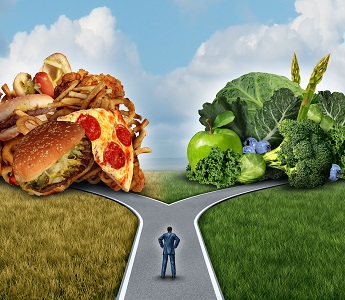
Which way will you go?

There is a pitfall though when you go shopping several days a week. You are a walking by the food that you crave, that you are trying to stay away from. if you are in any way like me, then you have the problem that as long as you don’t see it, you are doing great but that when you go shopping and walk by your addictions, you sometimes cannot help but buy it and as a consequence eat it. It is even worse if I walk into the store unprepared and/or hungry.

How to avoid the traps of store display

Some stores like Harris Teeter allow online shopping. There is no easier way to avoid the displays and candy / icecream traps then shopping online. You don’t even have to enter the store to pick up your food. You have to pay a small amount per shopping but if you get all your grocery shopping done once a week you might spend $10-20 for online shopping/month but have saved way more than that in junk food.

If you are someone who despises online shopping then going in with a plan is the way to go. A detailed shopping list of everything that you truly need is the best. Honestly most of us don’t do that.

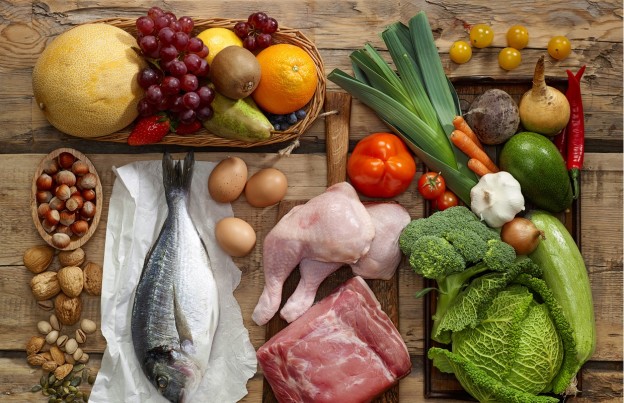
Even if you have not made a detailed shopping list you can still walk in with a plan. If you have been following this blog for a while then you know you want to make sure you have enough protein, veggies, some fruit, fats, and maybe some starchy carbs.

  1. Look for your veggies & fruit (produce section or frozen area)
  2. Next, fill up your protein for the week, best choose two for some variation from the meat/poultry/fish section. Look for things that are about to expire or on sale to save some money. Other great sources of protein are eggs, cottage cheese, greek-, European style yoghurt, cottage cheese (dairy section)
  3. Fats you can get in the produce section (avocado), oils (extra virgin olive oil, coconut oil, etc)
  4. Your starchy carbs you can find in the produce/frozen section. You can get some quinoa or brown rice but would stay away from pasta, etc.
  5. If you need some supplementation you can get those at the pharmacy area of your grocery store like whey protein, fish oil, quest bars.
  6. Staples: Toilet paper, etc

For most of your food items you should not have to venture into the middle of the store. Always ask yourself, does the article you are purchasing fall into the categories, protein, veggies, fruit, healthy fats, low glycemic load+index carbs. Shopping for your categories and marking them off mentally might help you stay away from the crap.

Read Labels

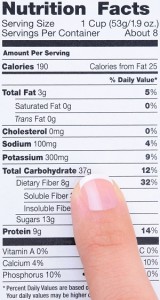
Pay attention when reading labels. Foods with long ingredient lists are usually not a good idea.

Learn how to read labels at Shape Up Fitness & Wellness Consulting
Do you read your labels or fall for the manufacturer’s claims

Avoid trans fats or products that add in additional sugars like sucrose, glucose, sugar, maltodextrin, corn syrup, etc.) By the way organic sugar is still just that….sugar. 

Companies make all sorts of claims like: gluten free, health, wholesome, added vitamins and minerals, contains real fruit, natural, fat free, low-carb, high-protein.

Please, just because something is gluten free does not make it healthy. Read the label carefully. Avoiding chemical additives is always an additional benefit.

Conclusion:

  • Shop online if you can
  • Have a detailed shopping list or shop by marking off important categories
  • Never shop hungry
  • Shop on the outside of the grocery store as much as you can
  • Shop once a week to avoid being exposed to your cravings


Shape Up Fitness & Wellness Consulting Nutrition Fat Loss

Are Low Carbs Diet Dead?

Recently a new posted study gained a lot of attention from the media proclaiming that the Low-Carb Diets are not as effective as Low-Fat diets. I am grateful to the people at Examine.com who looked more closely at the study design to try to figure out what this study really means. This post will just summarize shortly what the article has to say. If you are interested you are welcome to read the article here: Really Low Fat vs. Somewhat Low Carb

Study Make-Up

  • It was a six day study
  • 19 volunteers resided in a metabolic unit
  • Calories were reduced by 30% in both group (352g of carbs w/ 17g of fat vs 140g of carbs w/ 108g fat)
  • steady protein intake
  • exercised 1 hour/day on a treadmill
  • both groups went through both protocols after a 2-4 week break
  • Body fat analysis via indirect calorimetry

Results:

This is where it gets interesting. The “low carb group” had a decreased metabolism of about 98 kcal, while the “low fat group” had a drop of 50 kcal. This difference is not high enough to explain the variation in fat loss.

We need to understand that this study did not compare apples with apples. They used a really low fat diet and a moderately low carb diet, if they wanted to go to an extreme on the low carb diet like they had on the low fat diet and keep it equal their fat intake would have had to be in the negative, which is hardly possible.

The fat metabolism at least in the short run is dependent on glycogen as well. This could be one of the reasons for the difference in outcome compared to a steady state glycogen in the long run.

Really low carb studies have shown to lead to a slightly higher fat loss over a 6 month period but after that seem to even out with a low fat diet. In addition most low carb diets usually make up for a higher protein intake which helps fat loss.

Like the authors of Examine.com mentioned, this study was designed to see the results over a short term period. The research shows that you lose body fat on a low carb diet or a low fat diet. In the end, what matters most is the ability to adhere to it.

Nowhere was the actual food mentioned in the article. A whole foods, minimally processed, diet has many advantageous independently of the macro-nutrient intake. Fat loss is not the only factor to measure success by, like a recent study showed comparing diets heavy in meat or cheese to a high carb diet. The meat and cheese diet improved cardiovascular risk markers significantly compared to the high carb diet.

Conclusion: Don’t buy the media hype

The study was designed to fill in some of the gaps in nutrition it does not prove or disprove the effectiveness of any diet.

If you are in the process of cleaning up your diet, reducing junk food, eating more whole foods you are probably one step ahead. You can lose weight on a low fat diet or on a lower carb diet but you cannot out-train your food intake!

A Zombie App can help you with your Fitness in Charlotte at Shape Up Fitness & Wellness

Getting Fit While Zombies Are Chasing You

It is sometimes hard for people to get started working out. There are thousands of apps by now providing you with training tools and good advice but what most apps lack is one crucial thing: The fun factor. 

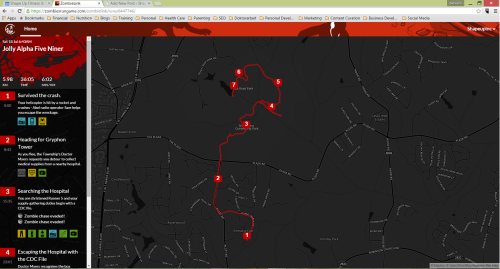
In comes Zombie Run: This running app that puts you into an interactive post-zombie-apocalyptic world full of perils, opportunities and….walking, jogging, or running at your own pace.

What the game provides:

  • The free version provides you with 4 missions to try out.
  • In between game interactions you are able to listen to your own tunes, Pandora, Spotify, etc, the game will automatically pause the music and restart it.
  • It offers an additional “Chase” mode that notifies you with a warning sound of zombies approaching. In order to avoid the zombies you have to pick up your pace by a certain percentage which can be changed in the paid version ($2.99/month or less)
  • During the run you will pick up items that you can later use to distract zombies from catching you (in case you fail to increase your speed enough) or use it to build out your base (speaks to the computer geek inside of us, ahem me)
  • The game provides an interesting story line that keeps you captivated and makes you want to run more
  • The game will track your run statistics and enables you to share them
  • By now they have accumulated over 200 missions for you to do
  • The paid version can be set to automatically go towards the next mission or you can choose to radio mode (default)
  • The game does not dictate your pace other than to speed up during chases. It also does not forces you to change directions
  • Settings to use when you are on an elliptical, rowing machine or treadmill

    Zombie Run App at Shape Up Fitness & Wellness Consulting
    Are you faster than a zombie?

What is my experience:

  • By the time I am writing this I have run two missions with it so far. Running on trails makes it harder to avoid getting caught by zombies due to GPS inaccuracies.
  • Each session so far was about 30-40 min long. I like the radio setting as well as the go straight into the next mission setting
  • It definitely kept me motivated and made me pick up my pace.
  • I have a tendency to push myself and at points I tried too hard to “evade the zombies” which made me gas sooner considering I was running 7-8 miles total in hot and humid conditions
  • I definitely plan to use it more often considering I found the story engaging, the program interactive and it made me work harder. I will to make sure to pace myself.

Summary:

This might not be for everyone but especially for people who like computer games and interactive games this is fun. It can get you motivated to move your butt off the couch. I highly recommend giving it a shot. Become Runner 5 and find out what you can do in-game a well as on the road/trail running

Here is a video that gives you an idea what it sounds like:

Personal training helps stop making excuses

You know what to eat and do but you are not happy with your fitness level

Most of our clients are beginner’s in fitness when they start with us but we have a good number of clients who have been pursuing fitness for years, even decades and are not happy with their results.

They come in and when we talk to them, it is pretty evident that they have been reading up, have been in the trenches. Still when you look at them or their performance it does not seem to measure up to their knowledge.

So what is the problem?

In many cases it is accountability. What are you accountable to, who are you accountable to? When we have people write down when they train and what they eat, it  becomes obvious quickly that most people lack consistency. They train alright but they are busy at work and they miss a training session here and there. Missing one training session = not a big deal but missing one of 3 a week = 33% of your training in a month. You won’t be successful this way. With nutrition it is the same way. If you have a cheat meal you will still rock your goals but if you have whole cheat days or a cheat meal each day [which basically comes down to 2 whole cheat days counting breakfast, lunch and dinner] you are not going to make it.

What is your What?

It is much easier to stay on target if you are working towards something you really desire, and sadly weight loss is often not enough.

It might be: you wanting to prove to yourself that you are not the weak person that you were in high school or college, your first race, an active vacation with heavy duty hiking, you name it, the sky is the limit. In a few cases it can be health or fitness but I have seen it primarily work for people who have had a big scare like a doc telling them they are going to die if they keep it up. Even then unless they truly feel bad the chances are high that it won’t stick. They are training away from something, which can work at times. It is better to find something positive to train towards.

Who is your Who?

We train better if we are accountable to someone, at all times. with the good and the bad. It can be a personal trainer, it can be a friend, a family member, a dietitian, it even can be your online social media community. Find the person that is right for you. This person might change over time and you might find other people who can fill that role.

Powerful Combination

A combination of both will have the most impact. You will have most likely the most success If you are working with a person [i.e. personal trainer]  and you are working towards a specific tangible goal at the same time.


Have an awesome day,

Michael

Nutritional Advice at Shape Up Fitness & Wellness Consulting

When should I eat? How much should I eat? When should I stop eating?

Many of our personal training clients seeking weight loss ask us questions like these:

  • Should I eat breakfast
  • What should I eat for breakfast
  • Can I skip lunch?
  • Should I not eat after 6 or 7 pm?

Should I eat breakfast if I want to lose body fat, or can I just skip it?

That is actually an excellent question. As you can see with Intermittent Fasting skipping breakfast can be actually beneficial for some people in order to lose body fat and improve their body composition.

On the other hand, some people skip breakfast and then just wolf down so much food in the following meals that it not only offsets their skipped breakfast but they super-compensate.

Conclusion: If you want to follow an intermittent fasting diet, make sure that you plan it out properly.  At the same time skipping a meal here and there will not do you any harm as long as you don’t go off the rails because of it.

I have decided I want to eat breakfast but don’t know what to eat

Breakfast seems to be difficult for many people and one approach hardly fits everyone. We like to tell people that your dinner and your breakfast could look pretty much identical. Veggies, protein and some starchy carbs if you have worked out prior to breakfast.

The problem with that suggestion is simple. Some people cannot do it. We need to adjust for that. Some breakfast options that are healthy are the following:

  • plain Greek yogurt or regular yogurt, some frozen fruit w/ raw honey (1 1tsp)
  • whey protein mixed with almond milk, one serving of fruit and possibly one Tbsp of almond butter or peanut butter
  • omelet or egg muffins with spinach, bell peppers, mushrooms, onions, maybe some meat
  • sauteed veggies with some stir fry meat
  • veggie pan cakes with some scrambled eggs.

Can I skip lunch?

I prefer for you not to skip lunch. Here is the reason why: Most people seem to completely derail in the afternoon or evening and start binging on crap food. Now I also understand that it is not always easy to get lunch in. Meetings, work, etc can get in the way. Have alternatives ready if you cannot tear yourself away for 10-15 min to eat your lunch:

  • Protein Bars: Even though I am not a big fan of them, they can be used for the occasional meal replacement. Look at the KIND bars or Quest bars. I personally don’t like them but as a quick fix on a stressful day they will do.
  • Green smoothie: if you have a thermos you can mix some whey protein with frozen fruit and some kale or other dark greens, almond milk or water and if you like the taste add some nut butter. You just covered protein, veggie and fruit intake for lunch and it is super healthy.
  • Nuts; All you have are some nuts? Well, that is better than nothing. Have some almonds or walnuts to get you safely across the food gap and have a later lunch.

Should I eat after 6 or 7 pm?

That is a pretty general question. If you are heading to bed 5 min later it is probably not a good idea to have a heavy meal just before then. I usually recommend clients to stop eating one to two hours prior to bed time. This way the body has time to digest and sleep quality is not necessarily impaired. Ingesting a heavy meal just before bed time can definitely mess with your sleep, especially if you have trouble sleeping to begin with.


Paleo diet products

Paleo Diet May Have Positive Effects On Metabolic Syndrome

The paleo diet is an often discussed diet with clients and outside of the studio. Trial research has been looking quite favorable on the “paleo diet”. A recent study is looking at the effects of the diet on people with metabolic syndrome.

For those who don’t know what the metabolic syndrome is here is a quote from the mayo clinic:

Metabolic syndrome is a cluster of conditions — increased blood pressure, a high blood sugar level, excess body fat around the waist and abnormal cholesterol levels — that occur together, increasing your risk of heart disease, stroke and diabetes.

http://www.mayoclinic.org/diseases-conditions/metabolic-syndrome/basics/definition/con-20027243

Considering that more than 25% of the adult american population suffers in some form from the metabolic syndrome, this is a major issue.

The study done was a pilot study done on 32 individuals. 18 were assigned to the paleo group, 14 to the control group. The small number of people participating and the setting of the study should already warn us that this study does not provide conclusive, final results but a peek into what should be explored further.

Both groups ate 2080 kcal/day. The paleo group increased the amount of eggs eaten but did not have dairy, grains or legumes.

The results of this study were impressive: The paleo group consumed about 24% protein (vs 18%), 34% carbohydrates (vs. 53%) and 41% fat (vs 29%). The researchers goal was to avoid weight loss. Seven people in the paleo group needed to eat additional snacks versus 2 in the control group to avoid weight loss.

The paleo group outperformed the non-paleo group in just two weeks tremendously in all measured parameters: BW loss, reduction of systolic & diastolic BP, total cholesterol, triglycerides, increase in HDL, and improvement of metabolic syndrome.

Conclusion:

A diet is only as good as its sustainability. If you are not able to maintain it you are not going to be successful in the long run. The results in this pilot study are highly promising and show a lot of potential. The paleo diet has been extremely successful with clients that we have successfully employed it with in regards to weight loss and improvement of their metabolic syndrome. Do we recommend it to everyone? No, even not the people who have metabolic syndrome. Eating is more than choosing what we put in our mouth. A lot of emotional attachments play a role and what works for one person does not work for another.

Our recommendations are individualized but in general will lead to a minimally processed foods diet / paleo-esk diet in the long run if it is doable and sustainable for our client.

Have an awesome day,

Michael

Ressource:

Examine.com: Can the paleo diet make metabolic syndrome ancient history? Favourable effects  of consuming a Palaeolithic-type diet on characteristics of the metabolic syndrome: a randomized controlled pilot-study.

Get ready for the summer w/ Shape Up Fitness & Wellness Consulting

Beginner’s Summer Fitness Challenge 2015

Summer is approaching quickly and with it the sought after goal to look great in a bathing suit or bikini. Maybe you just want to be healthier than you are now. This Summer’s Fitness Challenge is designed to gradually increase your workout regimen and improve on your eating habits. It is a gradual approach and not a quick fix. By the end of summer you should see huge improvements in your overall fitness levels.

Beginner to Fitness

Each week we will add a a little bit to your routine. Keep doing what you have been doing and substitute or replace as required by the weekly suggestion. The video demonstrates all the exercises of this Summer Fitness Challenge:

Week 1

  • Every day: Walk 10 min a day at a brisk pace
  • Every day: Include veggies with lunch & dinner
  • Every two days: 2×10 bodyweight squats, 2×10 (modified) push ups, 2×15 band rows (attach to stair rail, etc. )

Week 2 

  • Increase your daily walk to 15 min a day
  • Start including proteins into your three major meals: pork, fish, beef, poultry, eggs, yogurt, cottage cheese, greek yogurt, etc.
  • Add 2×20 jumping jacks (or modified jumping jacks) +2x30s plank on knees or balls of feet

Week 3

  • Download a HIIT timer (high intensity intervals) to your phone. Set it to 30s on and 60s rest. Increase your speed for the 30s and walk as before during the rest phase. Stay with 15 min total. Do this every 2nd day while walking your regular 15 min every other day.
  • Decrease one of your vices (soda, diet soda, alcoholic beverages) by adding 16-20 oz of water in between drinks
  • Increase all of your sets by one (doing 3 instead of 2) for two of your strength training routines during the week

Week 4

  • Increase your pace during the intervals. If you cannot do that because of joint issues, take some hand weights with your or use nordic walking sticks.
  • Eat only until you are 80% full. Good gauge: after 1 hour of eating = not hungry, after 2 hours of eating = could eat some, after 3 hours of eating = hungry, after 4 hours of eating = starving.
  • Add 3x30s of dead bug (ab exercise) to your strength regimen

Week 5 

  • Increase your walking duration on non interval days by 5 min
  • If you sleep less than 6.5 hours, schedule a nap or go to bed 15-30 min earlier
  • Add one more set to all of your strength exercises.

This is a 5 week program. within 5 weeks you will make huge changes in your lifestyle without thinking that it is not accomplishable. You will notice an increased energy level, decreased body fat and you will definitely be overall fitter.

If you prefer a customized fitness transformation please contact us at Shape Up Fitness & Wellness Consulting

Have a fit & healthy day,

Michael

Seraphinite AcceleratorOptimized by Seraphinite Accelerator
Turns on site high speed to be attractive for people and search engines.